New laws to restrict short-term lets will be the 'strongest' in Europe, housing minister says
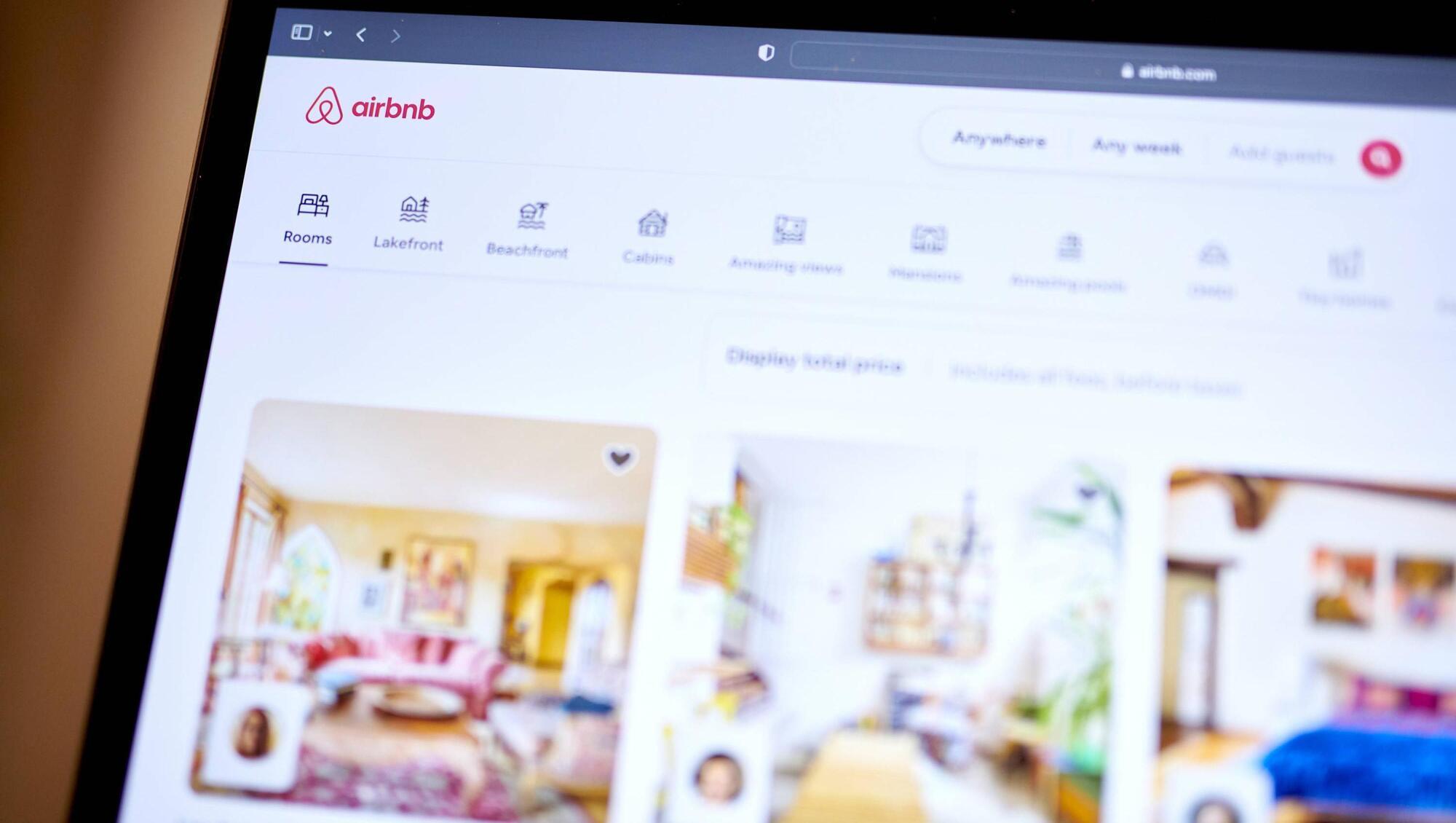
Housing minister James Browne said in rural Ireland, short-term lets were supporting the local economy through their use for tourism. File picture: Gabby Jones/Bloomberg
New laws to restrict short-term lets across the country will be the “strongest” in the EU, the housing minister has claimed.
James Browne said he wanted to “get as many homes back into use as possible”, as the restrictions will bar new planning permissions for short-term rental in towns over 20,000 people.
However, Mr Browne said in rural Ireland, short-term lets were supporting the local economy through their use for tourism.
“They bring money in, which helps people to live and stay in those local economies. We will try to find and strike that balance,” Mr Browne said, adding the 20,000 rule would “maximise” the return of houses in urban areas.
The Government previously approved the Short-Term Letting and Tourism Bill in April, but the new rules are not expected to come into force until December.
They will crack down on the creation of new short-term lets in places like Cork, Dublin, Galway, Limerick and Waterford, alongside a further 20 towns.
There will also be a new national register for short-term lets, which will be overseen by Fáilte Ireland.
Anyone renting out their property for more than 21 nights a year will be required to register and confirm they have valid planning permission.
Read More
While there are restrictions on new planning permissions for areas with more than 20,000 people, Mr Browne said there would be a two-year grace period introduced to allow people regularise their affairs.
It will also include a new grandfathering rule, where if a property is proven to operate for more than seven years without action being taken, individuals will be permitted to regularise their short-term let with retention planning permission.
Mr Browne said there were about 24,000 properties being advertised on short-term letting platforms. He said he believed this was an “underestimate”.
“What we also suspect is that where perhaps in an apartment block, someone is advertising one property, they have maybe five or six behind it,” he said.
Draft research, carried out by consultants Indecon, suggests there are 28,903 short-term lets in Ireland. About 40% of those are in cities, with Dublin accounting for 9,186 short-term lets.
The housing minister said there was a “serious challenge” on the enforcement of existing rules around short-term lets, adding while there was a requirement for planning permission, many people are operating without it.
“Proving somebody is operating as a short-term let has been the real challenge.
“It's very easy to identify if somebody has put up an extension without permission, but identifying who's going to into a property, what their purpose is, are they paying for it, are they family, are they not family, how many nights are they staying there, is extremely difficult.”
On the enforcement of the new rules, Mr Browne said it would be up to both Fáilte Ireland and local authorities to police them.
He said local authorities would be able to read the new register and find anyone in breach of the rules.
“I would expect the planning authorities and Fáilte Ireland to be very robust in actions against Airbnb or any platform that is facilitating illegal activity on their websites,” Mr Browne said.

CONNECT WITH US TODAY



Be the first to know the latest news and updates