EU foreign ministers fail to agree sanctions against Israel over Gaza genocide
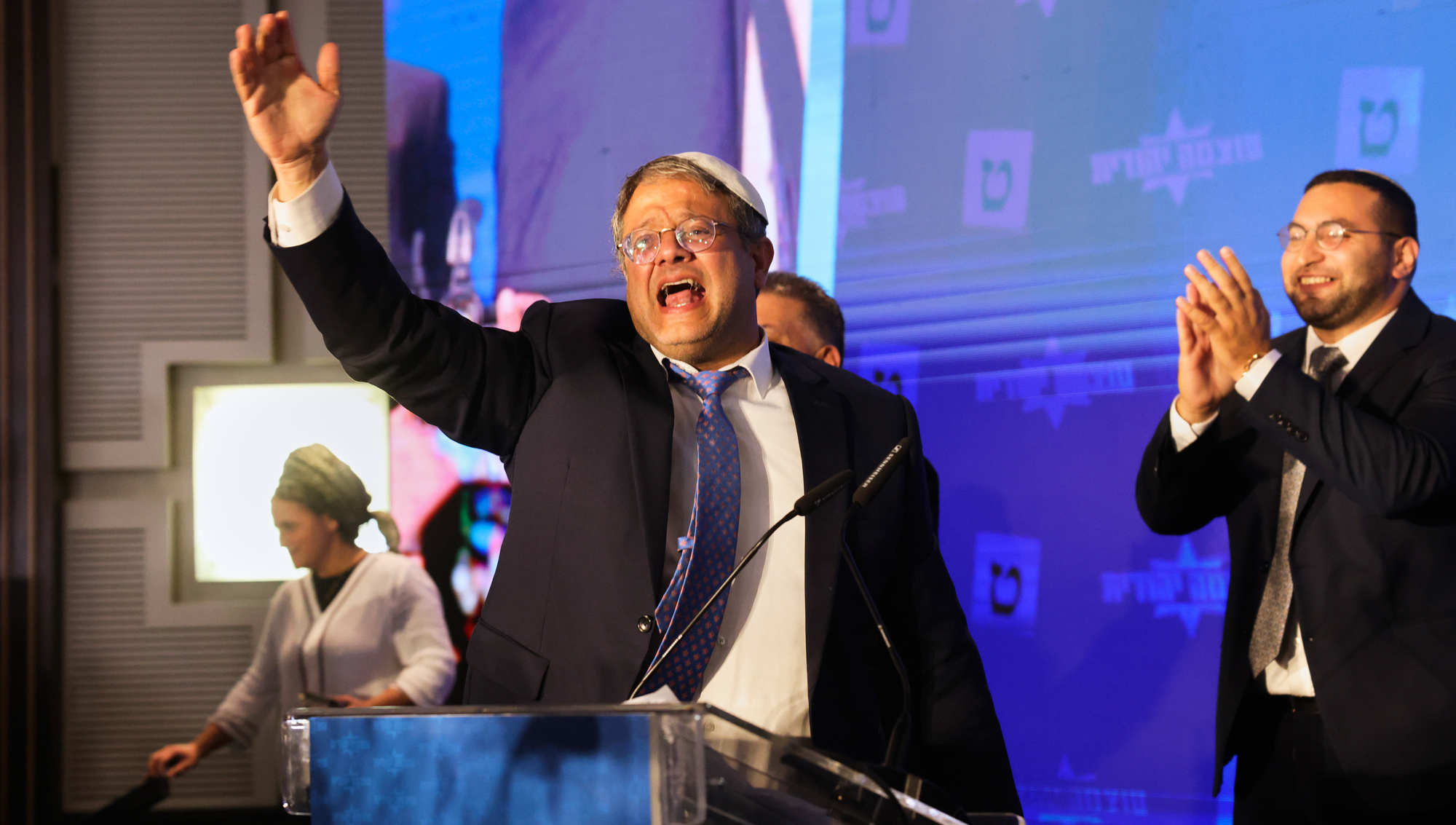
Central to the foreign ministers in Luxembourg on Monday was the tabling of formal EU sanctions against Israeli settler minister Itamar Ben Gvir (pictured). File photo: AP/Oren Ziv
EU foreign ministers have failed to agree on taking action against Israel for the ongoing violence in the West Bank, as well as the "dire" humanitarian crisis in Gaza.
Central to the foreign ministers in Luxembourg on Monday was the tabling of formal EU sanctions against Israeli settler minister Itamar Ben Gvir.
"The situation in Gaza and the West Bank is dire," said EU foreign policy chief, Kaja Kallas, in a press conference after the meeting.
"Many member states proposed to sanction minister Ben Gvir, but no consensus was reached on that today," she said.
However, following an intervention by Ireland, Spain, the Netherlands, and Slovenia, Ms Kallas said she will request that the European Commission outline proposals to end trade with the occupied territories.
A further discussion on this will happen at the next Foreign Affairs meeting in Brussels in July. Ireland will at this stage hold the presidency of the European Council.
Read More
Given the stark divisions among European governments over Israel and Palestine, it's highly unlikely any proposals to end trade with illegal settlements will pass the required voting threshold. Instead, Spain, Belgium, the Netherlands, and Slovenia have implemented or are preparing to implement similar measures.
The Israeli government — including prime minister Benjamin Netanyahu — is accused of starving the civilian population as part of its military assault following the Hamas terror attack on October 7, 2023.
Speaking in Luxembourg ahead of the meeting, foreign affairs minister Helen McEntee said "the credibility of the EU in how we respond to this is at stake"
"It’s completely unacceptable that Israel continues to take the actions that it has with impunity and without the EU responding decisively," she said.
Foreign policy decisions at EU level, including the sanctioning of individuals accused of war crimes or other crimes within the international justice system, require unanimous support from all 27 member states.
Invariably, Germany, Austria, Czechia, Bulgaria, and Italy have all voted against taking any action against Israel on any other occasion where a motion to sanction the state has arisen.
However, EU member states say they are increasingly frustrated over Israel's escalatory attacks in Lebanon, where the military is occupying the south of the country and has displaced over a million people.
Last month, several countries said they were horrified at the treatment by Israeli forces — led by far-right settler minister Itamar Ben Gvir — of hundreds of international peace activists arrested for attempting to enter Gaza through a flotilla of boats.
Governments condemned the physical and mental abuse meted out by Israeli security personnel when they intercepted the boats carrying basic medical supplies for civilians, much of which has been prohibited from entering the enclave by the Israeli government.
A qualified major vote (QMV) is required from states in order to end preferential trade within the EU-Israel Association Agreement. In order for QMV to pass, 16 out of 27 member states representing 65% of the EU population is needed.
In this case, support from either Germany or Italy is required as they are the two largest states. Neither has indicated any shift in their prior positions in lending their steadfast support for Israel.
Nonetheless, Ms McEntee said Dublin will be pushing for a suspension of trade in the occupied territories and suspension of trade in the EU-Israel Association Agreement at the next foreign affairs council.
Some member states are moving on this issue, said Ms McEntee.
The entire population of Gaza is now living in "30% of land that was already too small, while food is blocked from being let in", she added.
Meanwhile, Ms McEntee said Ireland would work alongside the EU in complying with international sanctions against Russia in relation to the Aughinish alumina refinery.
The Government is investigating whether the factory is responsible for making and delivering alumina raw material, which eventually finds its way into the Russian military supply chain after it is smelted into aluminium and then used for the production of weapons for the Russian military.
"We'll make sure we don’t play any part in material that can be used as a weapon that can be used by Russia," she said.
She said the Government is "determined to get all the facts" as part of its review, including details on how much alumina is exported to Russia from the plant. The Government claims the plant is also important in the supply of aluminium to the rest of Europe.
She said Ireland can be relied upon to continue to pressure Russia to cease its full-scale invasion of Ukraine.
"We’ll make sure to continue to impose as strong sanctions as possible on Russia because they’re working," she said.
"They have worked. You can see it in the economy in Russia. You can see the impact on the shadow fleet."

CONNECT WITH US TODAY



Be the first to know the latest news and updates