Housing, the economy, Castro: the previous times President Higgins courted controversy
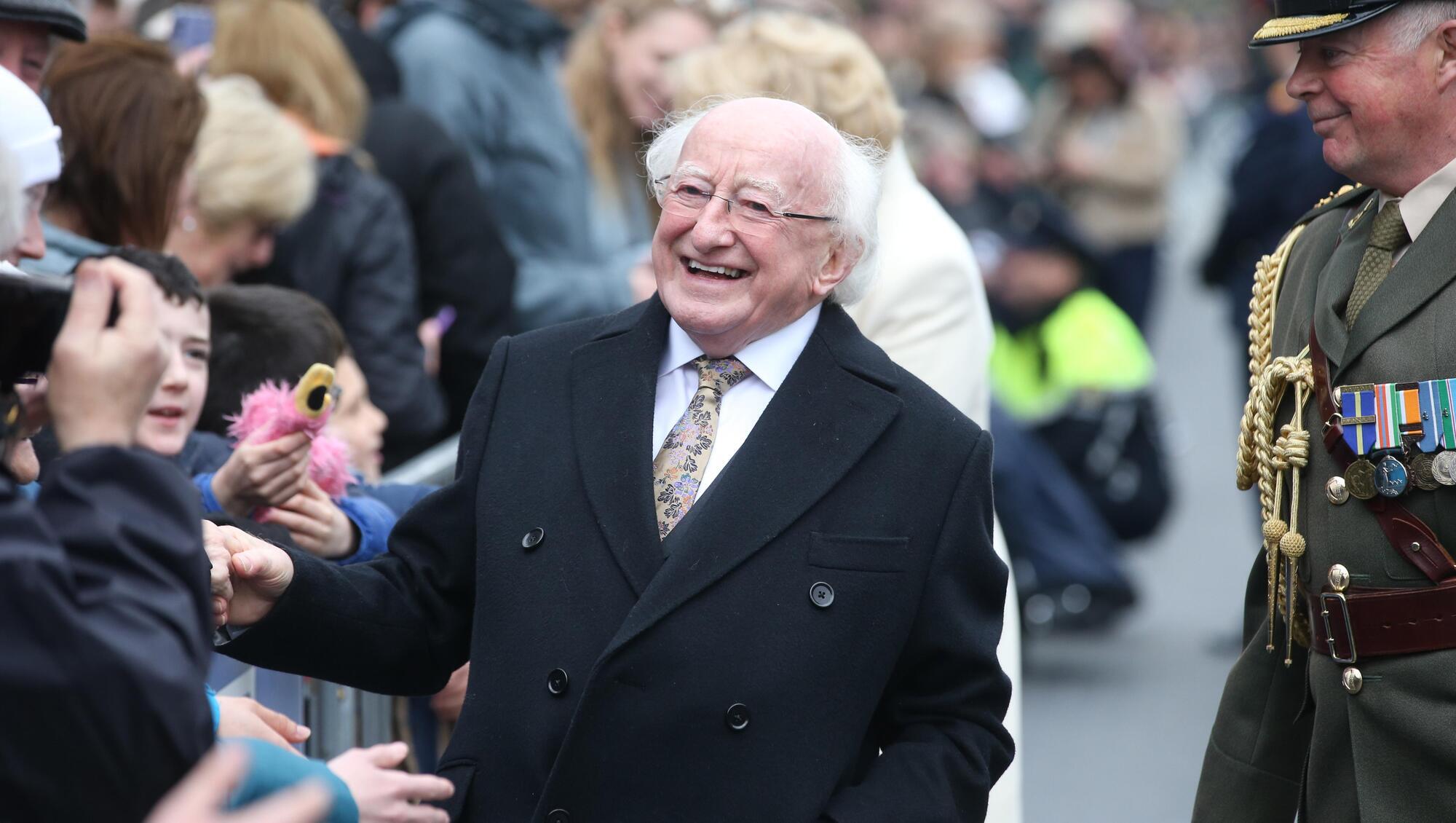
President Higgins is no stranger to speaking out against government policies. File Picture: Stephen Collins/Collins Photos
President Michael D Higgins' remarks on the Government's Consultative Forum on International Security is not the first time his commentary has attracted debate.
In recent years, President Higgins has not shied away from letting his opinion be heard on a number of matters including housing, the refugee situation as well as the economy.
In June last year, President Higgins expressed his anger at Ireland’s housing “disaster” describing it as “our great, great, great failure”. He said he had taken to speaking more frankly in relation to housing because it “isn’t a crisis anymore, it’s a disaster.”
His remarks raised eyebrows within Government given the precedent that the President shouldn’t weigh in on matters of active political controversy or be seen to criticise Government.
In April this year, economists rounded on President Higgins after he condemned the “obsession” with achieving economic growth in a speech at Áras an Uachtaráin and was critical of economic policy.
He said economists were “stuck in an inexorable growth narrative” which was an “empty economics which has lost touch with everything meaningful”. A number of economists branded his comments “lazy”, “outdated”, “uninformed” and “incomprehensible”.
Last year, a Nigerian Catholic bishop criticised the President for suggesting climate change played a role in the massacre of 40 people attending a Pentecost Sunday Mass at the church of St Francis in Owo district of Ondo’s Catholic diocese.
In September 2021, President Higgins declined to attend a church service to mark the centenary of Northern Ireland because he said the event had become politicised.
President Higgins said the title of the service made it "inappropriate" for him to attend as head of state.
In 2016, the President caused controversy after describing Fidel Castro as a “giant among global leaders, whose view was not only one of freedom for his people but for all of the oppressed and excluded peoples on the planet”. He was accused of “airbrushing” over the tyrannical dictatorship. In a statement at the time, the Áras said any suggestion that the President neglected human rights concerns is both unsustainable and unwarranted.