Ireland's European Union presidency will not disrupt Dáil's work – Taoiseach
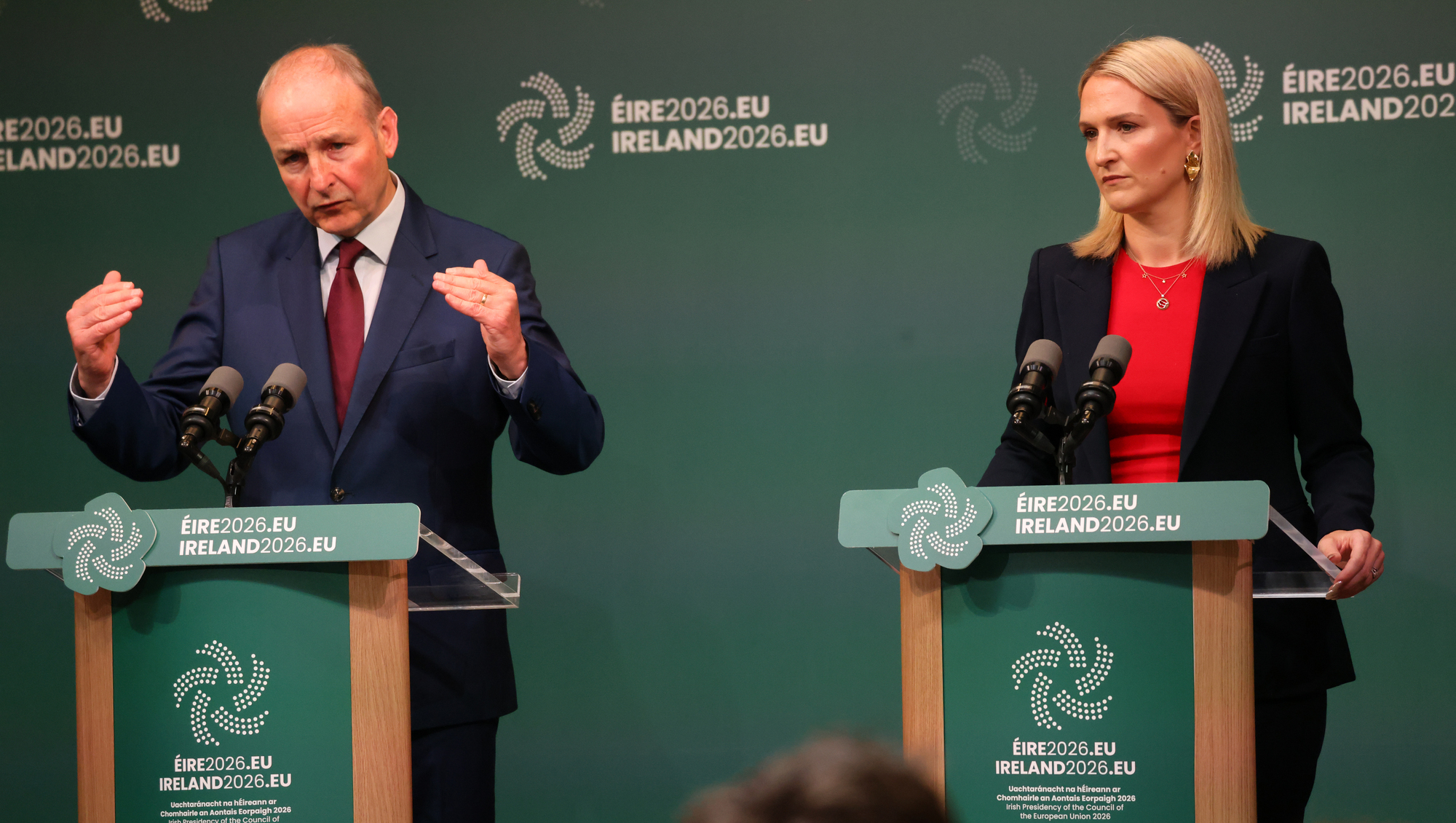
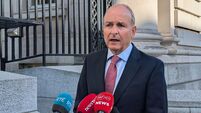
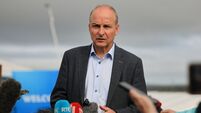
Taoiseach Micheál Martin and foreign affairs and defence minister Helen McEntee at the Government press conference to launch the Irish presidency programme. Picture: Eamonn Farrell/RollingNews
The work of the Dáil will not be disrupted when the presidency of the Council of the European Union comes to Ireland for six months, the Taoiseach has vowed.
Micheál Martin, along with other senior Government ministers, laid out the Government’s priorities for the presidency, which starts on July 1.
While the Taoiseach said that Ireland wants to advance online safety for minors during its six-month stint, he said he could “not guarantee” that a ban for under-16s would be advanced between now and the end of the year.
The European presidency shifts between each of the 27 EU member states every six months, meaning that each country assumes the presidency every 13.5 years.
Ireland last held the EU presidency in 2013.
From July 1, European leaders and ministers will fly into Ireland for over 200 presidency meetings and events, starting on July 2 in Cork when Commission president Ursula von der Leyen and her College of Commissioners will gather.
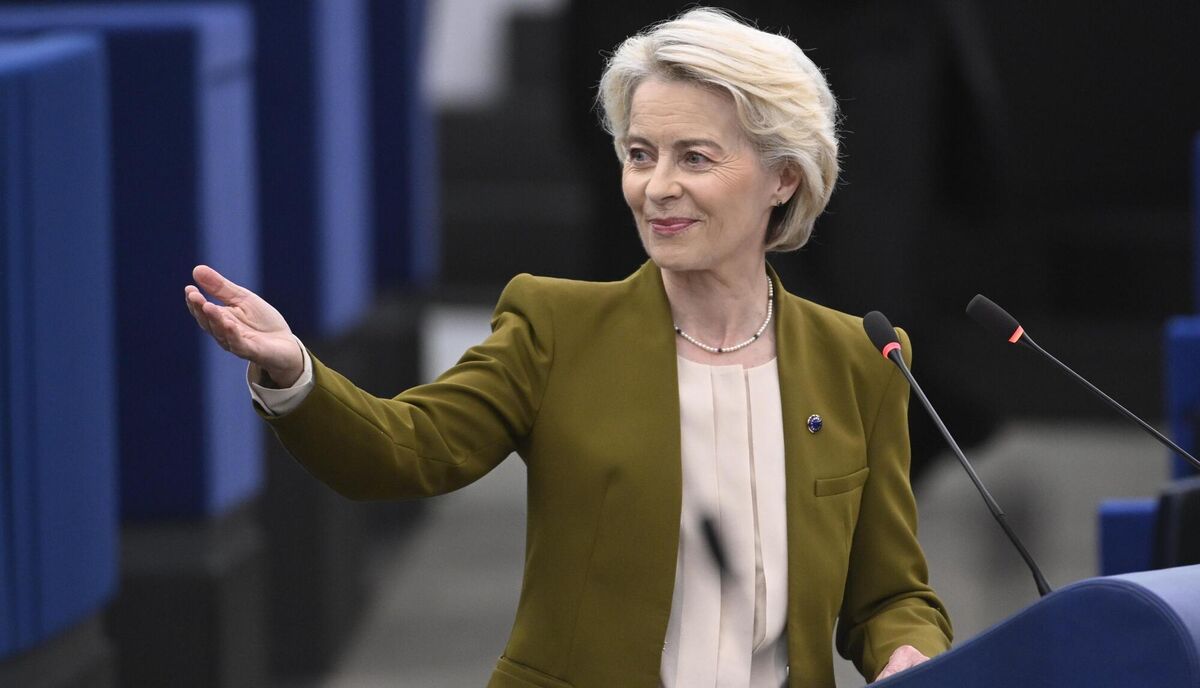
An informal European Council meeting and a gathering of the European Political Community, which includes EU and non-EU countries, including the UK, will be held in November.
The overall cost of the presidency will be up to €185m, excluding security.
However, the Taoiseach dismissed the idea that domestic matters would be put on hold by the Government or the Dáil during the six months.
Read More
“Obviously, we have to attend meetings and so on, but we envisage obviously the Dáil continues on in line with the calendar that has been outlined for the Dáil for the remainder of the year,” he said.
“That’s an annual organised framework governing Dáil and Seanad activities. But it will mean a significant extra workload for our ministers, ministers of state, in particular, and for many of our public servants also.
"We have to keep our focus on the domestic agenda too. It is very important for us that the programme for Government gets delivered. We have a budget. We decided that, and we had already, earlier consultations on the budget, because we know the budget will be delivered in October.”
Ireland’s priorities for the presidency will be “competitiveness”, “security” and “values”.
Under competitiveness, there will be a focus on simplifying the regulatory framework, a “more integrated single market”, an “ambitious trade policy agenda”, strengthening the EU’s capacities in cloud computing and artificial intelligence, and energy transition.
Mr Martin said households and businesses across Europe are “faced with very high energy costs”.
The security pillar will involve addressing challenges caused by Russia’s war on Ukraine, the conflicts in the Middle East and in the Gulf, and the “new forms of warfare present serious challenges”.
“Active support for Ukraine will be a defining priority for the Irish presidency.
We will work to ensure Ukraine has what it needs to defend itself against Russian aggression, and support Ukraine in advancing its capacity and coordination with the EU and cooperation with partners,” the presidency programme vows.
There will also be work on the White Paper on the Future of European Defence and the associated Defence Readiness Roadmap 2030, and on defence procurement.
Under “values”, Ireland also again vows to continue to support Ukraine, and “promote active engagement in support of lasting peace and security in the Middle East”.
It will also address disinformation, online criminality, and child safety in digital environments.
When asked if there would be a ban on under-16s using social media as part of this, Mr Martin said that he could not guarantee there would be.
The Taoiseach also said that while no country is immune from threats, Ireland is not concerned about security during the presidency.
- Louise Burne, Political Correspondent
Read More

CONNECT WITH US TODAY



Be the first to know the latest news and updates