Garda Commissioner: Force must improve its response to domestic violence in Cork

The Garda Commissioner has admitted that “weakness” and a “lack of uniformity” remain in the force’s response to domestic violence.
The Garda Commissioner has admitted that “weakness” and a “lack of uniformity” remain in the force’s response to domestic violence.
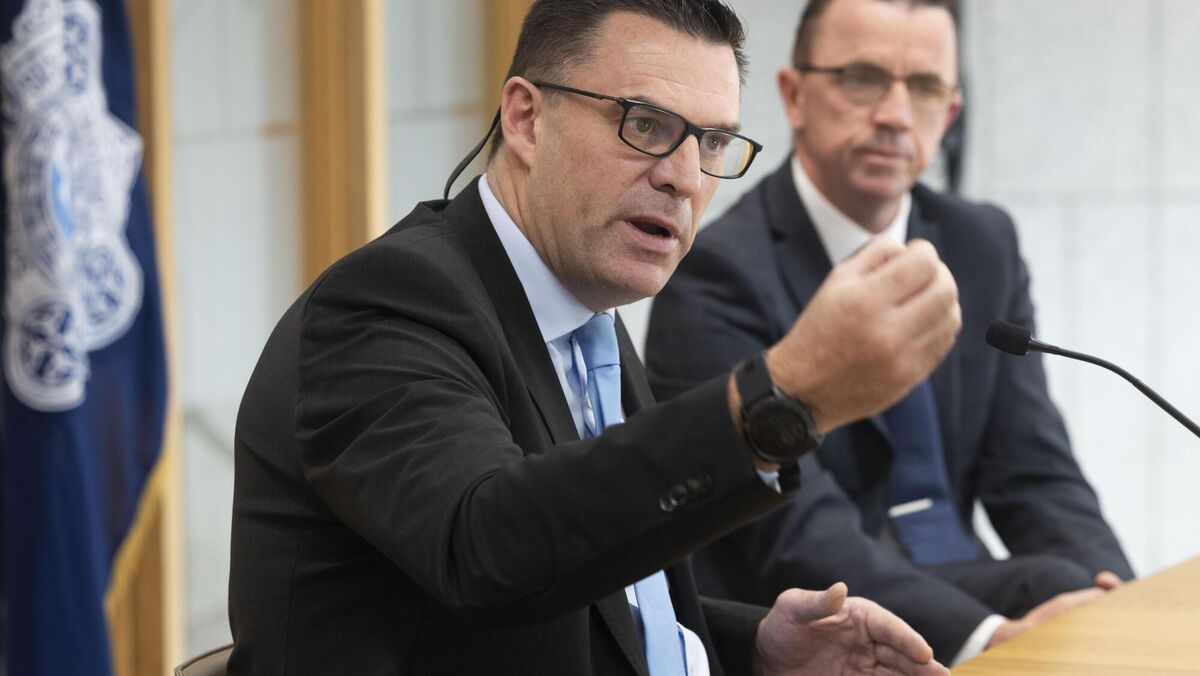
Justin Kelly was speaking at the first public meeting in Cork of the Policing and Community Safety Authority (PCSA) which has said, despite the prevalence of domestic abuse, it has identified low per-capita rates in the reporting of sexual crime in Co Cork
Read More
PCSA member Emma Reidy said concerns also exist about breaches of court orders — such as protection orders and barring orders — in the county.
A perception exists among some people to whom the PCSA spoke in Co Cork that gardaí can be “soft” on enforcing protection and barring orders, with arrests not always occurring.
Additionally, a Garda Síochána Inspectorate report found low rates of domestic abuse protection in Co Cork, she said.
Mr Kelly welcomed the PCSA’s observations, but said the force should not have to rely on the PCSA to identify trends that should be identified by gardaí.

“If we have outliers, we should have red flags around what’s going on,” Mr Kelly said.
He added that a “weakness” remains around gardaí’s response to domestic violence.
Although there have been major improvements, with protective service units established across all garda divisions, there are concerns about a lack of uniformity in how gardaí respond to domestic abuse, Mr Kelly said.
Trainees in Templemore now receive over 34 hours in training on responding to domestic violence, one of the highest levels of police training in Europe, according to Chief Superintendent for Cork City Colm Noonan, who previously led the Garda National Protective Services Bureau.
Some 190 gardaí will graduate from Templemore today and these new graduates are key to shifting the culture and understanding of domestic abuse in the force, the PCSA meeting heard.
Increased garda training is needed to ensure a consistent response to domestic abuse across all garda stations, Mr Noonan said.
Concerns had been raised with the PCSA about domestic abuse survivors’ first interactions in a garda station when they report the crime.
Ms Reidy said the PCSA received feedback that although interactions with the specialist protective service units were positive for domestic abuse survivors, their experience of first “going to the hatch” in a garda station and having their statement taken was not always positive.
That first-touch garda response is critical to building trust, she said.
The Garda Commissioner agreed that the force needs to improve elements around gardaí’s first contact with survivors of domestic violence.
It is “very disappointing” when he hears reports of poor responses to complaints of domestic abuse, Mr Kelly said, adding that each person who comes to gardaí to report domestic abuse has already suffered some 30 “horrendous” instances of abuse before they ever report it.
That is why the first garda response to a complaint is critical, he said.
Mr Kelly added that gardaí receive some 64,000 calls a year about domestic abuse and getting consistency among all gardaí to those calls is a challenge.
Ms Reidy noted that under-reporting of domestic abuse, which includes intergenerational and financial abuse, can mean these crimes remain hidden.
Under-reporting is particularly pervasive in rural Ireland, she said.
Mr Kelly stated that rates of reporting definitely do not reflect the reality of offending.
“Particularly in rural Ireland, there are challenges,” he said.
“If you are living in a city, you can be somewhat anonymous. If you’re living in smaller, close-knit rural communities, there can, with some people unfortunately, be a cultural thing about not coming forward."
It is now mandatory that a garda risk evaluation tool used to measure the cumulative and escalating risk in a case of reported domestic abuse must be completed in Co Cork, Mr Kelly said.
However, that tool has had low completion rates in some areas, including in Cork, Ms Reidy said.
Efforts are being made to improve the culture and understanding of domestic abuse in An Garda Síochána, Mr Kelly said.
Screensavers on every garda computer now feature messaging about domestic abuse and training is ongoing.
Gardaí have been particularly focused on improving call backs to people who report domestic abuse, Mr Kelly said.
CONNECT WITH US TODAY



Be the first to know the latest news and updates