Paul Rouse: How Hibs took the lead as Scottish football's expression of Irishness
This weekend Hibernians – the oldest ‘Irish’ soccer club in Scotland – play Celtic in a pivotal match in the Scottish Premiership.
Paul Rouse: How Hibs took the lead as Scottish football's expression of Irishness

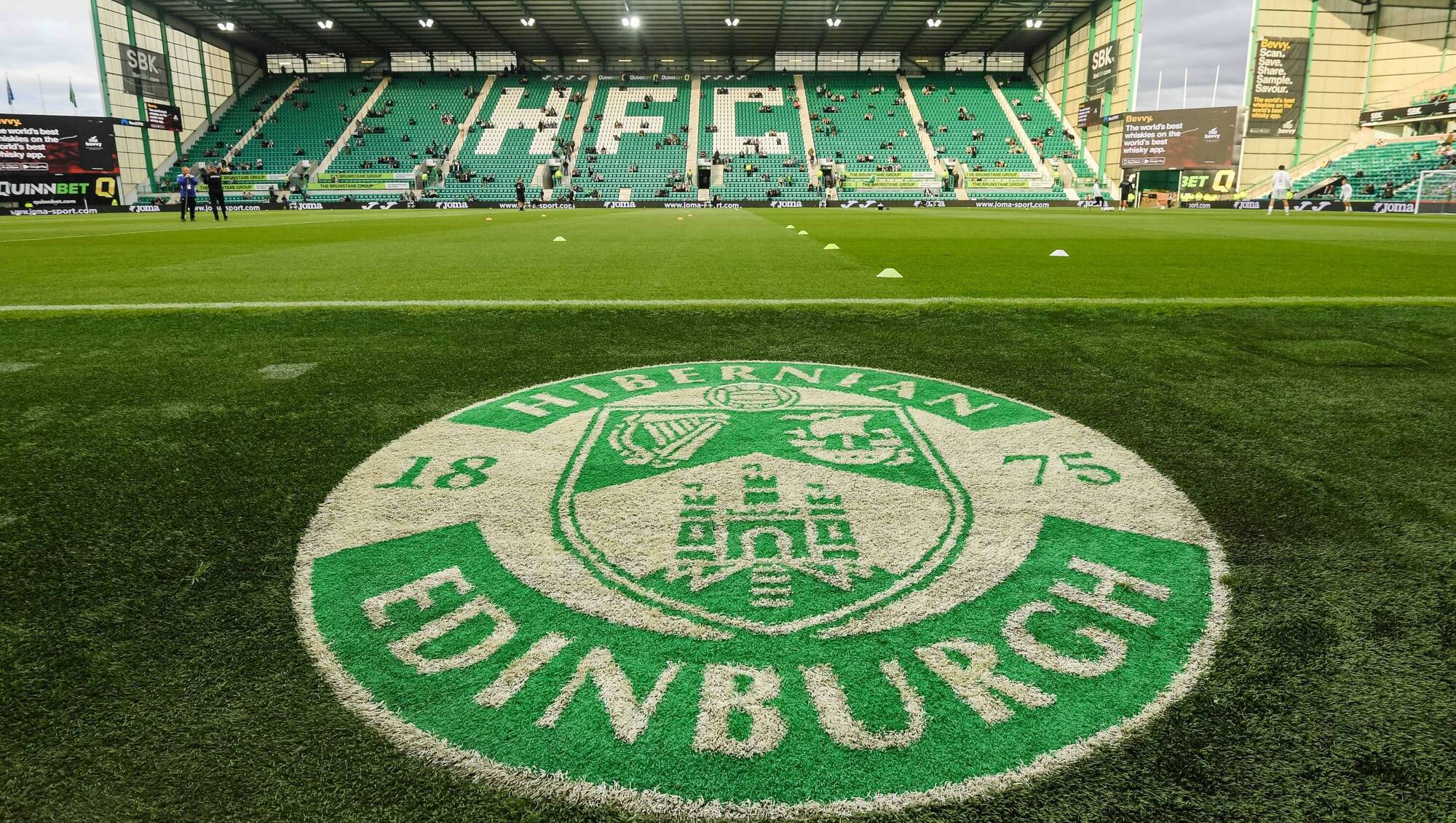
General stadium view of Hibernian's ground Easter Road. Photo by Euan Cherry/Getty Images)

This weekend Hibernians – the oldest ‘Irish’ soccer club in Scotland – play Celtic in a pivotal match in the Scottish Premiership.

The Scottish soccer season is enjoying its most exciting climax for a generation. In the league, the Glasgow giants of Celtic and Rangers are struggling to tame the upstart Edinburgh-based Hearts, who are seeking their first league since 1960.


No team other than Celtic and Rangers has won the league for more than four decades.

And in the Scottish Cup, Celtic will play Dunfermline, who haven’t won the cup since 1968. In total, Celtic have won the Cup 42 times and Dunfermline have won it twice.

Celtic supporters all over Ireland may be disenchanted with the current team and with the way their club is currently run, but they would nonetheless celebrate another double with great joy.

Celtic was famously founded in 1887-88 by Brother Walfrid among Irish immigrants in the East End of Glasgow. The pride in the Irishness of its identity is deep and genuine.

And yet, it had a role model and inspiration in another Irish club in another Scottish city, which enjoyed its first success in the year that Celtic was founded.

Hibernians were founded in the middle of the 1870s in Edinburgh, shortly after the playing of the first soccer games in that city. It enjoyed a keen rivalry with Hearts – itself newly-established – from their first match on Christmas Day, 1875.

Hibernians fought valiantly to establish themselves as a serious club and after a decade of trying managed to win the Scottish Cup in February 1887 – the year Celtic was founded – with a 2-1 victory over Dumbarton.

It was a result celebrated by Irish communities in many cities, home and abroad.

Indeed, there is a remarkable report of the final and of the celebrations afterwards in Michael Cusack’s Celtic Times newspaper. Cusack had founded the paper to report on GAA matters and the report on the Hibernian victory is the only mention of soccer in the 12 months that the paper survived.

It sits snugly on an inside page beside the report of a hurling match between Thurles and Loughmoe in which there was an account of a dispute between both teams as to which one had the benefit of the wind when it was at its strongest. On such fine detail rests generations of spleen across the sporting world.

The best part of the report of the soccer match in Cusack’s paper covers the banquet that took place near Hampden Park to celebrate the result. A speech by the secretary of the club was described as being ‘racy’. McFadden more or less said that his club had only ever wanted fair play on the field and that – although they hadn’t really got it on the day – they had still managed to win.

He continued by saying that they knew Irishmen everywhere were looking out for their result and they had been determined because of that to win.

Another speaker, Dr. Conway, the chairman of the club, agreed that they were representing all Irishmen and said that he hoped this success on the field would soon be met by political success and that Ireland would have its own parliament. This was an aspiration greeted by huge cheering.

Before heading to the station for the train home to Edinburgh, all assembled stood and sang ‘God Save Ireland’.

That ballad was written about the 1867 Manchester Martyrs and was a sort of unofficial anthem of Irish nationalists before the Great War:

‘God save Ireland!’ said the heroes;

‘God save Ireland!’ said they all.

Whether on the scaffold high 

Or the battlefield we die, 

Oh, what matter when for Erin dear we fall!

The themes of Irishness, of the commitment to relieve a grinding poverty, and of a love of playing football are interwoven in a fine book published recently by Thirsty Books publishers: Mike Hennessy’s Edinburgh's First Hibernian: The Mission of Edward Joseph Hannan.

This is in essence the story of the founding of a football club and its deep impact on the lives of generations of people.

Hannan was born beside Ballingarry, Co. Limerick, a farmer’s son who went on to be ordained as a priest, having studied at St Munchin’s College.

In the early 1860s, he went as a curate to the Cowgate area of Edinburgh which was home to thousands of Irish immigrants, to the extent that it was known as ‘Little Ireland’.

He worked tirelessly for parishioners, developing the St. Vincent de Paul Society, and promoting initiatives to combat poverty and drunkenness, as well as promoting education and progressive social outlets.

In 1875, Hannan founded Hibernian Football Club (FC), giving its jersey a harp-and-shamrock crest and ‘Erin go Bragh’ as its motto.

Edinburgh's First Hibernian: The Mission of Edward Joseph Hannan by Mike Hennessy

Deep anti-Catholic and anti-Irish sentiment in Scotland led to the Scottish Football Association rejecting Hibernian’s application for membership. This was only grudgingly allowed after firstly Hearts and then other clubs began to play Hibernians in matches.

One of the thousands of supporters who were coming to the games in those first years was James Connolly, the socialist and rebel leader. Connolly’s letters over the years contain references which lay bare his abiding love for the club.

The success in the Scottish Cup in 1887 could not have happened without the work of Fr. Edward Hannan. And it was followed by victory over the winners of the English FA Cup, Preston North End, in what the papers called a ‘world championship’ match.

It is true that Hibernians were soon overshadowed by Glasgow Celtic, but the club’s pioneering role in Scottish soccer and its importance to Irish emigrants was profound.

All of this is charted with great care and skill by Mike Hennessy. This is much more than a biography of a man who deserves to be remembered. It is also a fine insight into the social, political and economic context of the late 19th century.

It is at its best when it describes the life of Irish emigrants in Edinburgh – and the place of sport in that life.

Paul Rouse is professor of history at University College Dublin

x

More in this section

Sport

Newsletter

Sign up to our daily sports bulletin, delivered straight to your inbox at 5pm. Subscribers also receive an exclusive email from our sports desk editors every Friday evening looking forward to the weekend's sporting action.

Cookie Policy Privacy Policy Brand Safety FAQ Help Contact Us Terms and Conditions

© Examiner Echo Group Limited