Cara Darmody: Dearth of autism resources 'needs to be treated like a crisis, like Covid'
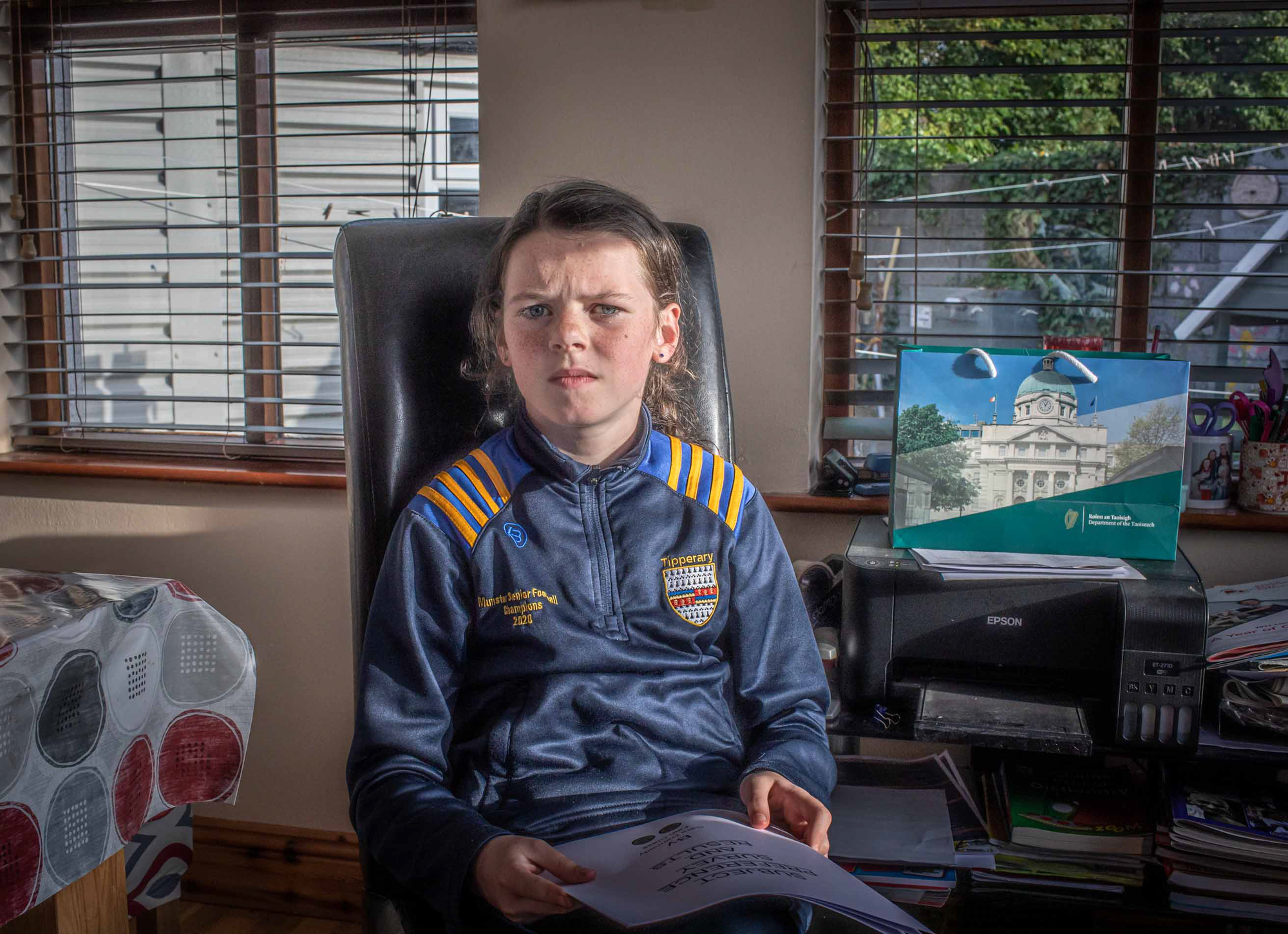
Cara Darmody: “I want to do what I can because what is happening is an absolute disgrace. The damage done from a lack of services for children like my brothers is permanent." Picture: Neil Michael
Cara Darmody’s brother Neil can watch a 10-second clip of Peppa Pig 150 times every day but nobody in the Tipperary schoolgirl’s family knows why.
The fact that he also likes watching the same clip upside down and exists on very little sleep is also baffling. As to why the nine-year-old repeatedly hits his face with a clenched fist is also something Cara can’t understand.
But then, at the age of 11, how could she?
Her mother Noelle is also struggling to understand why her eldest son sinks his teeth into her arms and bites her or why he gets hysterical and violent if he sees creams or ointments of any kind.
Little wonder then that when Cara met Taoiseach Micheál Martin last Thursday, she politely branded his Government’s handling of the current autism resources crisis “a disgrace”.
She also pleaded with him to do something for the thousands of children in Ireland like her brothers Neil, and John, who can’t access basic services on a regular basis and who have ended up severely impacted as a result.
In the case of the Darmody boys, the resources they get from the HSE are, the family says, “patchy at best”.
John, who was born in February 2017, was diagnosed privately in November 2018, by former Justice Minister Frances Fitzgerald’s husband Michael, the renowned consultant child psychiatrist.
As a result of Professor Fitzgerald’s early diagnosis, the Darmodys - who learned from the way Neil was handled by the HSE - paid for more services for him privately. He has benefitted from early intervention but the family believe the window of opportunity to tackle Neil’s issues has already passed.
It took, for example, the HSE until December 2016 to diagnose Neil, who was born in October 2012, as autistic. This was despite him being referred by a public health nurse when he was aged around 16 months to local HSE child services as a child of concern.
Neil, who is a 100% flight risk and has to have someone with him all the time, has yet to receive a full psychiatric assessment.
Speaking to the after she met Mr Martin for over an hour and 20 minutes, Cara said: “I feel really strongly because Neil and John and so many other children like them deserve better.
“I want to do what I can because what is happening is an absolute disgrace. The damage done from a lack of services for children like my brothers is permanent.
“It really hurts me to see my older brother Neil harm himself and it hurts me to know that not enough has been done to help him. You’re 11 and you see this, and you know he needs help he doesn’t get - that affects you.
“I wanted to meet the Taoiseach because I want to see if I can change the Government’s attitude to what is a serious crisis affecting thousands of children. It needs to be treated like a crisis, like Covid or a house on fire.”
If Cara, who is fast becoming to autism what Greta Thunberg is to the environment, isn’t raising money for autism services in and around her home town of Ardfinnan in south County Tipperary, she is in the media demanding HSE and government action.
She set up a GoFundMe page in April to raise funds for autism services in her local Ardfinnan National School and Scoil Chormaic Special School in Cashel, where Neil and John attend.
This followed her decision last year during lockdown to study the whole three-year secondary school Junior Cycle ordinary level curriculum in Maths, and ended up - with the help of her father - doing it in eight months.
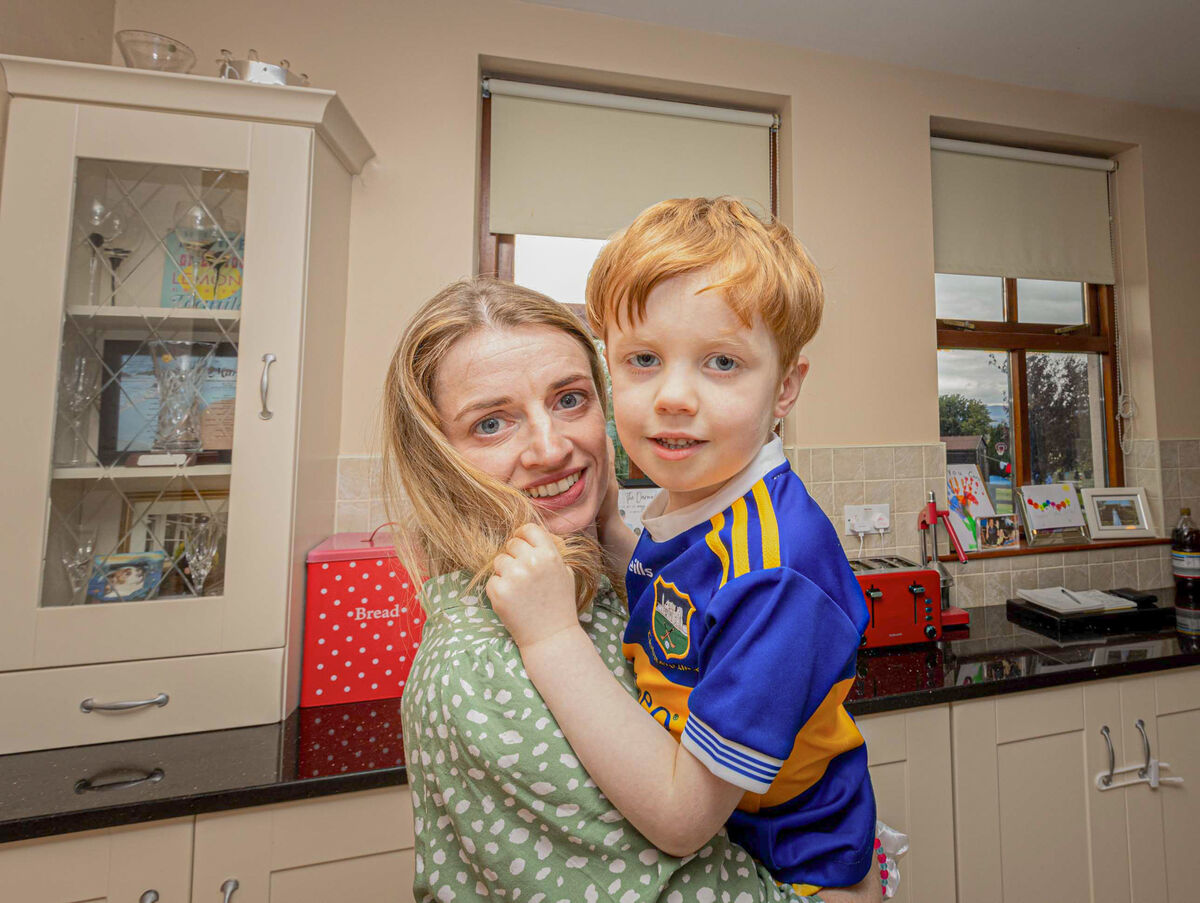
But she decided to turn the achievement into a way to help her brothers - by sitting the Junior Cycle Maths paper on June 10 for charity. In sitting the exam, from which she raised around €38,000, she became the youngest pupil in Irish educational history to do it.
She is modest about the achievement and puts it down to a love of maths and sheer hard work, rather than any amount of genius on her part.
“I’m not a genius, I just work a bit harder than other people do,” she said. “While everybody else is relaxing and chilling out after school, I can spend up to three hours studying.”
Although she plans to sit the Leaving Cert Maths paper next year, she concedes: “It could be much harder, but I don’t know.”
As well as local newspaper and radio appearances, and repeated references in Dáil debates, her appearance on RTÉ’s Ray D’Arcy radio show in May led to the meeting with Mr Martin. Local county councilor Michéal Anglim heard the interview, contacted the family, and asked them what he could do to help.
“Arrange a meeting with Micheál Martin is what I said to him,” dad Mark recalled.
Hours before the meeting, however, Neil decided he didn’t want to go to sleep until 3.45am - 15 minutes before the Darmodys were due to hit the road for Dublin. They were leaving that early as they had to drop by Morning Ireland’s Dublin studio before the noon meeting with Mr Martin.
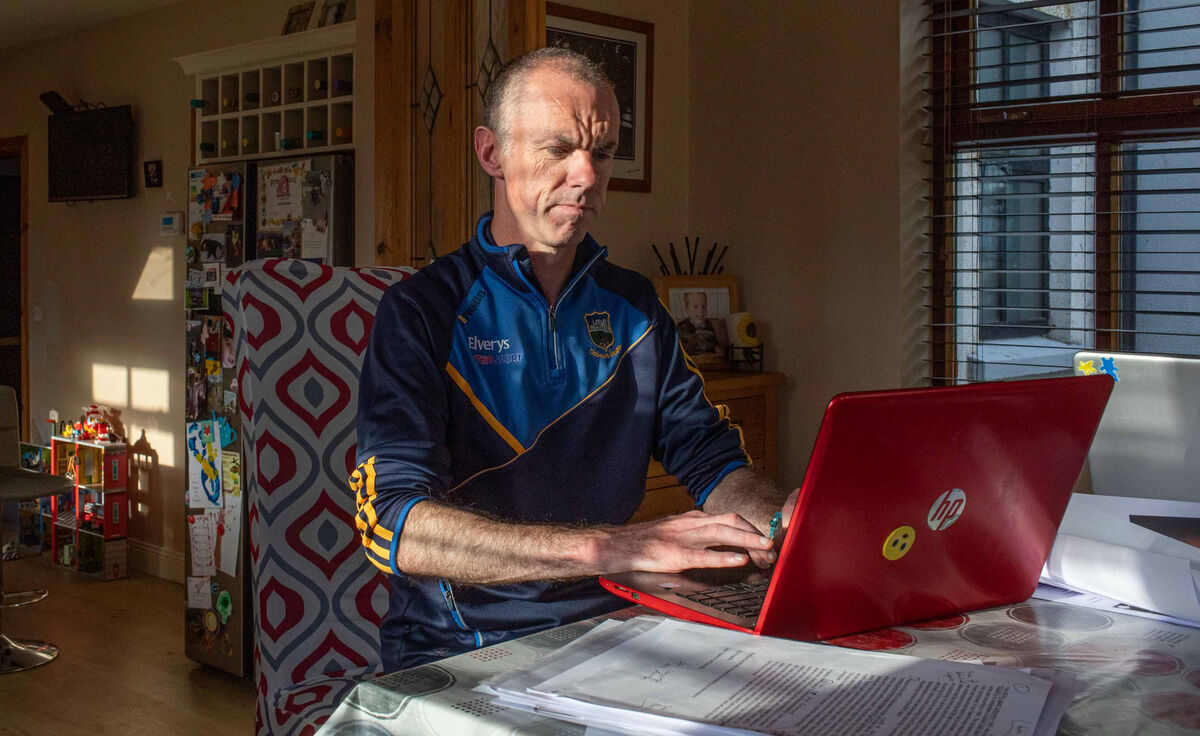
“By the time I arrived at the Merrion Street gates to Leinster House for our meeting, I was exhausted,” Mark, who last went on a family holiday in 2012, said.
“That, sadly, is the way it has been for almost as long as I can remember. Myself or Noelle have to either sleep with or stay up with Neil. He cannot be left for a second because he would he would destroy himself. He has no concept of safety."
His self-harming started four years ago with intense arm scratching but progressed to very aggressively scratching his elbows - which led to deep cuts in his elbows - then to smearing.
When he mentions “smearing”, Mark means his son - who cannot be toilet-trained - takes off his nappy, dips his hands into it and smears his own faeces over surfaces around him.
An example of how Neil has fallen through diagnostic and treatment cracks that exist in the health service is an exchange of letters between a consultant and the HSE.
On February 29, 2020, Consultant Child Psychiatrist Dr Victor O’Loughlin wrote to Dr Justin Roche, Consultant Paediatrician, South Tipperary General Hospital in Clonmel. The letter concerned an assessment Dr O’Loughlin had made of Neil just days previously.
He said in his letter Neil’s level of intellectual and adaptive functioning at the time was “in the severe range rather than mild/moderate as previously diagnosed”. That Neil experiences “significant developmental disabilities” and “severe comprehension difficulties” was also noted.
Dr O’Loughlin said that, in his view, it is “a priority” that Neil receive an up-to-date psychological assessment to clarify where exactly his level of intellectual and adaptive functioning is currently.
The priority cognitive reassessment was needed, he told the HSE, to “inform future therapeutic and educational interventions”.
He also sent the same letter to four key HSE staff. But nothing happened because of the pandemic, the HSE would later tell the family.
In her June 29, 2022, letter to Mark and Noelle, South Tipperary’s disability manager Margaret Larkin admitted Dr O’Loughlin’s referral letter “was not actioned” and the request was “not reviewed or responded to”.
“It is clear something went wrong,” she told the family. “Judging by the timing of this letter, I can only conclude the commencement of the pandemic contributed to this inaction.”
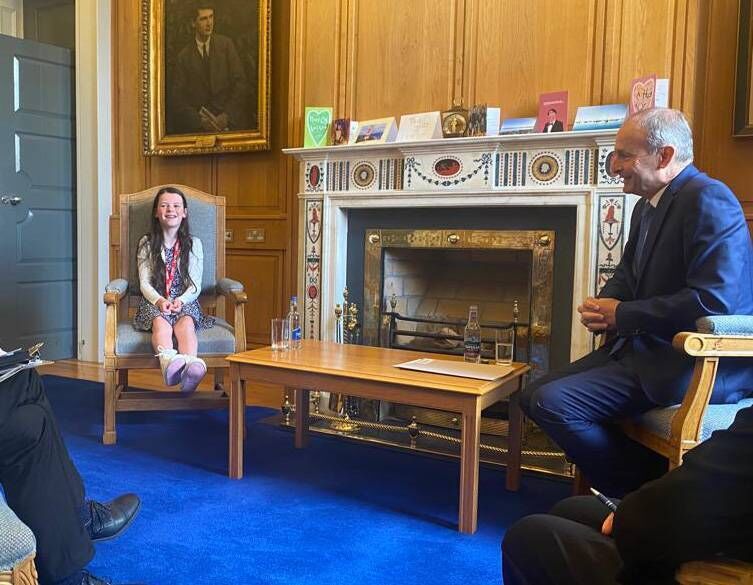
One of the more light-hearted moments in her meeting with Mr Martin was when Cara warned him that if the promises he made were not fulfilled, she would be back to haunt him.
“I’m not going away, and if he doesn’t do what he said he would do, I will be back onto him again,” she said.
Mark added: "She gave him her Terminator line, and told him jokingly ‘I’ll be back’. It may have been said in jest, but she does actually mean it. She is not going to drop this until action is taken.”
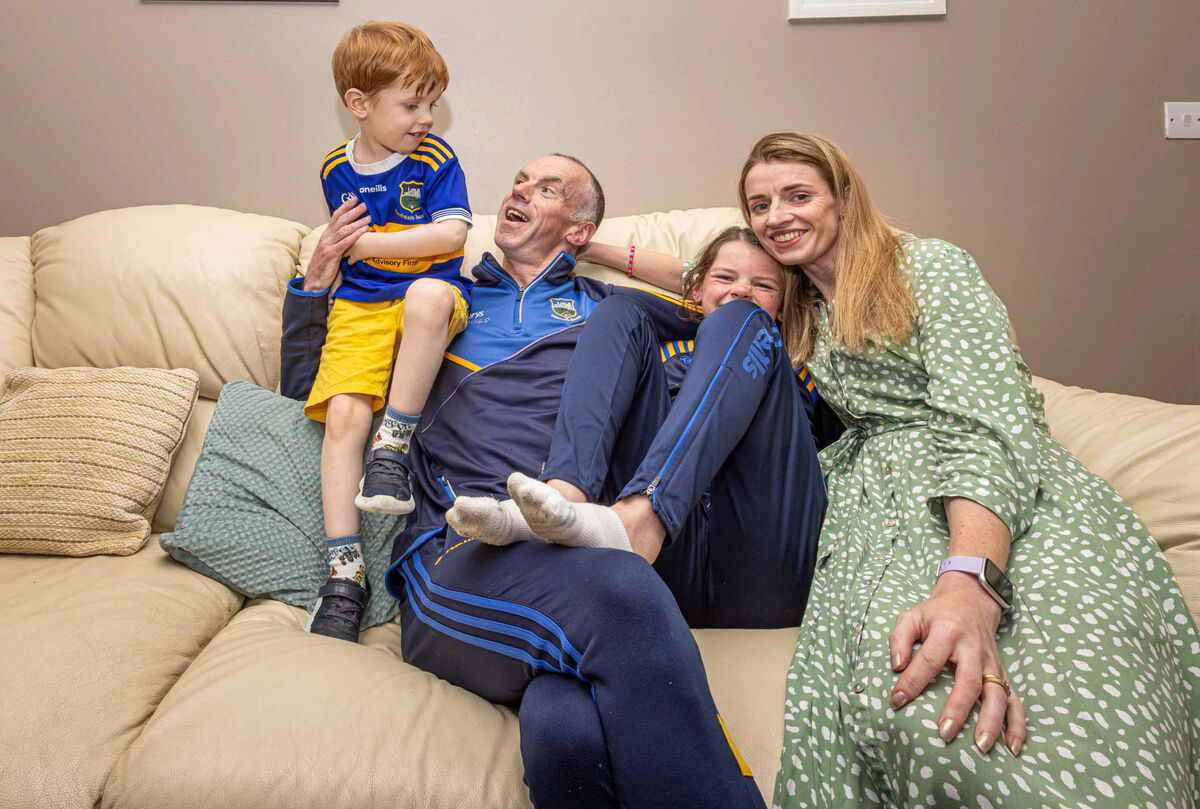
Mark added: 'To be honest it has got to the stage where myself and Noelle are wondering how much longer can we cope with the way things are?.
"No parent wants to even think about what could happen in the future, but it is not going to end well.
"The time will come where one day he will have to go into an institution, but we do not want to think about that.
"We want to do everything to keep him at home."
The build-up to Cara Darmody’s visit to the Taoiseach is a startling picture of the state of disability services for children in Ireland.
In March, for example, the Oireachtas heard there have been 212 legal actions taken against the Health Service Executive (HSE) between 2018 and 2020 in relation to overdue Assessment Of Needs (AONs). This, the Oireachtas heard, had so far cost the State €701,000 in legal costs.
It emerged in May that 452 of the 5,538 children whose speech and language therapy needs have been assessed have been waiting more than two years for their first speech and language therapy session.
In addition, according to documents released under a Freedom of Information request, of the 11,582 children just waiting for an initial assessment, around 1,300 have been waiting over a year.
Most of those waiting more than two years, some 343 children, are in homes in the HSE’s CHO Area 5 of South Tipperary, Carlow/Kilkenny, Waterford, Wexford.
It also emerged later, in June, that of the 2,082 mostly HSE posts for disability services staff around the country, 732 posts for professionals providing services for children with disabilities are vacant.
That is an increase on last year, when - in October 2021 - the Minister of State with responsibility for Disability Anne Rabbitte advised the Oireachtas that the children's disability teams were short 400 staff.
Information released in June by the HSE to Sinn Féin's health spokesman David Cullinane pointed to the fact that the vacancies equate to 480,000 hours of services not being provided to children waiting for them.
The agency admitted there were 52,000 children waiting for initial assessment and therapy and that 30,000 children were on a waiting list for speech and language therapy. There are also, according to the HSE, almost 8,000 awaiting physiotherapy and over 13,000 are waiting for occupational therapy.
Speaking on RTÉ’s This Week at the time, the HSE’s CEO Paul Reid said the disability services recruitment crisis was “an area of concern”. He also said the agency was looking at a range of different initiatives to try and recruit more staff, including trying to recruit people from abroad.
A few days after Cara’s visit, it then emerged that there has been a dramatic drop in AONs for children in 2022. These assessments - or AONs - are often needed first before a child can be allocated services.
The Disability Act 2005 provides that an Assessment of Need (AON) must be commenced and completed within six months.
The process took an average of 29 clinical hours to complete before the HSE, in a bid to slash waiting lists, introduced a Standard Operating Procedure (SOP) which limited the clinical time to 90 minutes.
However, it was forced to abandon this SOP after the Irish Human Rights and Equality Commission deemed that it "undermines disability rights". A High Court ruling against the HSE found that its SOP was a breach of the Disability Act.
Figures released to Deputy Cullinane just days ago show fewer AON reports have been finished since the High Court ruling in March. Just 455 reports were completed in the second quarter of 2022, a dramatic drop from the 1,268 reports completed in the second quarter of 2021.
Indeed, while around 4,000 were finished in the first half of 2021, some 2,174 were completed by the end of June this year. The HSE has said that it is due to implement a new AON system over the coming weeks.
“Sadly for parents and children alike, there is - other than updates on statistics going the wrong way - nothing new about the crisis Cara spoke to the Taoiseach about,” Cara Darmody's father Mark says.
“Alarm bells have been ringing about this for years.”
A sign of just how bad things have gone was illustrated in a damning report brought out by the autism action group AsIAm in June last year.
It found that 80% of parents and guardians have had to wait a year or more to receive an autism diagnosis for their child.
In addition, 79% said they were not in receipt of any support from either the Early Intervention or School Age-Going Teams.


CONNECT WITH US TODAY



Be the first to know the latest news and updates