More victims question DPP decisions not to prosecute in their cases
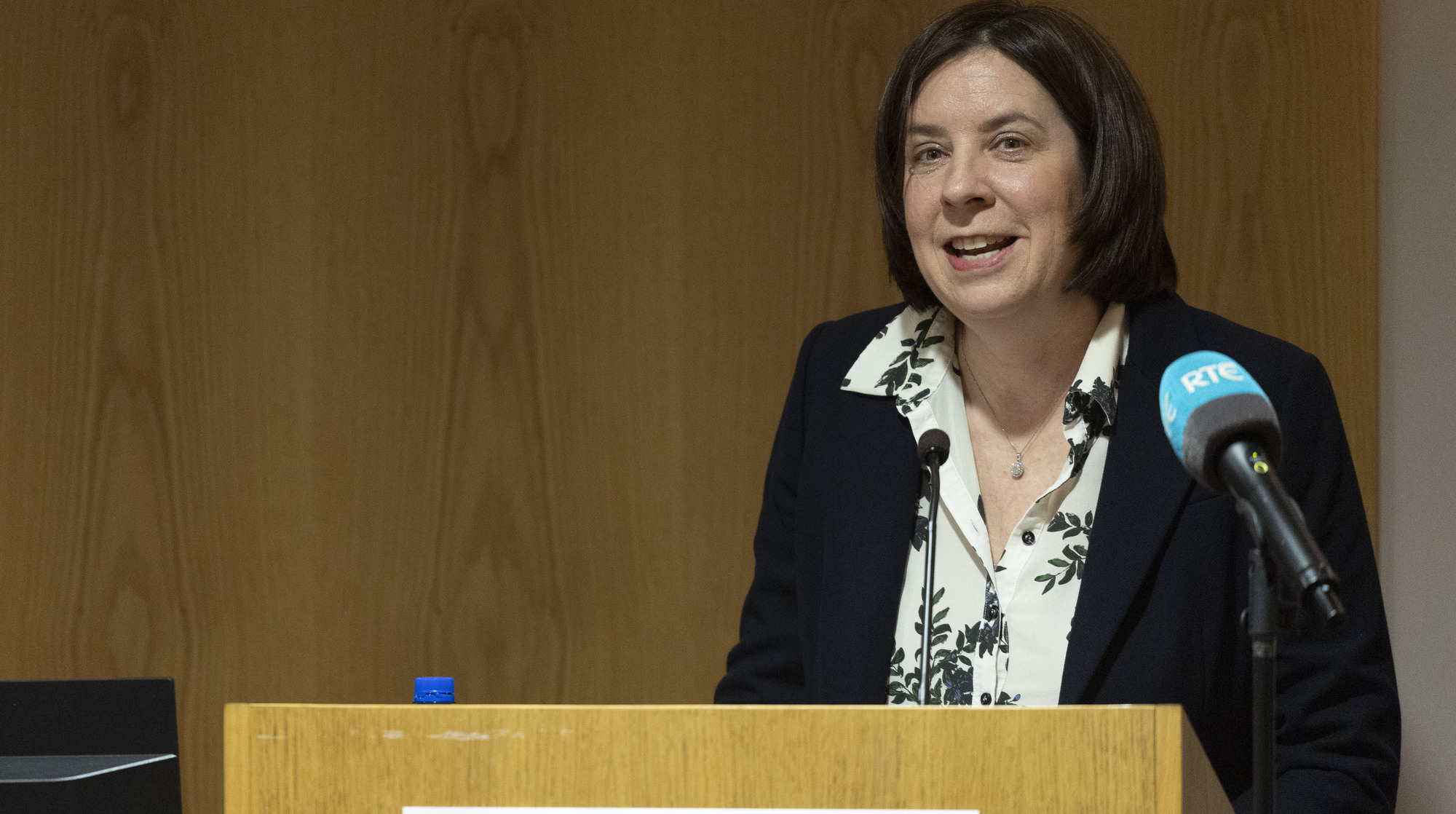
Publishing her office's 2025 annual report, DPP Catherine Pierse said they received almost 17,500 prosecution files last year, compared to nearly 16,600 in 2024. File photo: Sam Boal/Collins Photos
Rising numbers of victims are questioning the decisions of the State prosecution agency not to charge suspects in their cases, according to official figures.
They show that nearly all victims who sought reasons from the Director of Public Prosecutions (DPP) for decisions not to prosecute received a response last year, a marked improvement on the previous two years
The number of victims seeking reviews of DPP decisions is also increasing. While only a small number of reviews resulted in decisions being overturned, the number of successful challenges more than doubled compared with 2024.
Sexual offences account for the highest number of requests for reasons and reviews, followed by non-fatal offences against the person, including assault, harassment, and threats to kill.
Publishing her office's 2025 annual report, DPP Catherine Pierse said they received almost 17,500 prosecution files last year, compared to nearly 16,600 in 2024.
The number of files submitted to the DPP rose steadily between 2016 and 2021, when it peaked at 18,250, before declining over the following three years
Ms Pierse said the “exponential growth” in digital evidence, together with the need to balance fair trial rights, privacy rights, and the interests of victims, has transformed the prosecution landscape.
“During 2025, our office received and reviewed approximately 15 terabytes of evidential material, including mobile phone downloads, CCTV footage, and other digital records,” she said.
The report shows that 14,775 files were disposed of in 2025, compared to nearly 13,830 in each of the two previous years.
Prosecutions were directed in 9,764 of cases (66%) in 2025. This included 4,994 files on indictment in the higher courts and 5,010 files on summary disposal in the district courts.
No prosecution was directed in 4,771 (32%) of cases, compared to 4,599 (33%) in 2024 and 4,669 (34%) in 2023.
The report also shows a rise in the number of victims seeking explanations from the DPP for decisions not to prosecute. Requests for summary reasons increased from 536 cases, representing 11.5% of non-prosecution decisions, in 2023 to 571 (12%) in 2024 and 634 (13%) in 2025.
The DPP declined to provide reasons in just seven cases in 2025, or about 1% of requests, down from around 6% in each of the previous two years.
The office received 245 requests for a review of the decision not to prosecute in 2025 (5% of all such cases). This compared to 219 (4.7%) requests in 2024 and 223 (4.8%) in 2023.
The DPP overturned decisions not to prosecute in 12 cases in 2025, representing 5% of all requests for a review. That compared with five cases (2%) in 2024 and 10 cases (4.5%) in 2023.
Sexual offences was the main category of crimes in relation to both requests for reasons and requests for reviews.
In her foreword, Ms Pierse noted “historically elevated” activity levels in the Central Criminal Court, which deals with the most serious of crimes, such as murder and rape.
The report showed that between 2019 and 2025, the number of Central Criminal Court sitting dates nationally more than trebled from 1,888 to 5,663, with an 8% increase from 2024 to 2025. The number of Central Criminal Court sittings outside Dublin also increased, from 271 sitting dates in 2019 to 867 in 2025.
In Cork, there was an increase from 134 dates in 2023, to 242 in 2024 and 260 in 2025. Both Waterford and Limerick show a similar trend, increasing from around 50 in 2023 to circa 230 in 2025.
- Cormac O’Keeffe, security correspondent
CONNECT WITH US TODAY



Be the first to know the latest news and updates