Public inquiry to consider whether Omagh bombing was a 'joint operation' among dissident republican groups
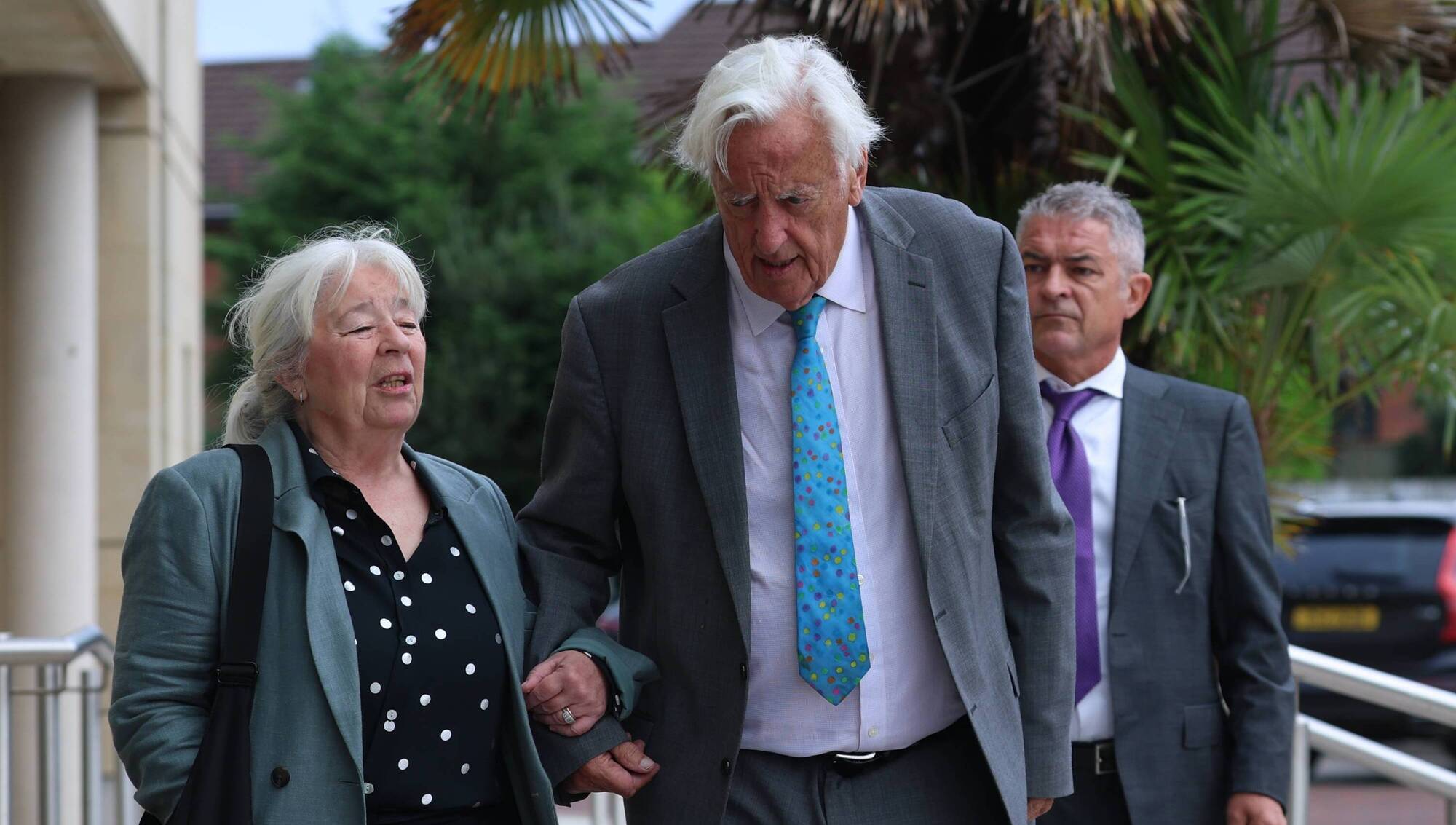
Siobhan Rose, nee Rush, daughter of Elizabeth 'Libbi' Rush, Michael Mansfield KC, and Andrew Rush, son of Libby Rush arriving at the Omagh Bombing Inquiry at Bradford Court in Belfast On Monday. Picture: Liam McBurney/PA
A public inquiry is to consider whether the Omagh bombing was a “joint enterprise” planned and carried out by dissident republican groups the Real IRA and the Continuity IRA.
Paul Greaney KC, lead counsel to the Omagh Bombing Inquiry, said a group of “experienced terrorists” was involved in the plot to bomb the Co Tyrone town in 1998.
He said the group was “motivated by a desire not to get caught” as he began to set out a “working hypothesis” on how the massacre was carried out.
The public inquiry, chaired by Alan Turnbull, has begun its latest stage of evidential hearings in Belfast.
The hearings, which have been delayed for six months, will centre on the period before and after the bombing and will examine how it was carried out and who was responsible.
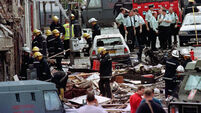
The dissident republican bombing in the Co Tyrone town on August 15, 1998 killed 29 people, including a woman who was pregnant with twins, in the worst single atrocity in the Troubles in Northern Ireland.
The inquiry was set up to examine whether the explosion could have been prevented by British authorities.
Last year, the inquiry heard personal statements from those affected by the massacre.
Read More
Mr Greaney told the inquiry that in the days after the bombing claims of responsibility were made to journalists at RTÉ and The Irish News.
He said the claims of responsibility were consistent with other evidence that dissident group the Real IRA was responsible for the massacre. The barrister said: “But, for the inquiry, that is the start, not the end.”
He referred to the reporting of David Rupert, an FBI and MI5 informant, after the attack that the bombing was a “joint operation” also involving a second dissident group, the Continuity IRA.
Mr Greaney said the source of the information to Mr Rupert was Real IRA leader Michael McKevitt, who was found civilly liable for the bombing.
The barrister said: “The working hypothesis to be considered in more detail in Chapter Three… at an organisational level, both the Real IRA and the Continuity IRA planned and carried out the Omagh bombing.”
Mr Greaney said use of telecommunications and how the suspects communicated by mobile phone would be a key part of evidence in the hearings.
He told the inquiry: “By August 12, 1998, at the latest, a plan was in place for a car to be stolen for use as a vehicle to transport a bomb, and it’s clear that a particular type of car had been identified for that purpose, namely a Vauxhall Cavalier.”
The barrister referred to Colm Murphy — who died in 2023 and had previously been found liable for the bombing in a civil trial — as a central figure in the plot.
He said: “As we shall see, the evidence suggests that Colm Murphy sat like a spider at the centre of the web of the plan to detonate a bomb in Omagh.”
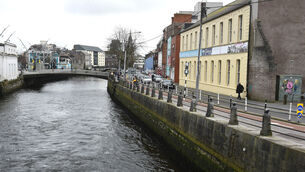
Mr Greaney told the inquiry that a Vauxhall Cavalier was stolen from Carrickmacross in Co Monaghan in the early hours of August 13.
He said the car had been stolen “effectively to order”. He said witness evidence showed it was likely three other Vauxhall Cavaliers on the same street or nearby had been interfered with on the same night.
Mr Greaney said the car was taken shortly afterwards to Dundalk.
He told the hearing: “It was the home town and base of operations of many of those whom the inquiry legal team has identified as being key individuals in this chapter.”
The inquiry was told the car was made available to Seamus Daly “ready to be loaded with a bomb”.
Daly has previously been found liable for the bombing in a civil case.
Mr Greaney told the inquiry that false number plates were quickly fitted to the stolen Vauxhall.
He said: “The fitting of cloned number plates on stolen vehicles used to transport bombs to their place of detonation was a common thread in dissident republican terrorist attacks in the late 1990s in Northern Ireland.
“We’re describing a tactic in which a car would be stolen, and then the number plate for a legitimate vehicle of a similar make, model and appearance would then be manufactured and applied to the stolen vehicle.
“In this way, it was calculated that if the stolen vehicle were to be the subject of a check on police systems, its status as stolen would be less likely to be revealed.
“Those transporting bombs would wish to attract as little attention as possible.
“This tactic, the tactic of using cloned number plates, was part of the terrorist tradecraft.”
The barrister told the inquiry that the dissident republicans who plotted the Omagh attack had been “engaged in a campaign of violence” which had begun months before.
He added: “They were experienced terrorists, and they were motivated by a desire not to be caught.”
Mr Greaney also said there were “sound reasons” to believe Daly was in a scout car which led the bomb into Omagh on August 15, and that Séamus McKenna, who is now dead, was in the vehicle containing the device.
The inquiry heard there were practical reasons for the use of two cars.
Mr Greaney said the scout car provided the means to “get away quickly”.
Later this week the inquiry is expected to hear a pre-recorded witness statement from a senior Garda officer about the theft of the car used in the explosion.
Before the hearing, Michael Gallagher, whose son Aiden was killed in the attack, said: “I think it is important that we do get into the nitty gritty of what happened in the lead-up to Omagh, particularly in the last few days.
“I think it is going to be difficult but hugely important.
“This was a cross-border crime and most of the evidential opportunities lie within the Republic. We welcome the fact that the gardaí are engaging and co-operating with the inquiry.
“We just hope in the end we will get truth and dignity out of this process.”
Claire Hayes, whose brother Alan Radford was killed by the bomb, said the latest hearings had been a “long time coming”.
She said: “This chapter is a pivotal point in the inquiry process. We are now 28 years past the bomb and there has been very little engagement from the south of Ireland.
“I want them to pass on all the knowledge they have.”

CONNECT WITH US TODAY



Be the first to know the latest news and updates