State given until Friday to respond to challenge over Palestinian student's visa refusal
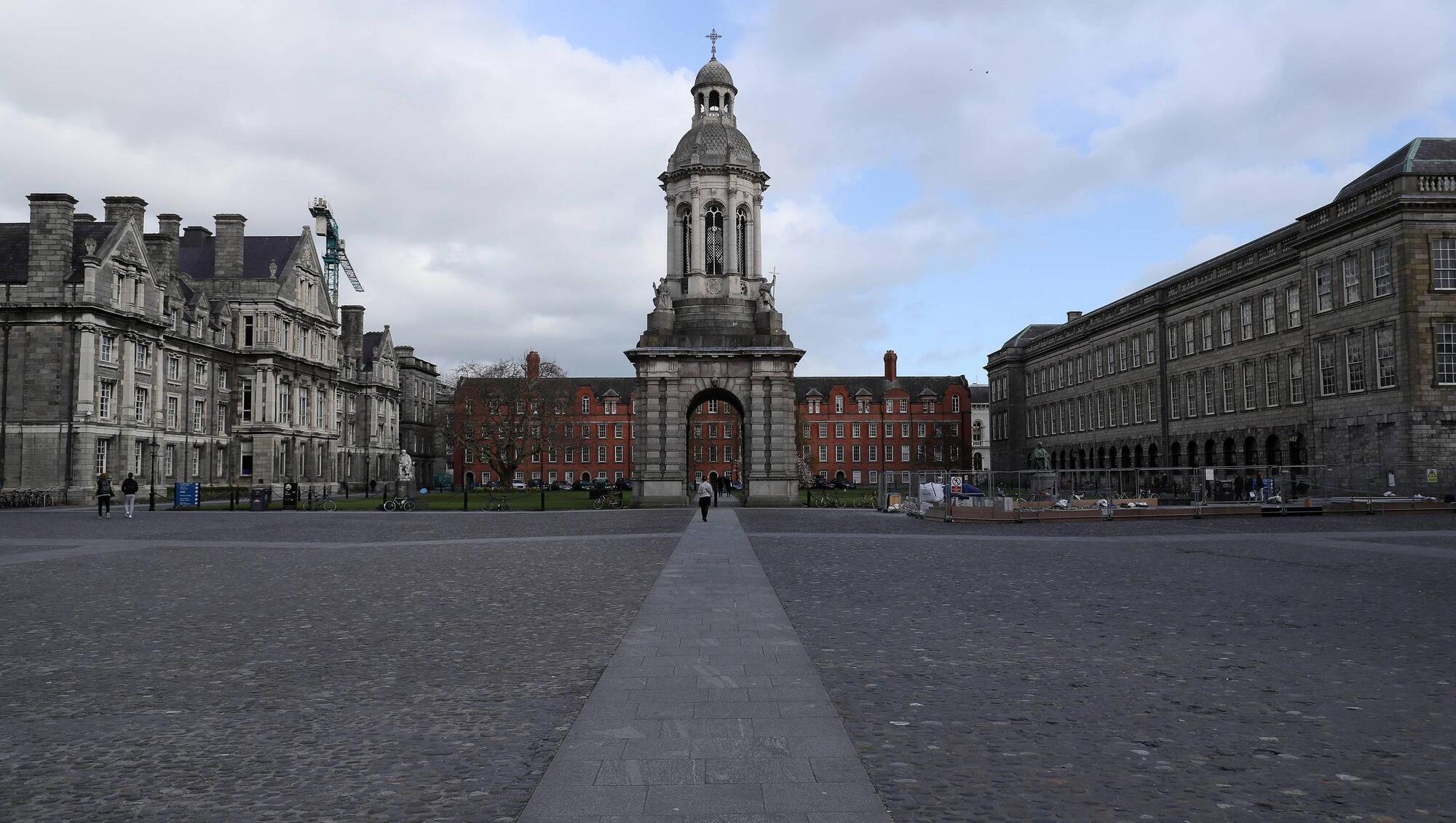
Hafez Alrayyes had been awarded a fully-funded scholarship at Trinity College Dublin, which covered course fees, accommodation, an annual stipend, and welfare supports.
The State has been given until Friday to respond to a challenge relating to its refusal of a visa to a Palestinian student who was granted an Irish scholarship.
The Department of Justice had sought more time to respond to proceedings seeking a judicial review of its decision to deny a visa to Hafez Alrayyes, a 20-year-old Gazan student awarded a fully-funded scholarship to study engineering at Trinity College Dublin.
However, the High Court instead directed that the application for leave to bring judicial review proceedings, and the substantive proceedings, be dealt with together, reflecting the urgency of the case.
The case is being taken by Belfast firm Phoenix Law on behalf of Mr Alrayyes, who was represented in court by Blinne Ní Ghrálaigh KC and Eamonn Dornan BL.
The State, represented by Sarah Cooney BL, was ordered to file its response by lunchtime on Friday, September 25.
A judicial review involves a High Court judge examining the legality of a decision made by a lower court or public body, and involves an auditing of the decision-making process, rather than the substance of the decision.
It does not amount to a re-litigation of a case.
Read More
Mr Alrayyes had been due to begin his course last week but was told in July that his visa had been refused.
His scholarship includes fully-funded course fees, accommodation, an annual stipend, and educational and welfare supports.
Last week, Sinead Marmion, a partner in Phoenix Law who heads the firm’s immigration and asylum department, told the Irish Examiner that the refusal to grant Mr Alrayyes a visa had been based on his inability to provide original documents as part of his visa application.
She said that after almost three years of bombardment of Gaza, the infrastructure for Mr Alrayyes to be able to go to a bank for official statements or to a post office to send documents simply did not exist.
Ms Marmion said a judicial review was being sought on the grounds that the decision to refuse Mr Alrayyes a visa was “irrational, unreasonable, and [failed] to react to the necessary urgency of our client’s situation and [was] discriminatory”.
Mr Alrayyes is one of more than 100 Gazan students who have been refused visas this year, 35 of whom are represented by Phoenix Law and most of whom have lodged appeals.
The Department of Justice said last week that it would not be prioritising visa appeals lodged by Gazan students.
“Visa appeals are dealt with in chronological order to ensure fairness to all applicants,” they said.
“[They] cannot generally be prioritised ahead of others that are awaiting consideration.”
Mr Alrayyes’s case is due to return before the High Court on Monday, September 28, when the State’s response will be considered, with the matter to be reviewed the following day and listed for hearing thereafter.
CONNECT WITH US TODAY



Be the first to know the latest news and updates