Groundbreaking legal victory 'will have profound effect on rights of same-sex couples'
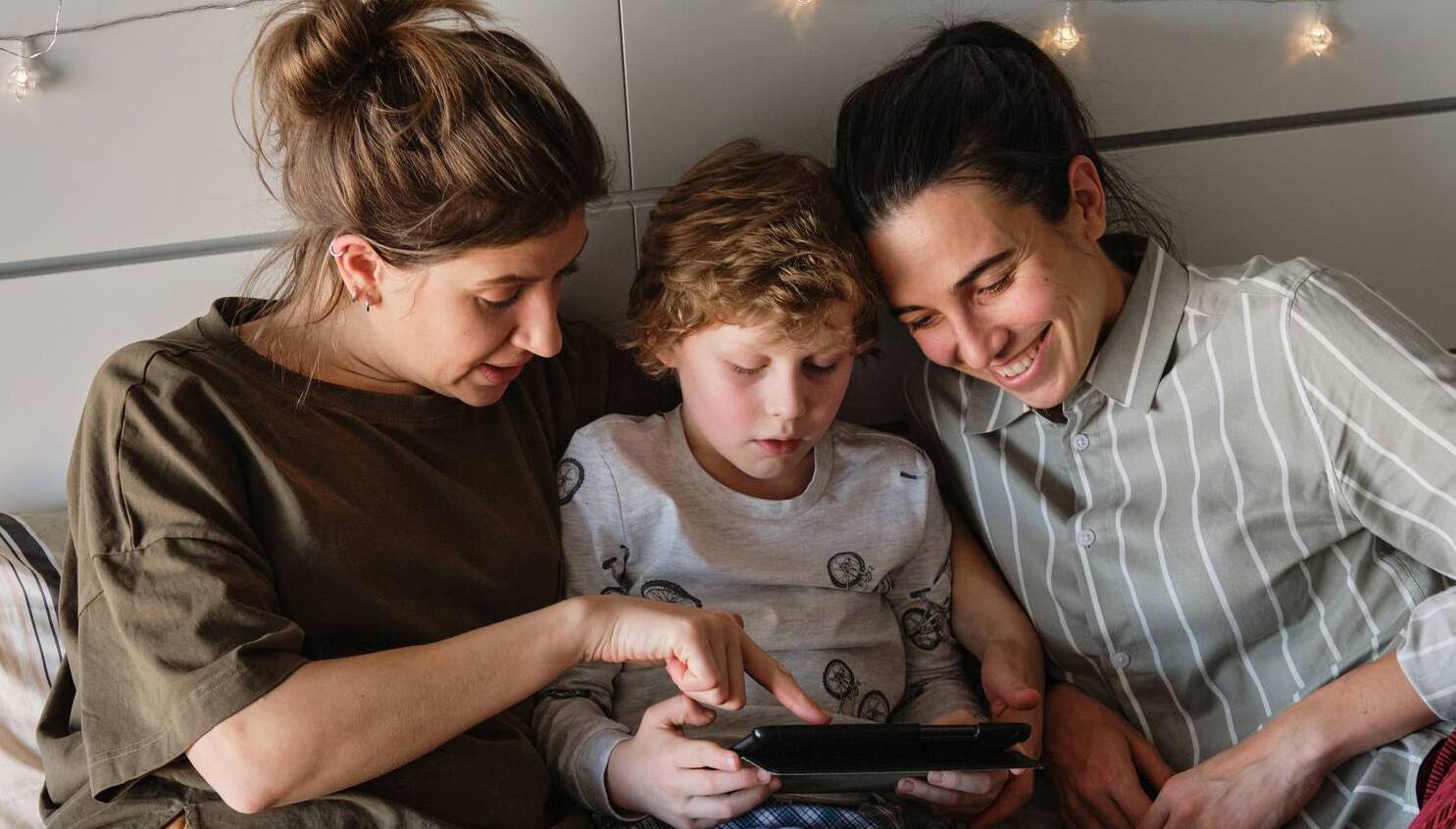
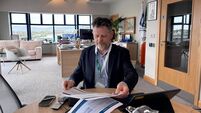
Barrister William McLoughlin told the 'Irish Examiner' the court victory will have huge implications for children of same-sex couples. Stock picture: iStockÂ
A groundbreaking legal victory in the High Court over the rights of four children refused Irish passports will have a âprofound effect on the future rights of same-sex couplesâ.
On Friday, a judge ruled that the State cannot deny passports to the children of same-sex couples involving an Irish citizen living abroad, and there appears to be a gap in the law.

The judicial review concerned the entitlements of four children in two families, where one parent is an Irish citizen â known as Ms X and Ms Y.
The two female couples who took the case are legally recognised as the childrenâs parents in Australia and Spain, where they were born using donor assistance.
In her judgement, Justice SiobhĂĄn Phelan said she was satisfied that âthe absence of a legislative pathway providing for the acquisition of citizenship by the children of an Irish citizen domiciled or habitually resident abroadâ was a âfailure on the part of the State to vindicate constitutional rightsâ.
Speaking to the , one of the barristers involved for the families said the victory will have huge implications for children of same-sex couples.
William McLoughlin, who represented the couples alongside Conor Power SC, said: âThis is a great day for equality in Ireland.
âAlthough we have had marriage equality, it is still not full equality amongst all married couples.
âThis is a great step forward: The parents of the children have won their challenge that it is unconstitutional to deny them Irish passports.
âIt is unfair treatment of children, and it is not equal.
âThis is going to have a profound effect on many other same-sex families, and it could be the tip of iceberg.â
Both families, who are unrelated and cannot be named for legal reasons, took a case against the minister for foreign affairs and the Attorney General, which was heard in December.
According to the judgement, both couples in Australia and Spain have two children each.
The entitlement to a passport in Ireland is based on the correct interpretation of "parent" for the purpose of an application under Section 7 of the Irish Nationality and Citizenship Act 1956 (as amended in 2001).
This provides for the conferral of citizenship by descent where a parent is an Irish citizen.
Under Section 7 (1) of the 1956 Act, âparentsâ of a child born outside Ireland, are either the childâs mother or gestational mother, or the childâs biological father.
In the case of all four children, the Department of Foreign Affairs refused to issue them with Irish passports â even in the case of the Spanish-born child where the Irish citizen (Ms Y) in the same-sex couple is also the biological mother.
In her judgement, Justice Phelan said: âProvision is made under Irish law, pursuant to the provisions of the Children and Family Relationships Act, for the recognition of non-genetic mothers as parents where the birth of the child occurs in the State following donor-assisted human reproduction procedure (DAHR).
âSeparately, parental recognition may be granted prospectively by court order in respect of procedures carried on outside the State, where the child is born in the State, in prescribed circumstancesâ.
However, Justice Phelan added there is âno provisionâ legally that allows for parental recognition âin a manner which recognises parentage from birth in the case of children born outside the State following DAHR carried out in accordance with the law of the child's domicile and recognised under that lawâ.
In the case of the children born in Australia, the judgment said the Irish woman (Ms X) who lives in New South Wales, entered a same-sex relationship in 2005. Two children were born via four artificial inseminations from a sperm donor following an embryo transfer in 2011 and 2014 in Sydney.
The sperm donor in the case of both children was the Irish citizen's brother who complied with all clinic requirements with respect of sperm collection.
The eggs were provided by the Irish womanâs Australian partner who was also the birth or gestational mother.
Ms X is recognised as their legal parent under Australian law and named as their "parent" on both their birth certificates.
In October 2017, Ms X applied for Irish passports for her sons. The following month the family received a letter from the Department of Foreign Affairs denying them the passports.
The Department said it does not recognise the Irish woman as being a "mother" or "parent" to either of her sons, and could not claim citizenship or an Irish passport via descent.
In the case of the family in Spain, Ms Y is an Irish citizen and moved to Spain in 2011 where she entered a same-sex relationship with a British citizen and the couple married.
Their first son was born following artificial insemination of Ms Y wife's embryo ("the genetic mother") by an anonymous sperm donor and implantation of the fertilised embryo into Ms Y, the "gestational mother".
Ms Y physically gave birth to her first son. Both mothers are registered on their son's Spanish birth certificate as "Mother A" and "Mother B."
In 2016, Ms Y and her wife applied for an Irish passport for their older child, and Ms Y was advised by the Department of Foreign Affairs that for the purposes of Irish law, she was the sole guardian of the first son and only her consent was required.
The Department of Foreign Affairs later refused to grant passports for both children.Â