Mick Clifford: Why the Enoch Burke saga is bigger than one teacher or one school
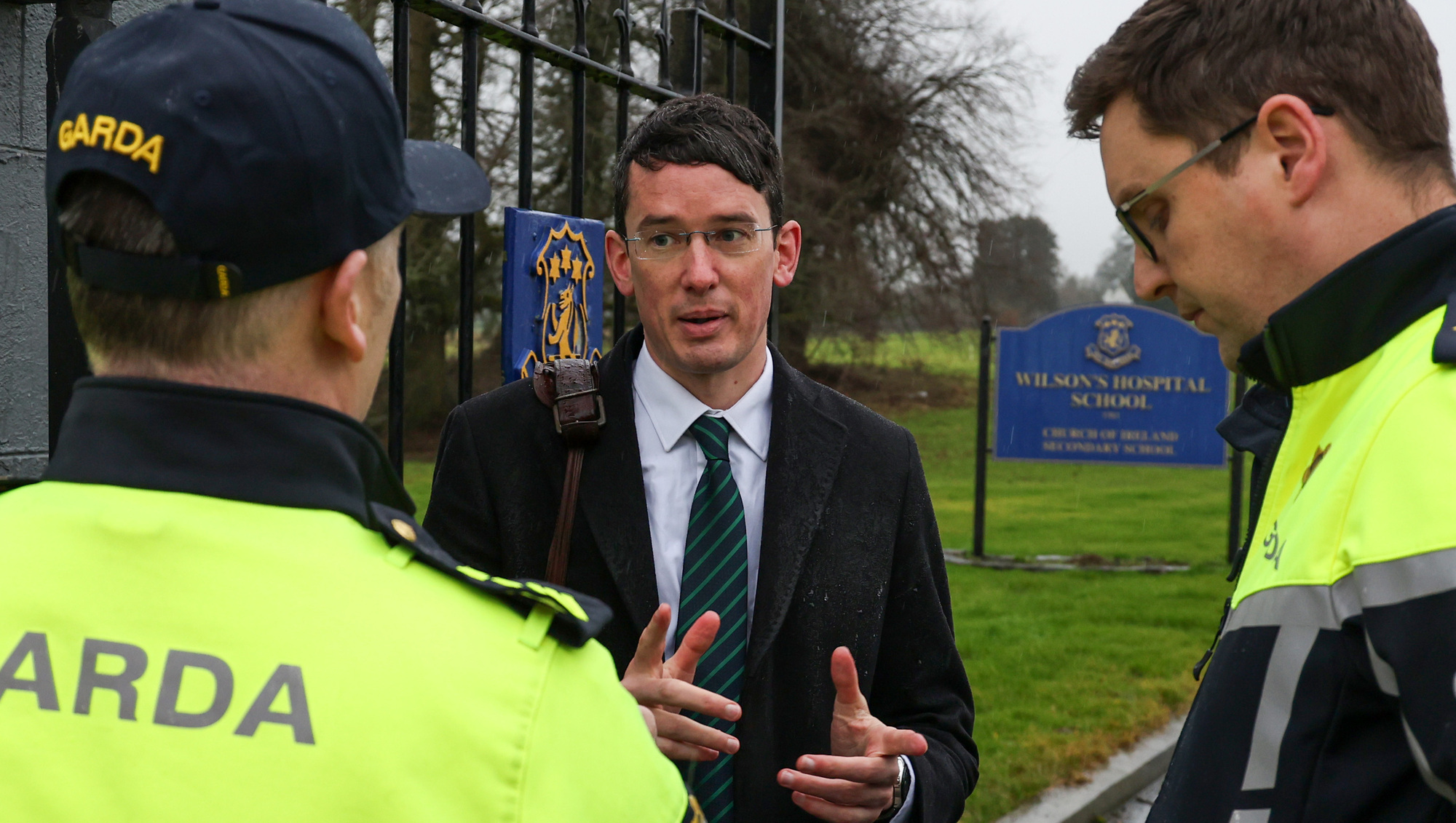
Enoch Burke being arrested at Wilson’s
Hospital School in Westmeath on Monday morning after he arrived there in defiance of a High Court order.

Let’s give Trump a wide berth for a column. He is sucking enough oxygen out of the atmosphere, as he increasingly regresses to the mentality of a five-year-old. Give him Greenland in a baby bottle, it might keep him quiet for a few hours.
Instead, take a look at another person who is causing consternation of a different hue over the last few years, Enoch Burke.
This week saw developments that throw his case into a stark light, and may well present some serious headaches for the education system in general.
Today he languishes in a prison cell, defying the law, contributing to the overcrowding of the penal system.
Different judges have attempted to give him a way out with dignity but he has spurned them all.
He claims he is being penalised for refusing, on religious grounds, to use a student’s preferred pronouns in the school where he taught. Judges and others have pointed out that is not the case. His alleged transgression was harassment of the school principal and associated behaviour. After that, he repeatedly refused to obey the law as handed down by the High Court.
But what of his contention? What if this issue was, legally, all about his right to refuse to use a child’s preferred pronouns on the basis of his religion?
In recent days it emerged in the pages of that schools are not legally obliged to address a student by their preferred pronouns. That was in response to news of a guide issued by the Irish Council for Civil Liberties that suggested there was such a legal obligation.
The ICCL guide states: “According to Department of Education guidelines, your school must make every effort to update your name and pronoun in relevant systems and documents. It must also use your correct name and pronoun in day-to-day interactions...
“If you feel that your school is discriminating against you because you are trans or non-binary, you and your parent(s) or guardian(s) may choose to take a complaint to the WRC.”
Yet the department told the newspaper there is no such obligation and the department did not issue guidelines as suggested by the ICCL.
Instead, the paper reported, the department has advised schools that there is “nothing to preclude them” from using a student’s preferred pronouns if they decide to do so in consultation with parents and the student.
As far as the department is concerned, this is a policy matter for individual schools. What then of the legal rights of a teacher who believes he or she is being discriminated against under the Employment Equality Act? What happens when a teacher’s rights are pitted against a policy that is formulated by stakeholders in the school?
The teacher has a right to refuse to engage in any act that is contrary to their religion, as long as doing so is not breaking the law. And the department is now saying there is no such law.
Take Burke. He is quite obviously religious and does not believe in the concept of gender dysphoria. There is every possibility that the law is on his side in terms of his employment rights. If he had, for instance, made his case to the school first and thereafter to the courts, it now appears he would have won.
He could have made a serious point, and given ballast to what he apparently views as a moral issue in society. Instead, he presented himself as somebody whose beliefs supersede the law that the rest of us are obliged to observe. For that reason, he deserves little sympathy.
Beyond Burke though, what has emerged this week throws up some other issues.
The ICCL guide cost €18,500 and was commissioned by the Irish Human Rights and Equality Commission. It now looks like money badly spent at a time when there are all sorts of abuses of human rights in society, not least towards sections of immigrants and prisoners who are being detained in inhumane and degrading conditions.
The details of the policy document were put together by TENI, Transgender Equality Network Ireland.
TENI frequently sends people into media organisations to instruct how matters around gender dysphoria must be reported. Yet TENI has always refused to engage in any public discussion, claiming any such discussion questions the rights of trans people to exist. This is simply not the case.
It might well be posited that the approach of the organisation, and some others of a like mind, does little to elicit empathy among the general population for teenagers who are questioning their gender.
As for the department, it might be asked why it has not issued guidelines.
What will now happen in schools if, for instance, a teacher claims they don’t want to address a student by preferred pronouns due to religious beliefs, even if it’s common knowledge that the teacher in question is a committed atheist?
What if a group of parents demand a change of policy in this area, particularly in a school under religious patronage, on the basis that there are no national guidelines?
Perhaps department officials, probably taking a lead from their political masters, have decided it’s best to stand aside on an issue that appears to inflame passions among a vocal, if loud, minority.
That is, by any standards, a cop-out that conveniently ignores what can be painful for students who experience, or even witness, matters around gender identity. It fails to recognise that there is, on the populist right, an element that jumps on this issue as if it is a central tenet of some woolly “woke” culture to be attacked.
What has developed in this sphere is shouting and roaring from two opposite sides who view gender questioning through an absolutist lens, with a complete absence of any self doubt.
The noise that is created was referenced on by Donal O’Shea, a consultant endocrinologist who has been working in trans healthcare for the last 30 years.
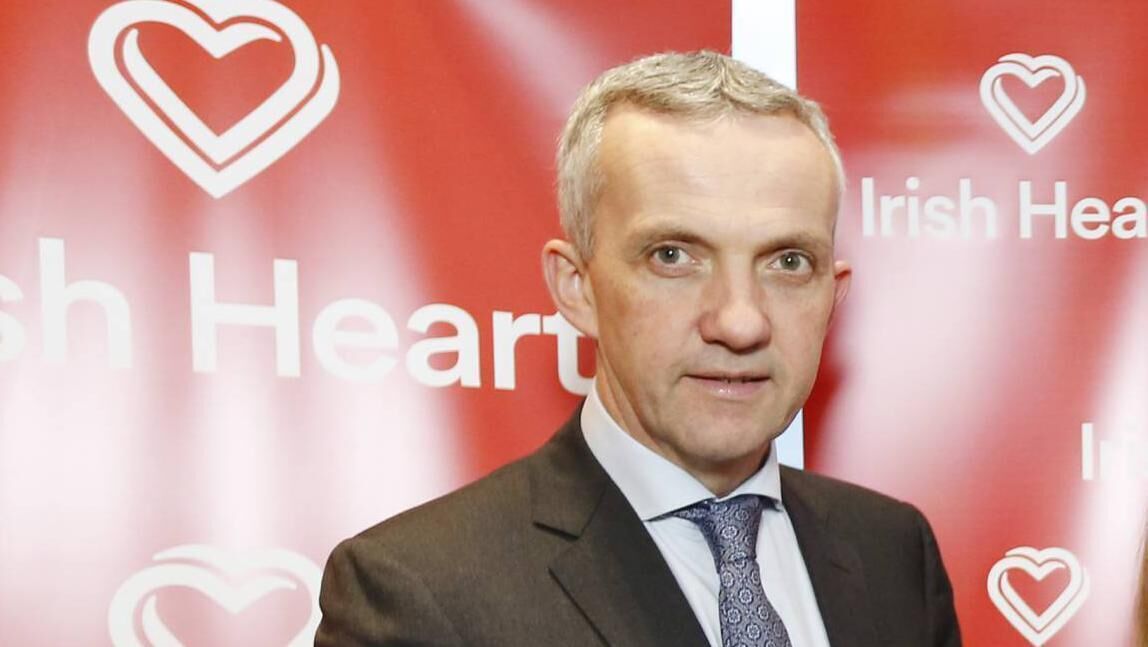
Dr O’Shea said there has been an explosion in gender questioning among young people since 2010, and anytime you put “must” in this area it will cause problems.
“You have to be very careful that the rules you introduce don’t force an individual who is gender questioning to make a firm stand on something they haven’t made their mind up on,” he said.
“The vast majority of people who are gender questioning who I deal with will not be in the activist space pushing legislation.
Instead of this issue being viewed through respective lenses — as either a significant staging post in the quest for universal civil rights or an exhibit of so-called woke culture gone mad — maybe everybody could step back and listen to somebody like O’Shea who deals with the human reality.
Maybe, for a change, and in contrast to prevailing trends, it might be a good idea to defer to the experts and elevate above politics and anger the welfare of individual young people living in a harsh world.

CONNECT WITH US TODAY



Be the first to know the latest news and updates