Ulster Bank to appeal High Court compensation ruling for tracker mortgage customers
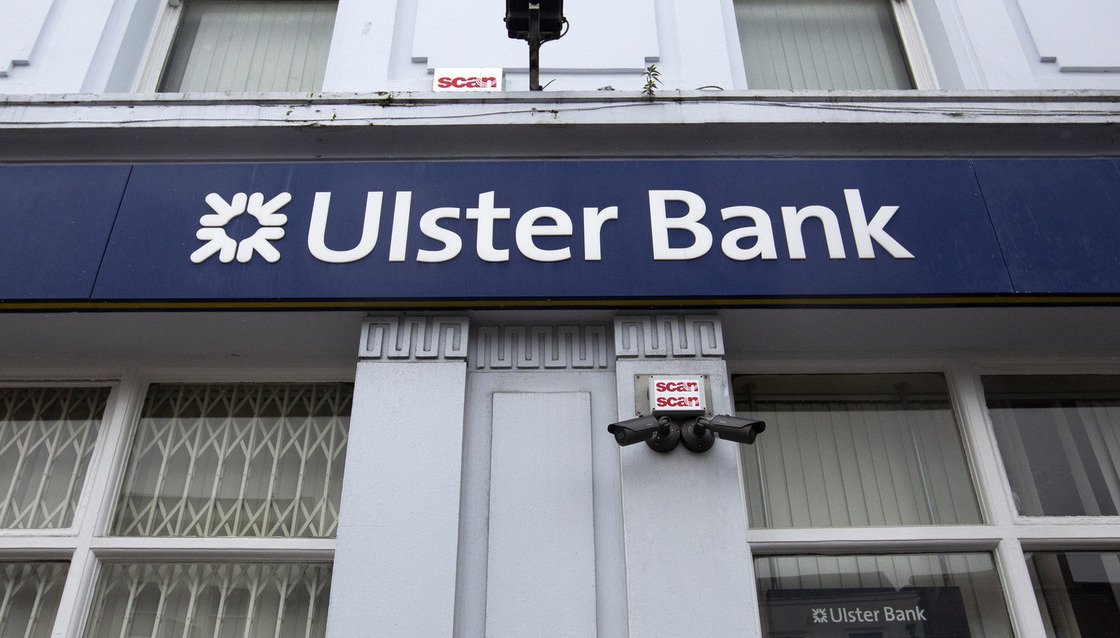
Ulster Bank had sought to persuade the Supreme Court there were “exceptionally pressing and urgent” circumstances in light of its withdrawal from the Irish market. File photo: Sam Boal / RollingNews.ie
An appeal by Ulster Bank against a High Court ruling that upheld the entitlement of two home loan borrowers to tracker mortgage refunds and compensation will go ahead before the Court of Appeal next year.
The setting of the hearing date comes after the Supreme Court turned down the possibility of a leapfrog appeal and said a decision by the appeal court will likely refine and clarify elements of the dispute. The ruling of the appeal court could have implications for other tracker mortgage customers.
Ulster Bank had sought to persuade the Supreme Court there were “exceptionally pressing and urgent” circumstances in light of its withdrawal from the Irish market.
At least 5,300 loan accounts may be affected by the appeal, with other lenders potentially affected as well, the bank submitted. Whatever the Court of Appeal decides, the lender said, there is likely to be a further appeal to the Supreme Court anyway.
The High Court last June dismissed the lender’s appeals against the Financial Services and Pensions Ombudsman’s (FSPO’s) binding decisions that two borrowers were entitled to tracker mortgage refunds and compensation.
Ms Justice Bolger said she could uphold the findings of the FSPO on the basis that the bank’s conduct was contrary to its contractual and consumer-protection obligations.
The ombudsman, represented by Eileen Barrington SC and Francis Kieran BL, opposed the bank’s application for an appeal to the Supreme Court, submitting that the High Court’s ruling concerned discrete and specific contractual wording. Many of the bank’s points are “far removed from matters of general public importance”, the ombudsman added.
A panel of three Supreme Court judges said Ulster Bank put forward an important issue that has never been addressed by the highest court regarding whether and to what extent a court hearing an appeal from the FSPO (or other non-judicial adjudicative body) should defer to the FSPO’s construction of a contract.
However, this is not enough to meet the “exceptional circumstances” threshold for an appeal straight from the High Court to be granted. In fact, the judges said, the circumstances “weigh decisively against” a so-called leapfrog appeal.
A second issue raised by the bank, which arises in specific facts and circumstances, would benefit from a clarifying decision in the Court of Appeal. The issues “may well present differently” if one of the parties looks to appeal from the court, the judges said.
If the bank was permitted to directly appeal to the top court on one important issue, its wider appeal would be split in two, with part of it being pursued before the Court of Appeal.
“Such a scenario would not be in the interests of the parties or the wider public interest,” said Ms Justice Marie Baker, Mr Justice Gerard Hogan and Mr Justice Maurice Collins in their determination. The Court of Appeal has listed the appeals for February 26 and 27 next.
They relate to cases brought before the ombudsman by two sets of borrowers who were excluded from redress in an industry-wide mortgage tracker controversy examination overseen by the Central Bank between late 2015 and mid-2019. More than 40,000 cases of overcharging were identified across Irish lenders during this process.
In one of the cases before the FSPO, two borrowers who in 2006 signed a so-called flexible mortgage transfer form, entitling them to move on to a tracker loan.
When European Central Bank rates were rising, in mid-2007, the pair applied to fix their interest rates until August 2010. Their loan documents said the bank may offer to extend the fixed period or offer “alternative available products”.
After the fixed-rate period, the borrowers sought to revert to their previous rate but the bank refused as it had stopped offering this rate to new customers in 2008.
In her ruling last June, Ms Justice Bolger said the bank never explained that the tracker rate might not be available when the fixed-rate period ended. The ombudsman was entitled to decide that the borrowers’ contractual entitlement to the tracker rate continued at the time they opted to fix their rate, she found.
CONNECT WITH US TODAY



Be the first to know the latest news and updates