Jozef Puska 'admitted to murder', Ashling Murphy murder trial told
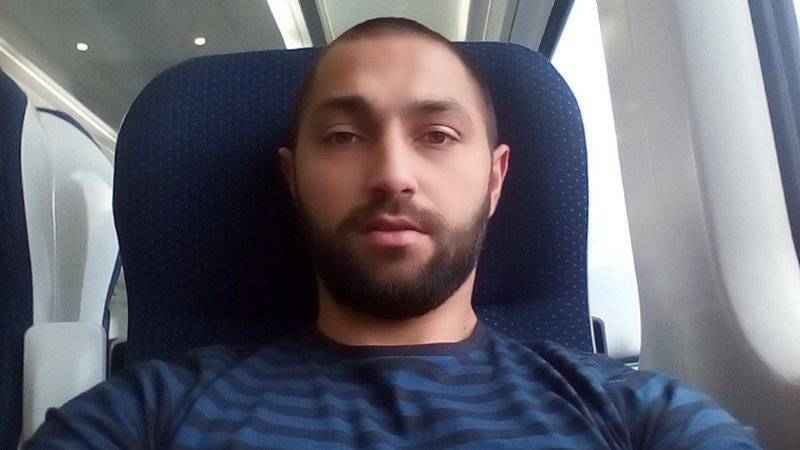
The prosecution told the jury on Tuesday that Jozef Puska (pictured) had told a garda: 'I didn't do it intentionally, I feel guilty and I am sorry.'
Jozef Puska "admitted to murder" when gardaí investigating the death of Ashling Murphy spoke to him two days after the 23-year-old schoolteacher was found dead beside the Grand Canal in Tullamore, a barrister has told the Central Criminal Court.
Anne-Marie Lawlor SC opened the case on Tuesday morning for the prosecution before a jury of three women and nine men at the Central Criminal Court. She said that the evidence will show that Ms Murphy suffered 11 stab wounds to the right side of her neck while she was out for a run after work on January 12 last year.
Ms Lawlor said a scientist from the Forensic Science Laboratories will give evidence that Y-STR DNA matching Mr Puska's DNA was found under Ms Murphy's fingernails. She said the prosecution will also rely on CCTV which she said shows Mr Puska in Tullamore in the hours before Ms Murphy died, cycling slowly in close proximity to two other women.
She said that Mr Puska's "distinctive" bicycle was found at the scene where Ms Murphy's body was found. There will also be evidence, she said, that Mr Puska had cuts and scratches on "every exposed part of his body" which she said are consistent with him leaving the scene of the killing through the thick briars that surround the canal.
That was "the only way to leave without being apprehended by people on the canal who had come across Ashling's body," counsel said.
Two days after Ms Murphy's death, gardaí spoke to Mr Puska at St James's Hospital in Dublin. He was there with stab wounds to his abdomen which he had said he suffered when he was attacked in Blanchardstown the previous evening. Mr Puska's claims about being stabbed were "a pack of lies", Ms Lawlor said, designed to conceal the truth of Mr Puska's involvement in murdering Ms Murphy.
While in hospital, Ms Lawlor said Det Gda Brian Jennings spoke to Mr Puska with the aid of a Slovakian interpreter who was on loudspeaker on the garda's phone. Ms Lawlor said the interpreter told gardaí that Mr Puska "wants me to translate word for word what he is about to say."
The interpreter then translated: "I did it, I murdered, I am the murderer," Ms Lawlor said. Counsel added that Mr Puska continued:
Ms Lawlor said this was Mr Puska "accepting responsibility for having murdered Ashling Murphy" and she later said that he had "admitted to murder".
In a further exchange with Detective Garda Fergus Hogan, Ms Lawlor said the accused told the garda in English that he was "sorry" and that he had never seen "the girl" before. He also said that he had a knife that he used for the chain of his bike and "when she pass, I cut her neck, she panic, I panic. Will I go for 10 years?"
Ms Lawlor said the cause of Ms Murphy's death had not been disseminated and Det Gda Hogan did not know that she had been stabbed in the neck. She added: "The murderer knew, Mr Puska knew, and he told Det Gda Hogan how he affected her death."
When Mr Puska was questioned at Tullamore Garda Station following his arrest on January 18 last year, Ms Lawlor said he told gardaí: "I didn't see her, I don't know her. I never saw her, first on this picture. I have never known her."
Ms Lawlor said the evidence in the case will satisfy the jury that Mr Puska was the person who killed Ashling Murphy. She added that the 11 stab wounds to the right side of her neck leave "no other inference but that the person who did it intended to kill her or cause her serious injury."
Ms Lawlor explained to the jury that her opening speech is not evidence but a "roadmap so you are not sitting there, listening to witness after witness without any idea of how it all knits together." She said the evidence will consist of "different and diverse strands that we say will allow you to come to a verdict of guilty against Mr Puska."
Ms Lawlor said Ashling Murphy was 23 years' old, from Tullamore, and working as a primary school teacher in Durrow at the time of her death. She went to the canal, near her home in Tullamore, to exercise after work and was killed at about 3.30pm.
Ms Lawlor said the jury will not hear much more about Ms Lawlor or those she left behind because the focus of the trial will be on Mr Puska and "what we say is the commission of the murder by him".
She said Mr Puska is from Slovakia and therefore required an interpreter in some of his interactions with gardaí. There was "no connection directly or indirectly of any kind" between Ms Murphy and Mr Puska.
Ms Murphy was killed on a stretch of the canal where there is a concrete path alongside a grass ravine that is covered in briars, thorns and brambles. That will be significant, counsel said, because Mr Puska had "cuts pretty much on every exposed part of his body — his hands, legs, face and head" consistent with him leaving the scene through those brambles.
That was, Ms Lawlor said, "the only way to leave without being apprehended by people on the canal who had come across Ashling".
Nobody witnessed the commencement of the attack, Ms Lawlor said, but two people came upon the scene. She said they will describe the features and demeanour of the "lone assailant" who had attacked Ms Murphy. Other witnesses will describe persons of note they had seen shortly before the stabbing near the canal.
In the aftermath of the killing, gardaí quickly turned to CCTV in their investigation and took witness statements from people at or near the scene. One person was identified and arrested but later released when the evidence showed he had no involvement in the offence.
As the investigation unfolded, Ms Lawlor told the jury a post mortem revealed Ms Murphy suffered 12 sharp force injuries, 11 of which were stab wounds to the right side of the neck. There were other injuries that may be defensive injuries, counsel said.
Ms Lawlor said the jury will be asked to decide "who did this" but for a finding of murder, they must also be satisfied that the killer intended to kill or cause serious injury. Ms Lawlor explained the law allows a jury to find that a person intends the natural and probable consequences of their actions.
Counsel added: "She was stabbed 11 times to the right side of her neck, there is no other inference to draw but that the person who did it intended to kill her or cause her serious injury."
Beside Ms Murphy's body, gardaí found a bright green Falcon Storm mountain bike. Ms Lawlor said it is accepted the bike belonged to Mr Puska and it is the prosecution case that Mr Puska could be seen earlier on the day of the killing cycling the same bicycle around Tullamore. She said Mr Puska's DNA was found on the handlebars and his fingerprint on the saddle.
DNA samples were taken from Mr Puska and from under Ms Murphy's fingernails. The material from Ms Murphy's fingernails provided a Y-STR DNA profile which matched Mr Puska, counsel said.
She explained the chance that the DNA under Ms Murphy's finger nails belonged to anyone other than Mr Puska is one in 14,000.
CCTV evidence, Ms Lawlor said, will show that at 12.25pm, roughly three hours before Ms Murphy suffered her injuries, Mr Puska can be seen coming from the direction of his home in Mucklagh cycling his bicycle. She described an "aimless, meandering" for much of the afternoon but on two occasions counsel said the jury will see Mr Puska "in close proximity" to two women.
She said the jury will see Mr Puska "cycling in close proximity in a particular way" behind the first woman until she went into a shop "blissfully unaware of anyone being behind her".
The second woman, counsel said, became "aware that a fella was cycling behind her very slowly" and she altered her movements. That witness will tell the trial the man stared at her and, having altered her movements, she later saw the same man at the canal at 14.17, Ms Lawlor said.
The next sighting of Mr Puska on CCTV, counsel said, shows him going back in the direction he had come earlier at about 8.55pm that evening.
In the early hours of the following morning, CCTV at the entrance to Mr Puska's parents home on Armagh Road in Crumlin, south Dublin, will show Mr Puska walking in through the external front door having "fled Tullamore", counsel said.
Ms Lawlor asked the jury to note the CCTV shows Mr Puska had a beard and was walking "perfectly naturally and apparently without any difficulty whatsoever".
He is seen again from the same CCTV camera at 11.56am the following day, when members of a Dublin ambulance crew removed Mr Puska from his parents' home. Ms Lawlor said Mr Puska can be seen "clean shaven" as he is wheeled out on a gurney.
Mr Puska said he had been stabbed in Blanchardstown the previous day and was taken to St James's Hospital for treatment. There had been a stabbing in Blanchardstown the previous day and investigating gardaí came to St James's to speak to Mr Puska.
What he said did not accord with what they understood about the incident in Blanchardstown, Ms Lawlor said, and when Mr Puska told them he had come to Dublin from Tullamore the previous day, they contacted their colleagues in the Midlands.
Det Gda Brian Jennings from Tullamore spoke to Mr Puska twice the following day using the aid of an interpreter who was on loudspeaker on the garda's phone. On the second occasion, Ms Lawlor said the interpreter told detectives that Mr Puska "wants me to translate word for word what he is about to say".
The translator then interpreted Mr Puska saying: "I did it, I murdered, I am the murderer." He said he "didn't do it intentionally, I feel guilty and I am sorry".
Ms Lawlor said this was Mr Puska "accepting responsibility for having murdered Ashling Murphy''.
Having "admitted to the murder" Ms Lawlor said the accused then told Det Garda Fergus Hogan in English that he was sorry, adding: "I’m family, five kids, I see girl I never see before, I have knife I use for chain, when she pass I cut her neck, she panic, I panic. Will I go for ten years?"
She said Mr Puska also pointed at his stomach where there had been "this apparent stabbing" and said: "I do this."
For operational reasons, gardaí had withheld Ms Murphy's cause of death, counsel said. But Mr Puska told Det Garda Hogan: "I cut her in the neck". Until that time, Det Garda Hogan did not know the cause of death but, Ms Lawlor said, "The murderer knew. Mr Puska knew and he told Det Gda Hogan how he had affected her death."
Mr Puska remained in St James's Hospital until January 18 when he was arrested and taken to Tullamore Garda Station. While there he was interviewed. Ms Lawlor said that "notwithstanding what he told gardaí on January 14", when shown a photograph of Ms Murphy, the accused said: "I didn't see her, I don't know her, I never saw her. First on this picture. I have never known her."
Ms Lawlor said the summary of the evidence is simple. Mr Puska left his bicycle beside the body, his DNA is under Ms Murphy's fingernails. She said the only way to get from the canal without meeting other people was through the undergrowth, which caused him to suffer the cuts and scratches observed by gardaí.
Mr Puska then "fled to Dublin, to his parents' house", Ms Lawlor said, and "fabricated a story, made up a pack of lies" about being stabbed in Blanchardstown "to conceal the truth relating to the offence".
Ms Lawlor asked the jury to use their common sense when considering Mr Puska's admission to murder in hospital and the fact Mr Puska "confessed to it with a level of detail attendant on that person knowing exactly what happened at 3.30pm on January 12th at Cappincur".
She concluded: "All that evidence will allow you to be satisfied that the burden is discharged and that you can be satisfied that Mr Puska did commit the offence with which he is charged."
A jury of three women and nine men was sworn in on Monday to hear the trial, one year and nine months after 23-year-old Ms Murphy is alleged to have been murdered near the Grand Canal in Tullamore.
Jozef Puska, 33, with an address at Lynally Grove, Mucklagh, Co. Offaly, has pleaded not guilty to murdering Ms Murphy at Cappincur, Tullamore, Co Offaly on January 12, 2022.
The trial is continuing before the jury and Mr Justice Tony Hunt.


CONNECT WITH US TODAY



Be the first to know the latest news and updates