Man who stabbed fisherman 40 times in cocaine row jailed for 10 years
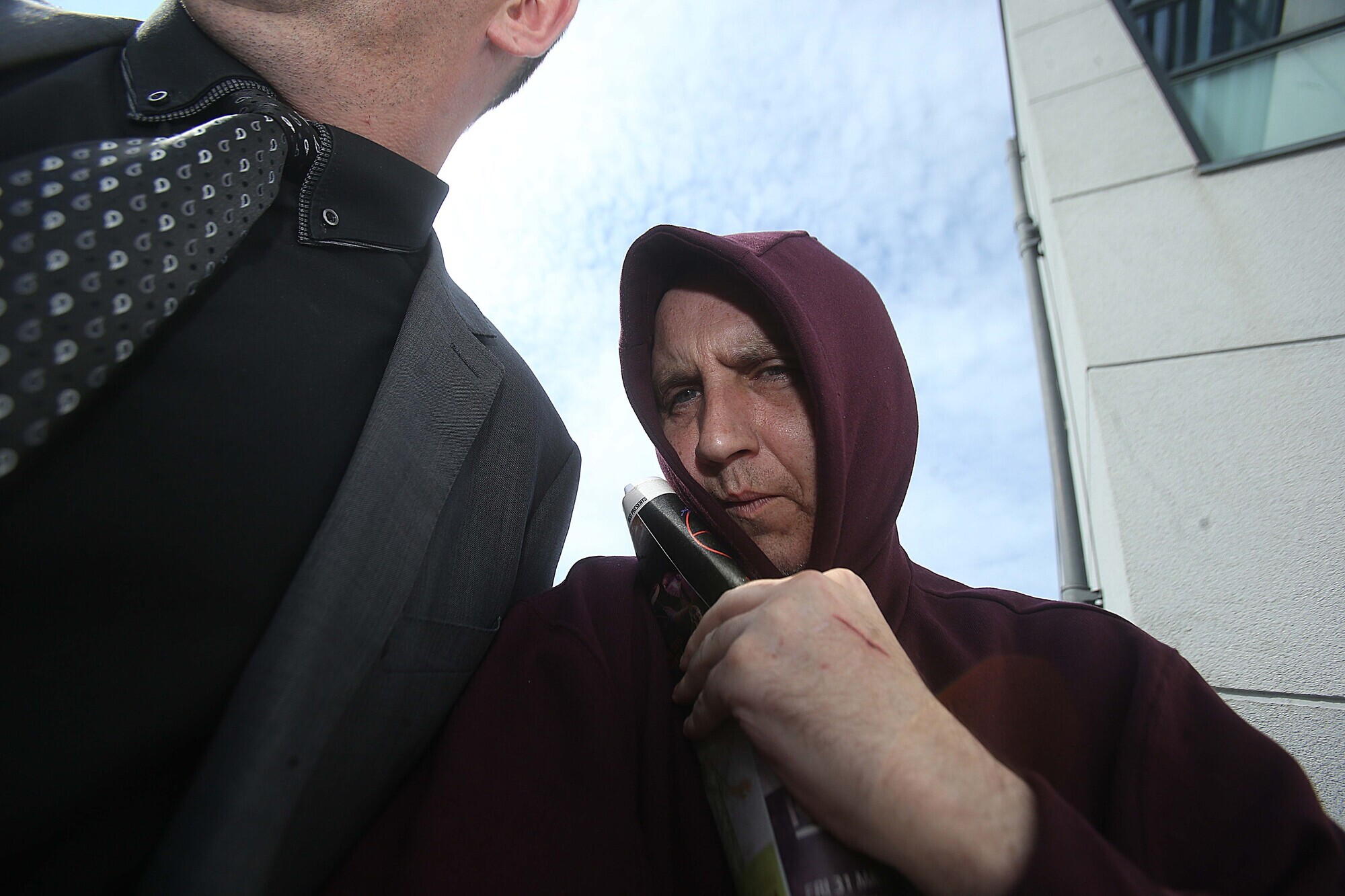
Darren Houlden, aged 44, with an address at The Crescent, Meadowvale, Arklow, Co Wicklow, was found not guilty of murder but guilty of manslaughter. Picture: Collins Courts
A man who was wearing blood-stained clothes and carrying a knife when he walked into a garda station and admitted to stabbing a fisherman 40 times after a row over missing crack cocaine has been jailed for ten years for manslaughter.
As trial judge Ms Justice Carmel Stewart was expressing her condolences to Stephen "Apples" Kavanagh's family, the deceased's sister, Kim Kavanagh, stood up and held a framed picture of her brother to the courtroom saying: "That's my brother who was hacked to death 40 times and had his throat cut by him."
The judge went on to explain to the deceased's sibling that there were "a myriad of factors" that the court was obliged to consider. However, Ms Kavanagh said in reference to a possible earlier release of the accused: "My brother's life is worth seven years. We will be appealing so don't worry."
Following a trial at the Central Criminal Court last December, Darren Houlden, aged 44, with an address at The Crescent, Meadowvale, Arklow, Co Wicklow, was found not guilty of murder but guilty of the manslaughter of Mr Kavanagh, aged 37, at the same location in the early hours of May 6, 2019. He had pleaded not guilty to murder but guilty to manslaughter.
The jury unanimously accepted the defence case that Houlden had "lost control and snapped" when he stabbed Mr Kavanagh in a "frenzied attack". It was the defence contention that "fear" was at "the heart of the case" and the accused was not only afraid for "his own skin" but that the victim had also threatened his family, which had "set him off".
Defence counsel Brendan Grehan SC, representing Houlden, had asked for a verdict of manslaughter on the basis of the partial defence of provocation, which can reduce an intentional killing from murder to manslaughter.
Last month at the accused's sentence hearing, another sister of Mr Kavanagh's, Stephanie Kavanagh, told the court in her victim impact statement that her brother's life was "so brutally and viciously robbed", saying that her 37-year-old brother had 40 stab wounds on his body and was "left to die like a dog."
"Think about that, he had more stab wounds than his age," she added.
Stephanie Kavanagh went on to tell the hearing that the trial had been conducted "according to the fictional and fanciful tales" of the defendant Mr Houlden, who she said had portrayed himself "as a true victim of the crime".
Former Deputy State Pathologist Dr Michael Curtis gave evidence that Mr Kavanagh died after receiving "around 40 knife wounds" to the head, neck and face, which included the slicing of the right jugular vein and the thyroid artery, which cut the pharynx in the victim's throat.
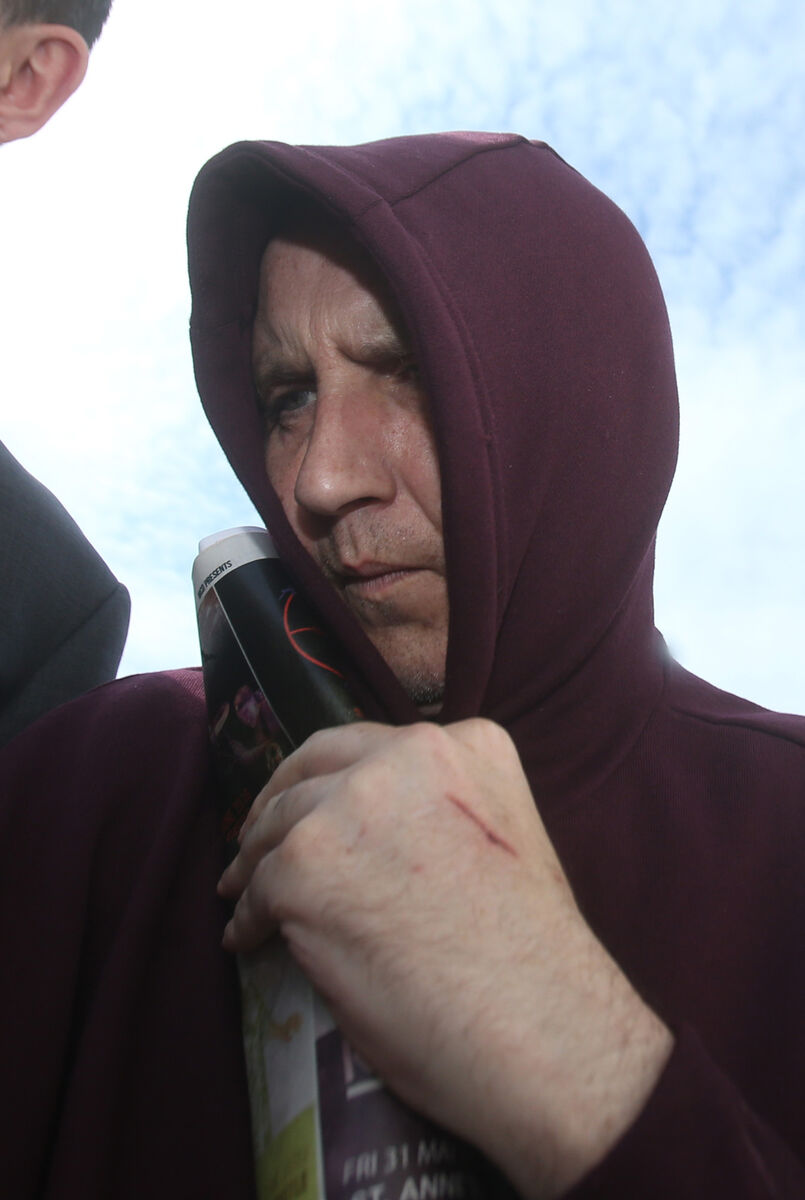
The trial heard that Houlden drove to Arklow Garda Station covered in blood at around 00.35am on the morning of May 6 following a weekend of smoking crack cocaine and taking a medley of drugs with the victim and his girlfriend. The accused handed a "bloodied knife" to the member-in-charge at the hatch of the public office and told him: "It's my fault. I attacked him. It's all on me."
Houlden told gardaí in his interviews that Mr Kavanagh was angry when he discovered that his cocaine was missing and made a phone call to someone saying: "There is trouble down here, your stuff has been taken, get bodies down here."
The accused told detectives that he begged Mr Kavanagh not to make a second phone call after the victim threatened him that "gangsters" would bring him to "the woods" and shoot him over the missing cocaine.
Whilst Mr Kavanagh was making the second call on the upstairs landing, Houlden said he was "like a lunatic" and "went into a rage" as he "went for" the deceased's brain with the knife.
Mr Kavanagh's girlfriend Rachel Kearney gave evidence that she saw the accused "slaughtering" and "overkilling" her boyfriend. The witness said that Houlden was on top of her partner and had his knees on his back as he stabbed the victim.
Mr Grehan said that it had not taken "Sherlock Holmes" to solve this case as his client, who was "covered from head to toe in blood" and carrying a knife, had walked into a garda station and admitted stabbing the deceased.
Before delivering the sentence, Ms Justice Stewart said it was quite clear and understandable that Mr Kavanagh's family had difficulty accepting the jury verdict but she pointed out that "the jury had spoken and the court was bound by the jury verdict".
The judge said things had "deteriorated" on the Sunday evening when Mr Kavanagh went looking for drugs which he had acquired earlier that day and then "appeared to be missing". The finger of suspicion, the judge said, was pointed in the direction of the accused man.
Ms Justice Stewart noted that the tragedy of this event was that the drugs were subsequently found in the house and a phone call made by Mr Kavanagh, which she noted was of "no real threat", had gone "unanswered". She said the situation then "escalated" due to the amount of drugs that were consumed that weekend. Houlden had "ransacked" the house looking for the missing drugs and placed an axe and hammer inside the front door at one stage, she said.
Referring to Houlden, the judge said it was accepted by the jury that the accused had attacked Mr Kavanagh "out of fear" that a further phone call would be made. Houlden then inflicted "gruesome and horrific wounds" on the deceased, "some forty wounds in total", she said.
Having regard to the gravity of the offence, the judge said she would place the offence for the killing of Mr Kavanagh at the upper end of the higher scale and set a headline sentence of 14 years.
In mitigation, she noted his early guilty plea to manslaughter, his expression of remorse and the contents of the probation report.
The court heard that Houlden has 13 previous convictions which include assault causing harm, possession of drugs and forgery.
Due to the mitigating factors, Ms Justice Stewart said she would reduce the headline sentence of 14 years by three years resulting in a sentence of eleven years. The judge then suspended the final 12 months of the eleven-year sentence for a period of two years. The ten-year sentence was backdated to May 7 2019, when he went into custody.
CONNECT WITH US TODAY



Be the first to know the latest news and updates