Mother of Parnell Square stabbing victim says daughter is 'still a character' three years on
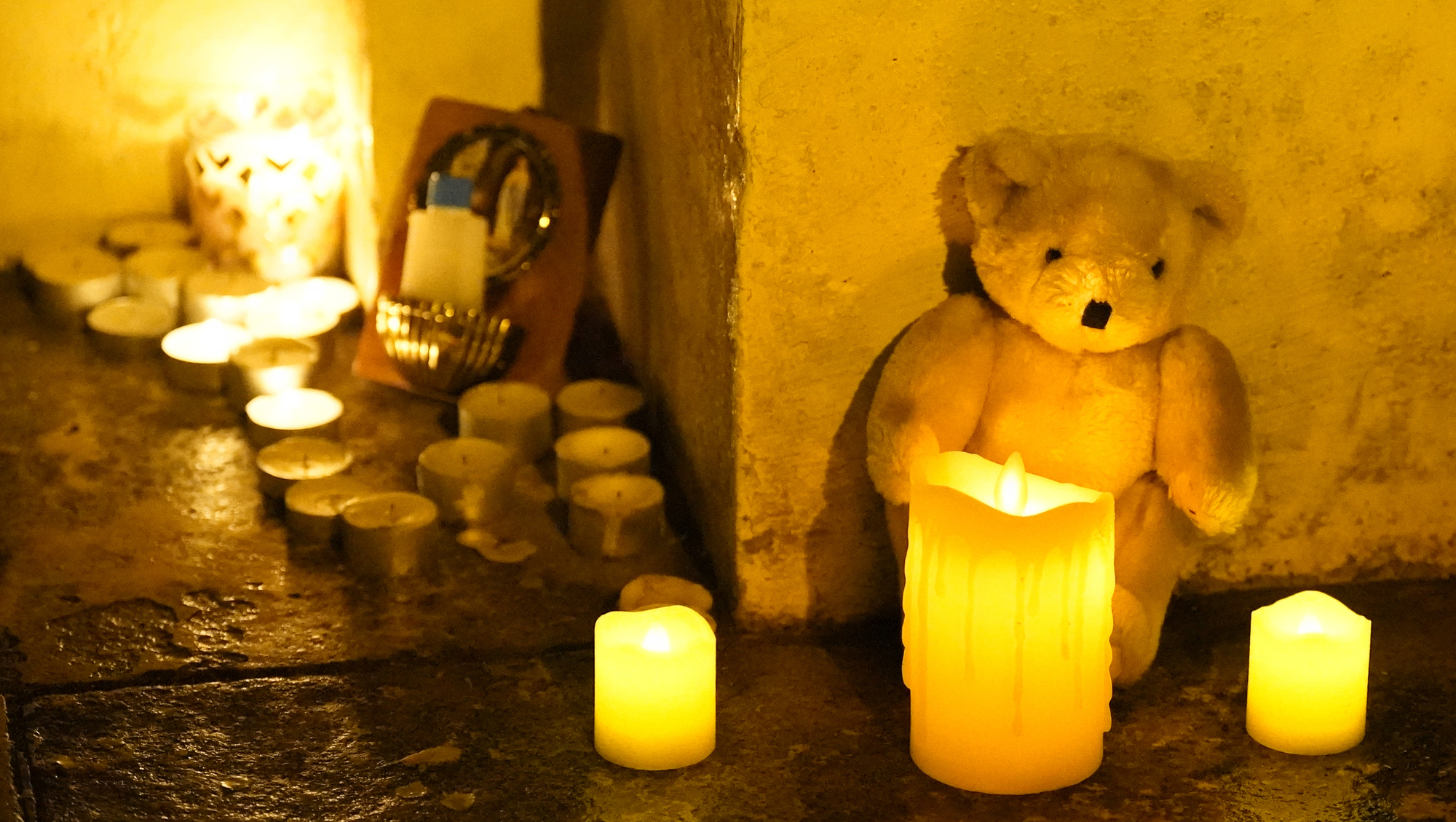
Candles and tributes left following a vigil held outside Gaelscoil Cholaiste Mhuire school on Parnell Square, following an attack on Parnell Square East where five people were injured, including three young children. Picture date: Sunday November 26, 2023.
The mother of a young girl who was stabbed in the heart by Riad Bouchaker said her daughter is “still a character” and has the “best smile and the best laugh”.
She said that while her daughter suffered a brain injury in the attack and is physically dependent on others, she is “very, very clear with her decisions and her wants”.
Her daughter, who was five at the time of the attack and is now eight, communicates by blinking but is beginning to mouth words, she said.
Speaking on RTÉ Radio 1’s today, the mother said she was “relieved” that Bouchaker was sentenced to life in prison earlier this month for the attempted murder of her daughter and two other children.
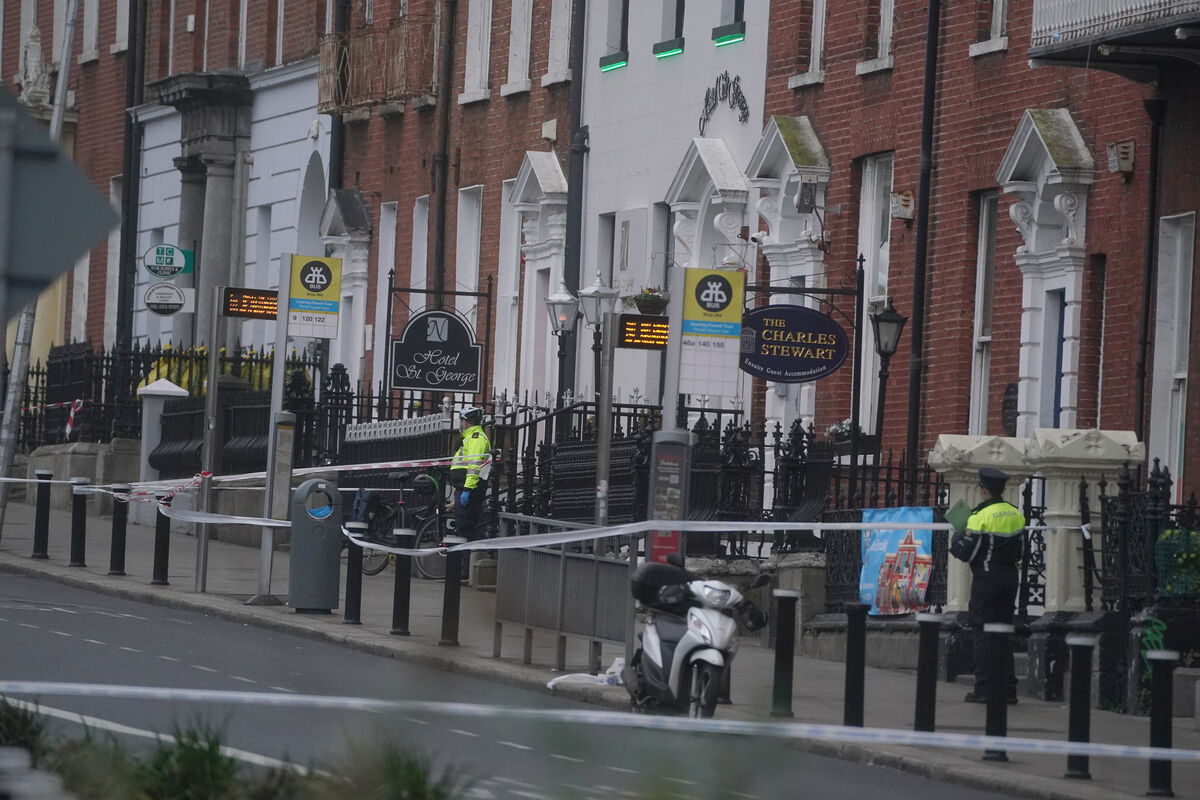
The attack happened at lunchtime outside a creche and primary school on Parnell Square in Dublin city centre on November 23, 2023.
In addition to stabbing three children, Bouchaker was also convicted of stabbing childcare worker Leanne Flynn and assaulting two other children and a teenager.
At sentencing, Judge Tony Hunt described the sudden, ferocious and sustained attack on young children and their childcare worker as “uniquely horrific”.
Read More
Referred to as “Katie”, with her daughter referred to as “Stacey” for the purposes of the interview, the mother said her daughter was “still a happy kid”, who loves going to school and “loves laughing”.
Katie said she did not give Bouchaker “any thought”, but was glad he had received a life sentence and was “relieved” he would not be able to harm anyone else.
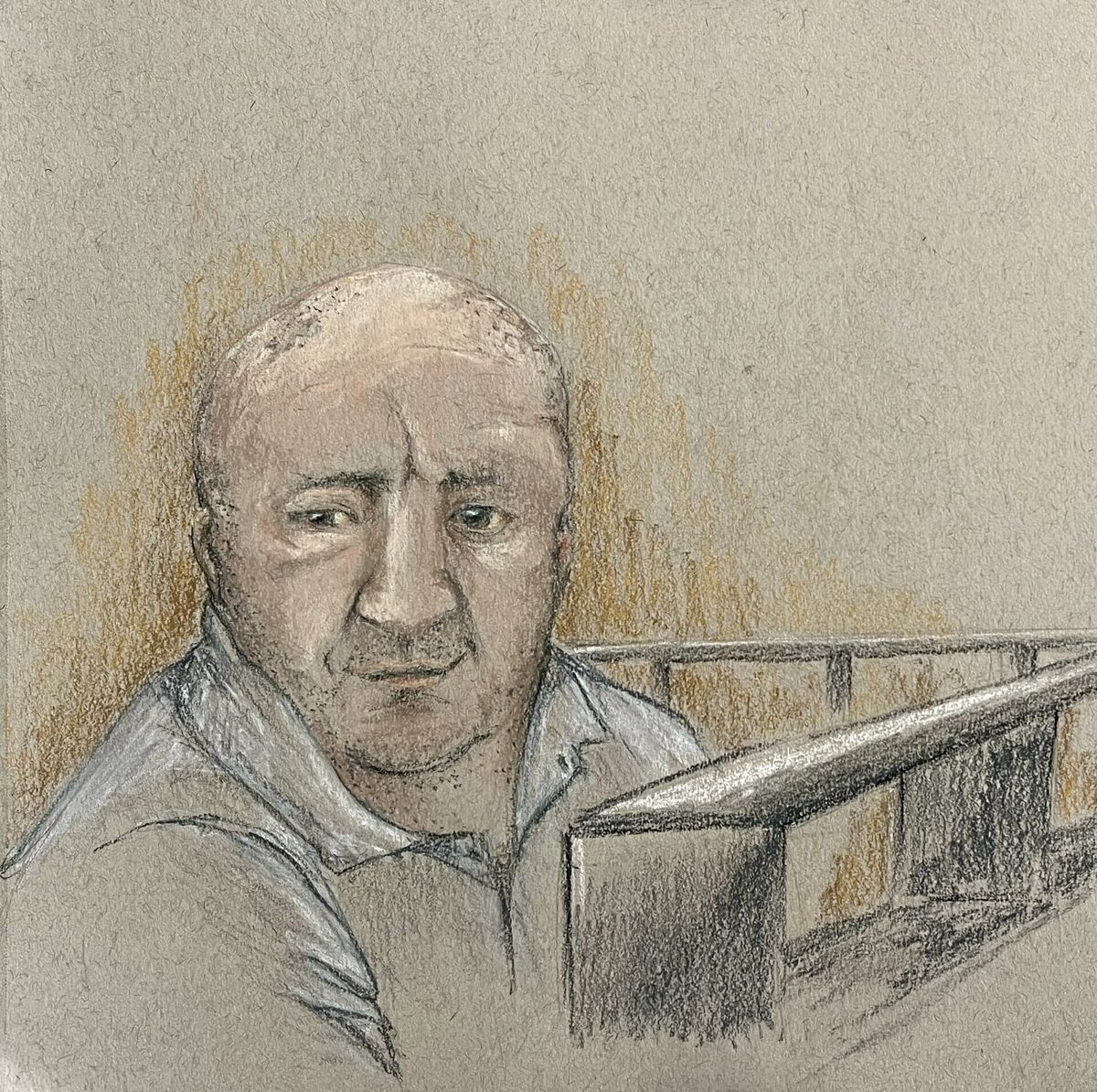
Katie said the long wait for the trial had been difficult, including the period when the defendant underwent a psychological assessment to determine whether he was fit to stand trial.
“Once the jury came back with a guilty verdict that’s when we started breathing a little bit more,” she said.
She recalled having to give evidence and experiencing “micro panic attacks”, forcing her to leave the courtroom to take deep breaths before returning.
She said Bouchaker did not look at her and described him as “an empty vessel”.
“There’s nothing there, he doesn’t even realise what happening around him,” she said.
She said people who have a brain injury, as Bouchaker had, often say they “blackout” during fights and cannot remember what happened when they wake up.
“I think he had an episode, I think that’s what happened,” Katie said.
She said there was “no closure” following the sentencing: “It’s always an open window.”
Asked about media reports that Bouchaker had been arrested in possession of a knife in May before the attack but was never prosecuted, Katie said she was aware of the incident.
“I knew about it before,” she said. “That part makes me upset at the legal system, not at him, maybe it could have been prevented it but we never know.”
She said she did not dwell on “what if” scenarios, as all her focus needed to be on her daughter.
Katie said that before the attack, her daughter was “crazy” and a “character”, and that she remained so. She said her daughter had found it easy to make friends and was very confident.
“She would light up a room, she still does, she has the best smile and best laugh,” she said.
Becoming upset as she recalled those memories, Katie said she “doesn’t go down that road” of nostalgia, as she felt it was not fair on her daughter.
She said her daughter's life before the attack was “one chapter” and that she was now living a “second chapter”, with no way of knowing what the next chapter would bring.
Recalling the day of the attack, Katie said she ran to the creche after receiving a phone call from its owner telling her that her daughter had been stabbed.
She said it took her five or six minutes to get there. When she told a garda who she and her daughter were, she was brought to another officer.
“He said they were working on her at the moment. I said ‘let them’. There was nothing I could. I could seek her backpack on the floor and five or six people around her. I could see her shoes on her - that’s what I saw.”
She said that once her daughter was stable enough, she was taken to the Rotunda Hospital, on the far side of the square. A doctor at the scene had already run there and arranged an operating theatre for surgery.
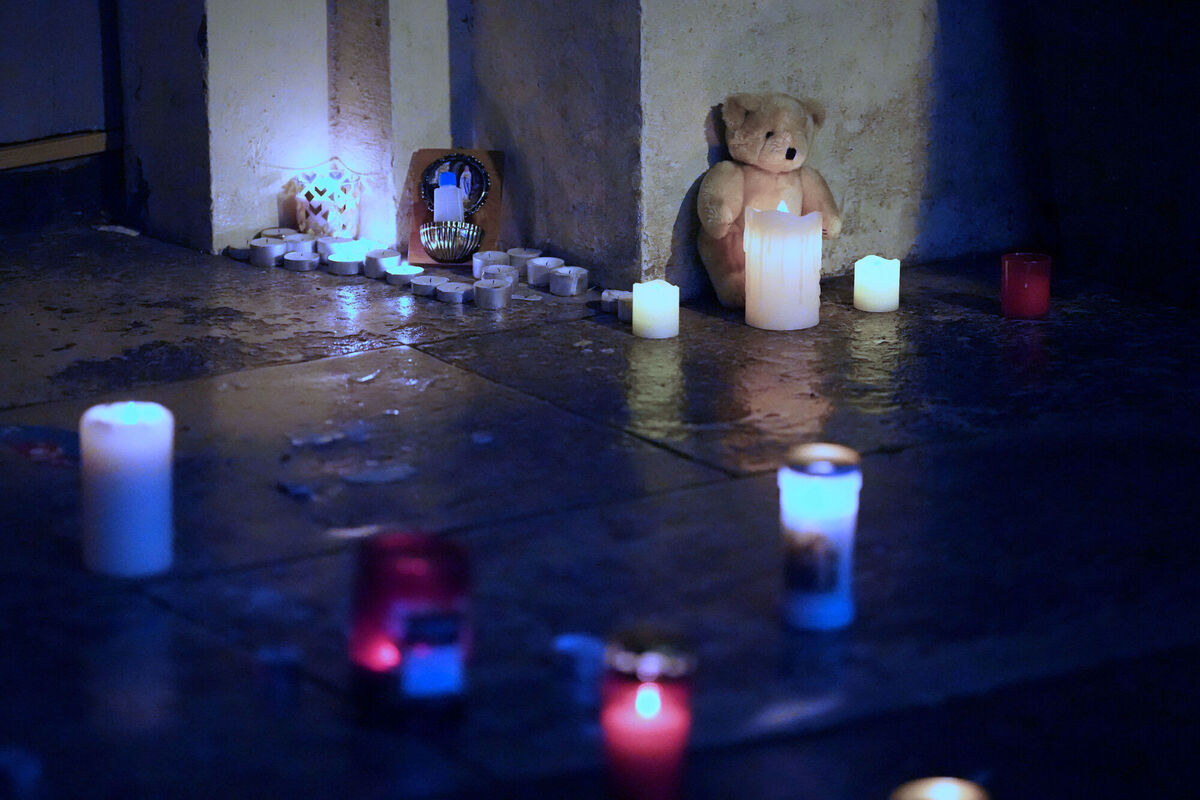
Katie rang her husband, while surgeons operated on her daughter for three-and-a-half hours before she was taken to the intensive care unit (ICU).
Her parents were brought to the ICU to see her.
“The head doctor said ‘we’re taking it minute by minute’, and then the day after it was ‘hour by hour’. It was two or three days before we knew she was going to live,” she said.
She said that while doctors knew her daughter's physical condition, they were anxious to assess her brain activity.
Katie said: “When she opened her eyes and saw me - and I don’t know if you or anyone listening knows what a person’s eyes look like when sedated – when she saw me and locked eyes, I saw her inside. I talked to her, and said ‘you are safe, you are fine, your dad is here, everyone is here to take care of you’. I wanted to reassure her she was safe.”
She said doctors carried out brain scans after three days.
“That’s when we got the first piece of information that she might never walk again, because the way the brain works is, when it is deprived of oxygen, the longer it is, the more damage is done,” Katie said.
She said the parts of her daughter's brain that were damaged were in the motor centre.
Katie said her daughter spent three weeks in ICU before moving to a ward and later returning to intensive care.
“Overall it was nine months in hospital and four months to rehab hospital,” she said.
Her daughter came home full-time at the end of November 2024.
Asked how Stacey was doing now, Katie replied: “She is still in a wheelchair, fully dependent.”
But she said her daughter was able to make decisions.
“She is very, very clear with her decisions and her wants. Now she has started mouthing some words, but the sound and her mouth they don’t match - that will be down the road with speech and language, to make sound come with mouth movement, that is also a very long word.”
Katie said her daughter was “very resilient” when it came to pain and could suffer muscle spasms.
Asked how aware Stacey was of what had happened, Katie said that while they were in hospital, she had a feeling her daughter might have “locked-in syndrome”. She said her daughter had a “frustrated look”, as though she was trying to communicate something that the world around her could not see.
Katie said: “I sat down in front and her and told her she got hurt and that was why she couldn’t talk to us the way she used to or move the way she used, but that we were doing everything we cold to make her better.”
She said her daughter calmed down after that and became a little more open to therapies.
Katie said she sat down with her daughter again after the sentencing and explained that she had something to tell her.
“Do you remember when I said you got hurt? It wasn’t your fault because someone hurt you but this person will never be able to hurt you again. He is going to prison for his whole life. He can never hurt you or any or your friends. You have been so brave.”
She said her daughter cried, but described it as not “sad crying” but more “like an OK cry”.
Katie said one of her favourite sayings was: “We don’t die of a broken heart, we thrive in the pain.”
She said: “I didn’t want to let everything happening to me and my family break me more, I wanted to keep showing up, like I always do. I do have my moments, they are a bit more spread out now. I don’t let my daughter see this side, she has enough going on.”
Katie said she did not think the saying was true for her, in the sense that people could die from a broken heart.
“I thrived, I became a better person, though tragic it is,” she said.
She said she was calmer and less anxious, and “more patient with everything”.
She added: “If I do activity with my daughter, like eating, like orally, you have be calm and have time for it and show her that calm - if not, everything will go wrong.”
Katie said she did not ask why the attack had happened to her daughter or dwell on pity.
“I feel she was stolen, like what happened she was stolen from herself, but I don’t pity her in any moment. That is not going to help her.”

Asked about the riots that happened in Dublin on the night of the attack, Katie said people had “their own agenda”.
“I honestly don’t think it was related to that [the attack] – it was just an open invitation, like what happened in front of the school, it was an open invitation to something that was already brewing. It would have happened at another stage,” she said.
She said some people expected her to be angrier and more hateful about what had happened to her daughter.
“I have never been that person, I can’t,” she said.
She said she would not allow Bouchaker to turn her into that person.
“My job now is to be a mother and a carer and give her the best possible chance of something," Katie said. "Whenever she is doing her therapy, I push her ‘one more, one more’.”
She said her daughter sometimes asked why she was pushing her, and she would explain that her little brother would soon be climbing on her and that she would need to push him away.
Katie’s son was born last March, although he was due in May, and spent six weeks in hospital.
She said the house was now “very active”.
Katie said she had no choice but to give up her full-time job.
In a final message to listeners, she said: “We all have to remember to take deep breaths and things do get better, even if they are getting worse. The way we react to them can make them worse.”

BLACK FRIDAY
Already a subscriber? Sign in

CONNECT WITH US TODAY



Be the first to know the latest news and updates