'We’ll close as we opened, without any fanfare': Paul and Máire Flynn on 30 years of The Tannery
From the power of a good restaurant review to the depths of the crash, the Flynns reflect on the highs and lows as they head into their final weeks of service in Dungarvan
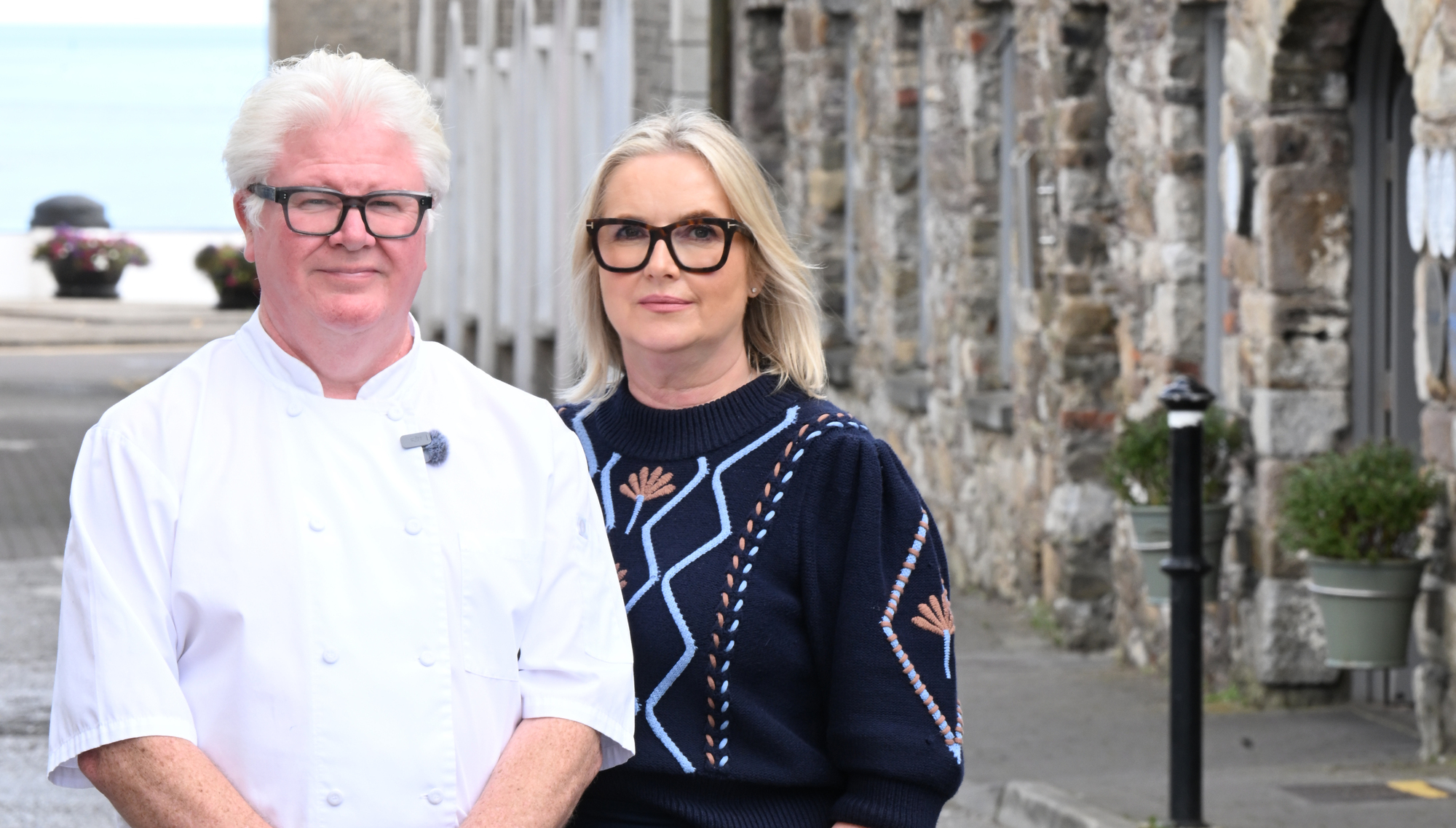
Chef Paul Flynn with wife and business partner Máire Flynn at Dungarvan, Co Waterford. Pictures: Larry Cummins
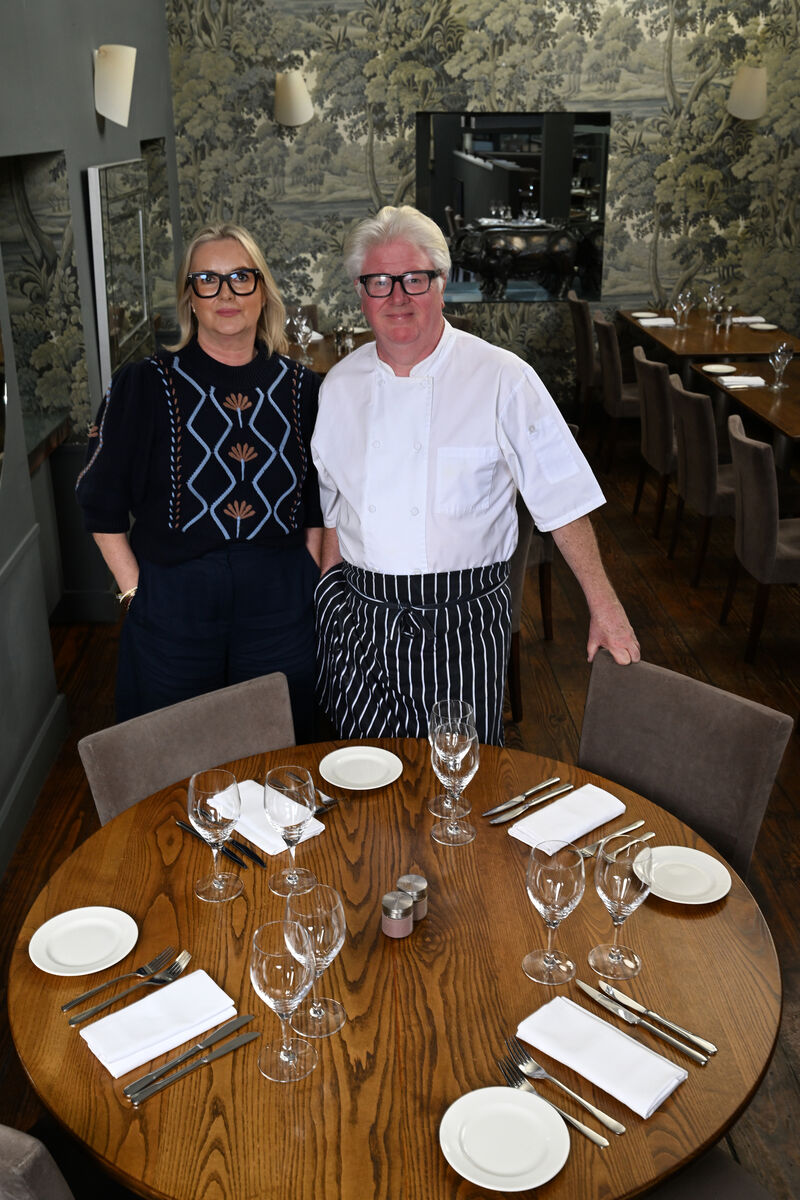
Chef Paul Flynn with wife and business partner Máire Flynn at Dungarvan, Co Waterford. Pictures: Larry Cummins
The youngest of eight, Paul Flynn grew up above his father’s pharmacy on Grattan Square in the centre of town — “about as Dungarvan as you can get”. Not much good at sport, he and his pals were instead dedicated in their pursuit of girls. Part time jobs, pumping petrol, working in a chip van, enabled him and a pal to buy Honda 50s. On Saturdays and Sundays, four of them headed to discos out of town.

His mother didn’t care much for cooking — “she could burn water,” he says — but on those nights, home from the discos, often soaked to the skin, he enjoyed cooking up a fry for the gang as their clothes dried. After sitting his Leaving Cert at 17, he weighed up his options and settled for a catering course in FÁS, but it was his first proper job that ignited his love affair with kitchens. In 1983, one day after turning 18, he left for London.

Ireland in the 1980s was like the Celtic Tiger crash with nary a sniff of Celtic Tiger — when you emigrated, it was often for good. When Paul Flynn’s culinary career took off in London, it seemed Mother Ireland had lost another son forever. Yet he not only returned but eventually summited the Irish culinary ladder, he and wife Máire creating The Tannery, in Dungarvan, one of Ireland’s most beloved restaurants. When they announced last February they were closing for good, some 40 years after that callow youth first took the ferry, they broke a nation’s heart.

That first job was in Merry’s Gastropub, around the corner from The Tannery. “It was the best restaurant in Waterford at the time,” says Paul, “after the first week I loved it. The chef, Paul McCluskey, was French classically trained, had even worked with Paul Bocuse, I loved the food he was cooking. In a very gentle way, he lit a fire under me.

“The first dish I learned was Dauphinoise potatoes, my sister would be getting me to cook it for her friends at parties while I would raid their drinks cabinets. I fell in love with food in Merry’s but I wanted to travel.”

In London, he got a copy of the Michelin Guide and wrote to every starred restaurant. His first break proved a false start, in a Roux Brothers restaurant in Covent Garden.

I hated the environment, full-on French, hardcore. They absolutely didn’t give a shit about you. But it was a big awakening, I don’t resent it, it’s just the way it was. I missed my train home a couple of nights and had to sleep rough in Waterloo Station. The next day, I was fit for nothing. Then I got a job at Chez Nico.

Chez Nico may have been a small, family-run restaurant in Battersea, owned by Nico Ladenis, but it was also one of just four restaurants in Britain with two Michelin stars. By the age of 23, Paul was head chef.

“[My] whole life revolved around chasing three stars. I had 16 chefs under me and I used to wake up with nosebleeds thinking of the day ahead. He taught me an enormous amount, a mighty man for flavour, flavour underpinned every dish. He was tough but he took care of people, it was very family orientated and you actually felt minded — although he sacked me once for going out with his daughter!”

Máire Power grew up in Kilmacthomas, and went to school in Dungarvan. After a year living in Paris, she had moved to Dublin when she was set up on a blind date with Paul, who was in Ireland for a weekend. Shortly afterwards she joined him in London. They soon married, bought a house, and she was happily working for a property company when Paul was headhunted for a new Dublin restaurant, La Stampa.

“I was hankering to go back anyway,” says Paul, “Máire would definitely have spent more time in London, but my parents were getting older. Though I loved London, it was approaching 10 years and I had never really had any experience in Ireland.

“La Stampa was very much the ‘in’ restaurant, in the papers every week, a big, beautiful brasserie on Dawson Street, like one of those Parisian brasseries like La Coupole. I was blown away by it. The noise, the buzz... we’d do 200 covers a night. Anyone famous who came to town, they were there. I spent four years there and saved every penny.” The money, intended for a world trip, ended up going to The Tannery, which opened in in Dungarvan in July 1997.

The premises for the new restaurant was a leather factory, some years shuttered.

“As kids,” says Paul, “we used to hold our breath cycling past because of the stench, hides, stacked high, dripping with this suspicious blue liquid. It was a part of town that no one went to any more, hoardings, derelict factories, cottages, but there were development plans and we could see the potential. It was a huge refurb but we had a very clear vision and we put all our savings into it.”

It was an era before dedicated food and hospitality PR.

“We picked a day, Wednesday, July 1, announced we were opening and took bookings. There was no social media, no PR. We were nervous but we had youth on our side and it didn’t ever occur to us that this wouldn’t work.”

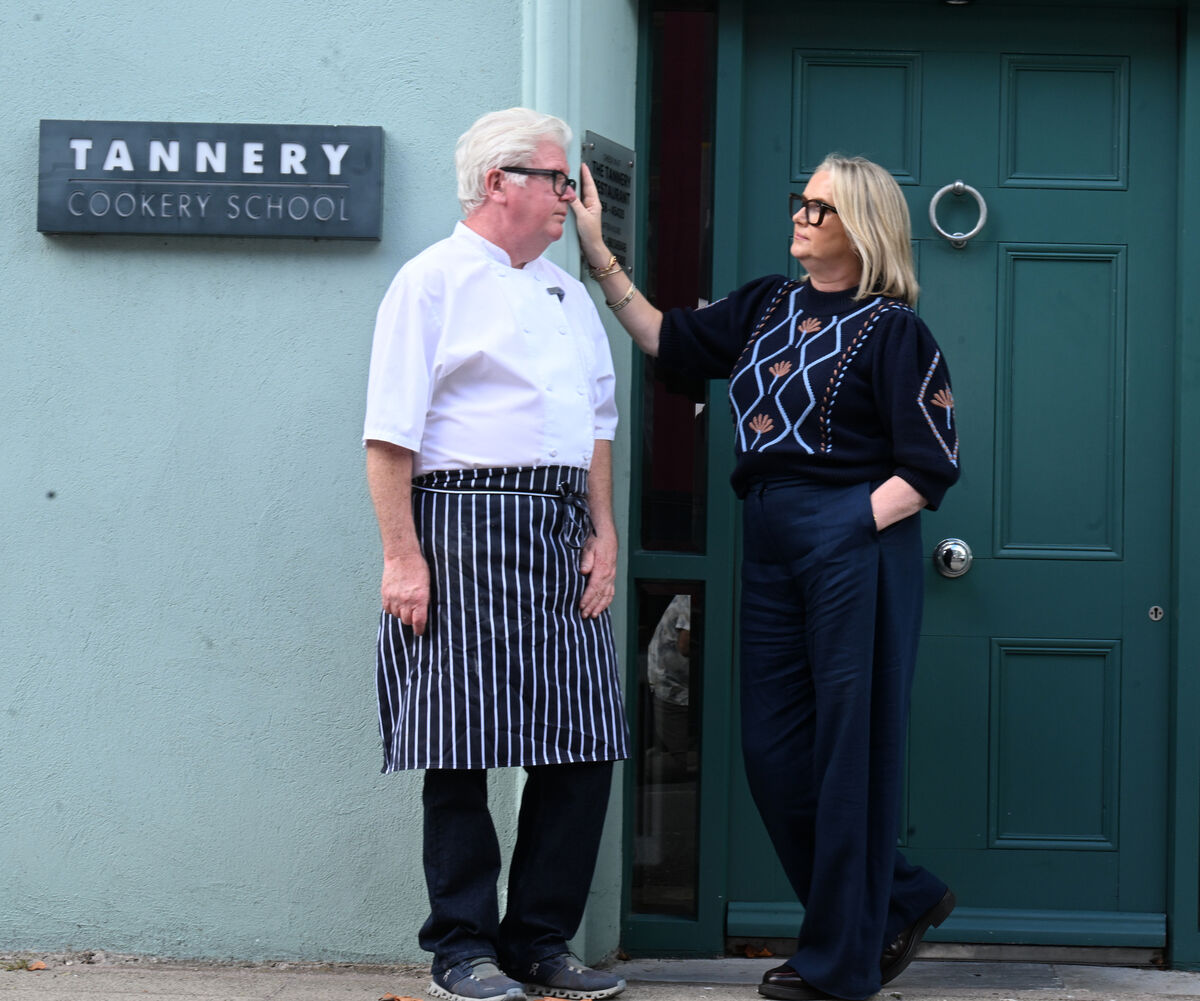
Paul and Máire Flynn outside Tannery Cookery School at Dungarvan, Co Waterford.

There is a delight in ascending the wide stairs at The Tannery, the soaring ceilings climbing up into forever, through a space criss-crossed by the original factory’s steel beams; a superb setting for often superlative food.

“It was ahead of its time,” says Máire, “Our architect had a really good vision, a real 90s look, but we were berated for not being traditional. This was the new wave of modern restaurants, one or two

in Dublin, none outside of Dublin.”

The menu also provoked strong reactions.

“We didn’t have brown bread,” says Máire, “Paul thinks it’s too heavy before dinner. That was a black mark. We got black marks everywhere. Back then, people, especially in rural Ireland, would expect orange juice or fruit cocktail as a starter, soup followed by carvery.”

“We were busy for the first two months,” says Paul, “because it was summer but we got the kiss of death of being labelled a special occasion restaurant where people only come once or twice a year; in a town of 8,000 people, what the hell are you going to do then.”

“We had no business experience,” says Máire, “We just thought, oh, we’ll always be busy. We had no idea.”

Paul says:

The quietest restaurant I’d ever worked in, turned out to be my own. The first meeting with the accountant, it like, oh my God, what have we done? We had some great local champions from the very beginning but they can only do so much.

A review from then- Irish Times restaurant reviewer John McKenna was a lifesaver.

“It was amazing,” says Máire, “People from Dublin started to come to eat”

All the other reviewers followed in McKenna’s wake, all equally effusive.

“Learning how positive reviews can actually save you,” says Paul, “taught us we have two jobs. One, because of our location, is to get them here. And the other is to make them happy once they’re here. Both are equally important.”

"From spring 2027, the Tannery will evolve into its next chapter as a seasonal Townhouse and Cookery School, welcoming guests and serving dinner to Townhouse residents while keeping the spirit of The Tannery very much alive."

In 2000, Paul was invited to become a food columnist. It was the beginning of life as ‘celebrity chef’.

“That was a game changer for the restaurant because we were in the paper every single week.”

His first cookbook, An Irish Adventure with Food, in 2005, the first of five, further cemented his national renown, drawing ever more custom to The Tannery. That same year, they added accommodation.

“Having persuaded people to travel to dine,” says Máire, “we were putting them into local B&Bs. It seemed logical to put them into rooms of our own so we got that first building.”

Business booming, they decided to add a second, The Tannery Townhouse, a 14-room boutique guesthouse, with a cookery school in the basement. Then someone shot the Celtic Tiger.

“The recession was life changing,” says Paul, “that was so hard. We bought this building which still required huge work a month before the crash, apparently the second last loan to be given in Dungarvan.”

“It was the peak of the Celtic Tiger, 2007,” says Máire, “we bit off more than we could chew. But we are extremely resilient. We put our heads down.”

To save the business, Paul was even willing to reconsider TV.

“All of a sudden I started to become a celebrity chef. At first I felt like a bit of a fraud. There was very little money in it, but the exposure for the restaurant was really valuable. And I actually really enjoyed it, getting out and about around the country and meeting people.

“It taught me to be a different kind of person. Most chefs live in their own little world, communicating very directly in the kitchen, often using bad language. It’s intense, like battle every night. It was like coming out of a hole. And it gave me confidence. It taught me, if you push yourself out of your comfort zone, you actually become better at it. But, I was always doing it for the business first, with Máire minding the fort.”

The next big challenge was the pandemic.

“I think the pandemic was the happiest time of my life,” Máire admits. “To be at home and not have to go to work every day... I’m not being flippant, I know it was extremely difficult for many people, but they were my [first] regular weekends off in 25 years. I’d forgotten what it was like.”

“A massive thing was that our staff were taken care of,” says Paul, “but definitely, you got a taste of how other people live. And the lack of stress that becomes part of your life — customer stress, staff stress, service stress.”

It set them thinking about the future.

“It made us think about an endgame,” says Máire, “We’re not retiring, though a lot of people think otherwise. We’re just moving to something smaller and more manageable.”

‘Smaller’ and ‘more manageable’ will entail closing The Tannery for good on January 1, 2027, then repurposing the cookery school space in The Tannery Townhouse as a cosy, intimate space, to serve dinner to their B&B guests, a simplified, condensed set menu of Paul’s deeply flavoursome and highly approachable take on fine dining.

“We don’t have an exact opening date yet,” says Paul, “because there is a lot of remodelling work to be done but we’re aiming for Spring. It will be a more holistic operation, the rooms contributing equally with the restaurant, so the primary focus is on B&B plus dinner packages, and any table spaces after that will be open to the general public. It will be very much a seasonal operation, open less in the winter but full-on in the summer. There will still be a cookery school element but, to be honest, very scaled back and probably mostly during the off-season.”

Meanwhile tributes have been pouring in from all over Ireland and elsewhere around the world.

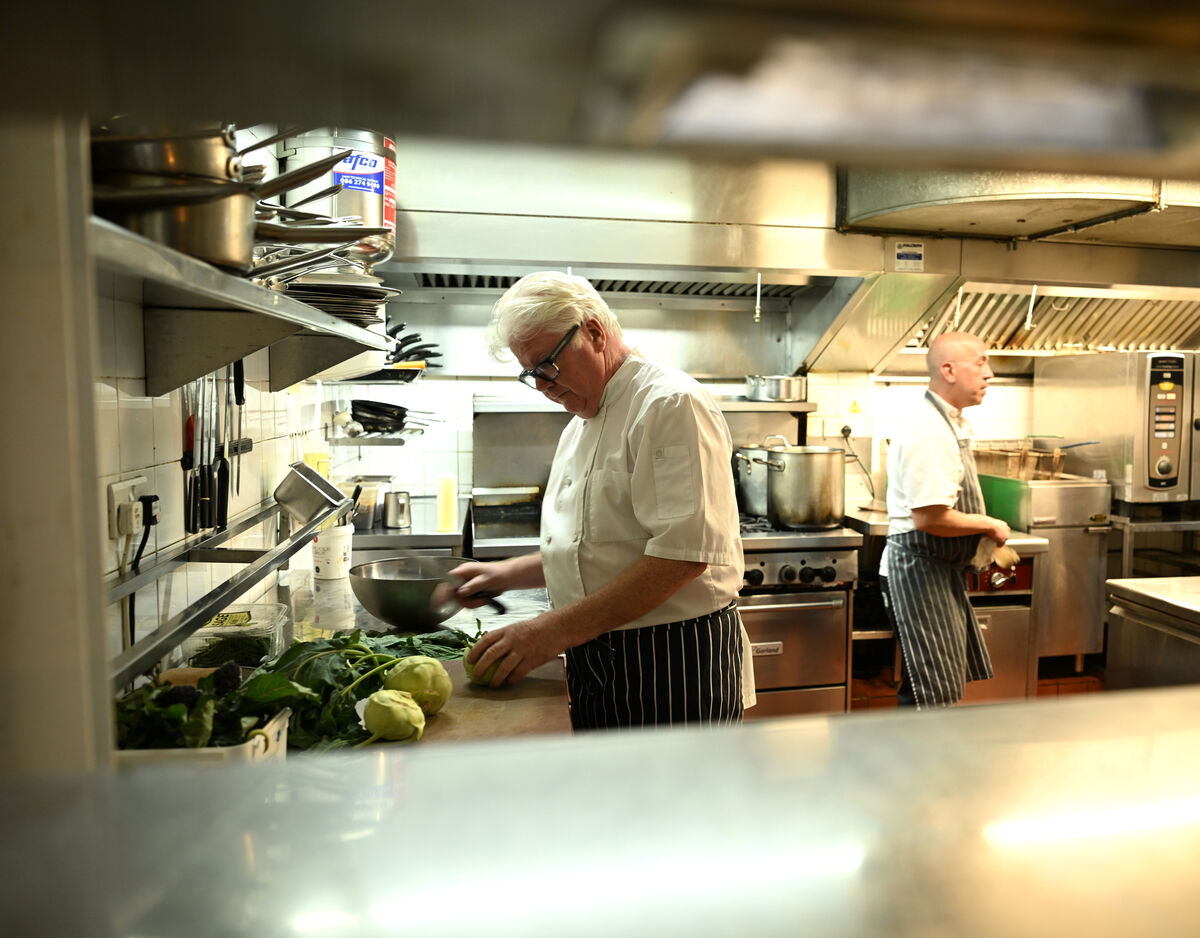
Chef Paul Flynn in the kitchen at the Tannery Restaurant at Dungarvan, Co Waterford.

“It’s been brilliant,” says Máire, “we’re actually overwhelmed. It’s been really surprising to us because we are both extremely self-critical, of ourselves, of the restaurant, of the food. So it’s been amazing having these waves of people constantly telling you they were here for all these important life events, birthdays, anniversaries, celebrations, everyone has a story.

“A woman told me they were here 25 years ago for Sunday lunch, one of her kids wet his pants and I got him new underpants and a pair of shorts. I’d forgotten — actually I have no idea where I would even have gotten those on a Sunday, but it really meant something to them. That’s one of many stories.”

And will the scene of so many legendary parties, bow out with a final shindig?

“No,” says Máire, “we’ll close just as we opened, without any fanfare, serve the final meal and shut up the restaurant one last time.”

More in this section

Lifestyle

Newsletter

Eat better, live well and stay inspired with the Irish Examiner’s food, health, entertainment, travel and lifestyle coverage. Delivered to your inbox every Friday morning.

Cookie Policy Privacy Policy Brand Safety FAQ Help Contact Us Terms and Conditions

© Examiner Echo Group Limited