How previously unseen records revealed six more Tuam children's deaths
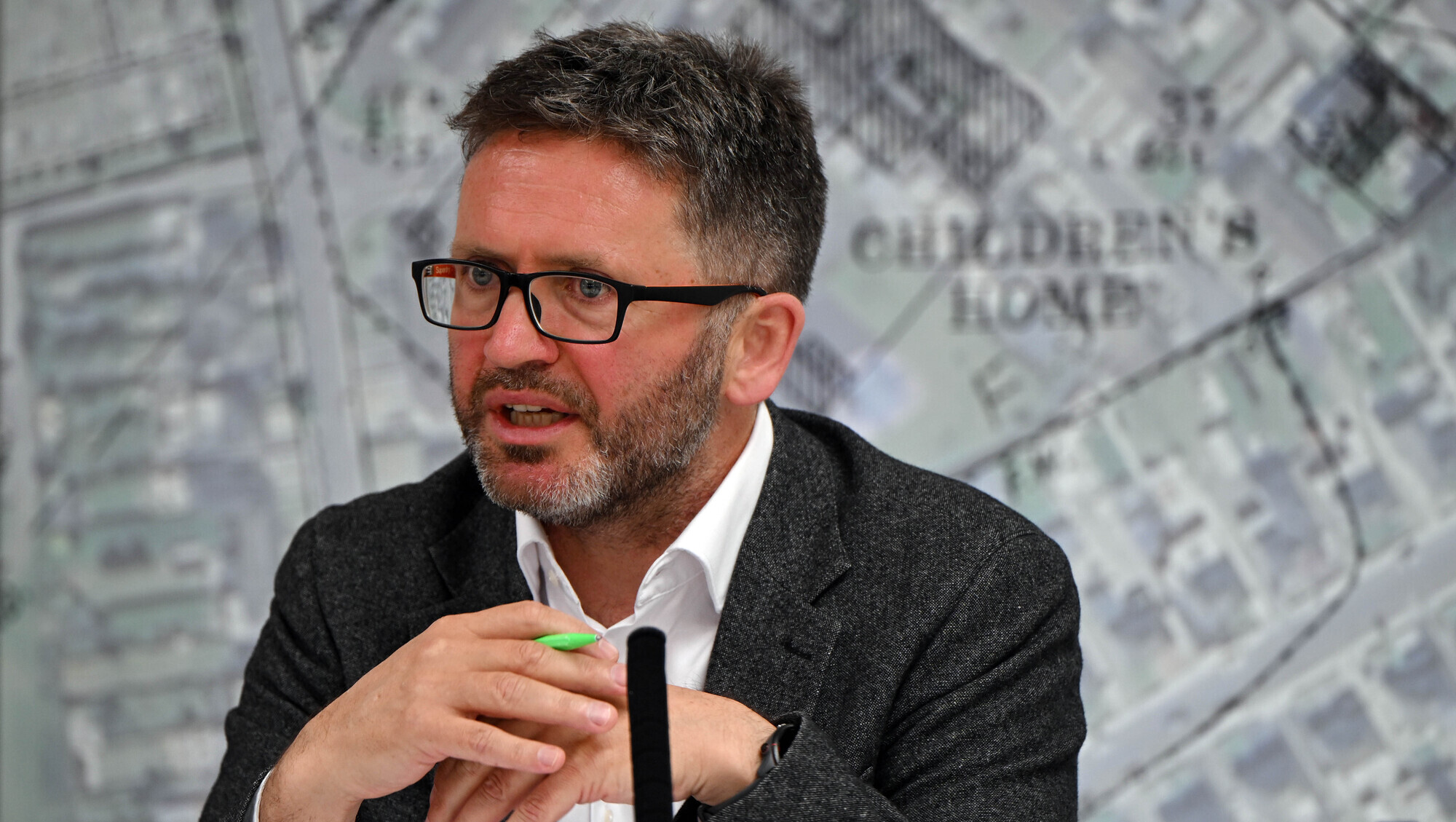
Daniel MacSweeney said an examination of documents revealed six further children whose records contained strong indications that they had died at the institution, bringing the known number from 796 to 802. File picture: Ray Ryan
Six additional children identified as having died at Tuam mother and baby institution were identified through previously unexamined institutional records that were not available to historian Catherine Corless during her original research.
Speaking to the , director of the Intervention at Tuam Daniel MacSweeney said investigators had access to the institution's own records, including admission and discharge books, the maternity register, and monthly returns.
Examination of those records uncovered strong indications that six further children had died at the institution, bringing the known number from 796 to 802.
He said an examination of those documents revealed six further children whose records contained strong indications that they had died at the institution, bringing the known number from 796 to 802.
Read More
The deaths had not been registered with the General Register Office, which is a legal obligation for any child born in the state, “We don’t know why they weren’t,” said Mr MacSweeney.
He explained that Ms Corless, who uncovered the names of 796 children who died at the Tuam institution during its operation between 1925 and 1961 could not have identified the six through her original research because she had been working from the public death register, rather than the institution’s internal records.
He said the words “dead” or “deceased” appeared in the institutional records and that the Office of the Direction of the Authorised Intervention at Tuam (ODAIT) had taken the decision to publish the names to give relatives an opportunity to come forward.
One of the children is registered as “Infant Clifford” and was recorded as having lived for just five minutes on December 2, 1938.
Mr MacSweeney has urged families to talk to older relatives about their family histories, warning that decades of secrecy could make the identification of hundreds of children buried at the site extremely difficult.
Mr MacSweeney said 250 people had contacted the identification programme, while 74 DNA reference samples had been collected to date.
The latest public information campaign is aimed at encouraging relatives, including those living abroad, to come forward before the deadline of September 24, 2027.
He said the programme was working to make the process as straightforward as possible, with teams travelling to families’ homes to collect DNA samples.
“We engage with people over the phone, by email, and then we will go and see them and take the sample from there, usually in their home. That’s what we’ve done in most of the cases,” he said.
Samples had been collected across Ireland, as well as in Britain, the US, and Canada.
The campaign includes six families who have already provided DNA samples and agreed to feature in advertisements encouraging others to participate.
“We are very grateful to them as well as the residents of the Dublin Road housing estate who have been very supportive,” said Mr MacSweeney.
Meanwhile, the forensic excavation at the site is continuing. Mr MacSweeney confirmed that "further infant remains have been recovered" since the last official figure of 109.
A new total is expected at the next update on December 4.
The excavation team remains working in the third tent, in a concentrated burial area along a roadway behind nearby houses where there were no surface markings to indicate the presence of a burial ground.
The team will eventually move into the memorial garden, where underground chambers containing commingled human remains were previously identified by the Commission of Investigation.

BLACK FRIDAY
Already a subscriber? Sign in

CONNECT WITH US TODAY



Be the first to know the latest news and updates