Irish firm unveils solution to GP crisis by helping qualified medics return to practice
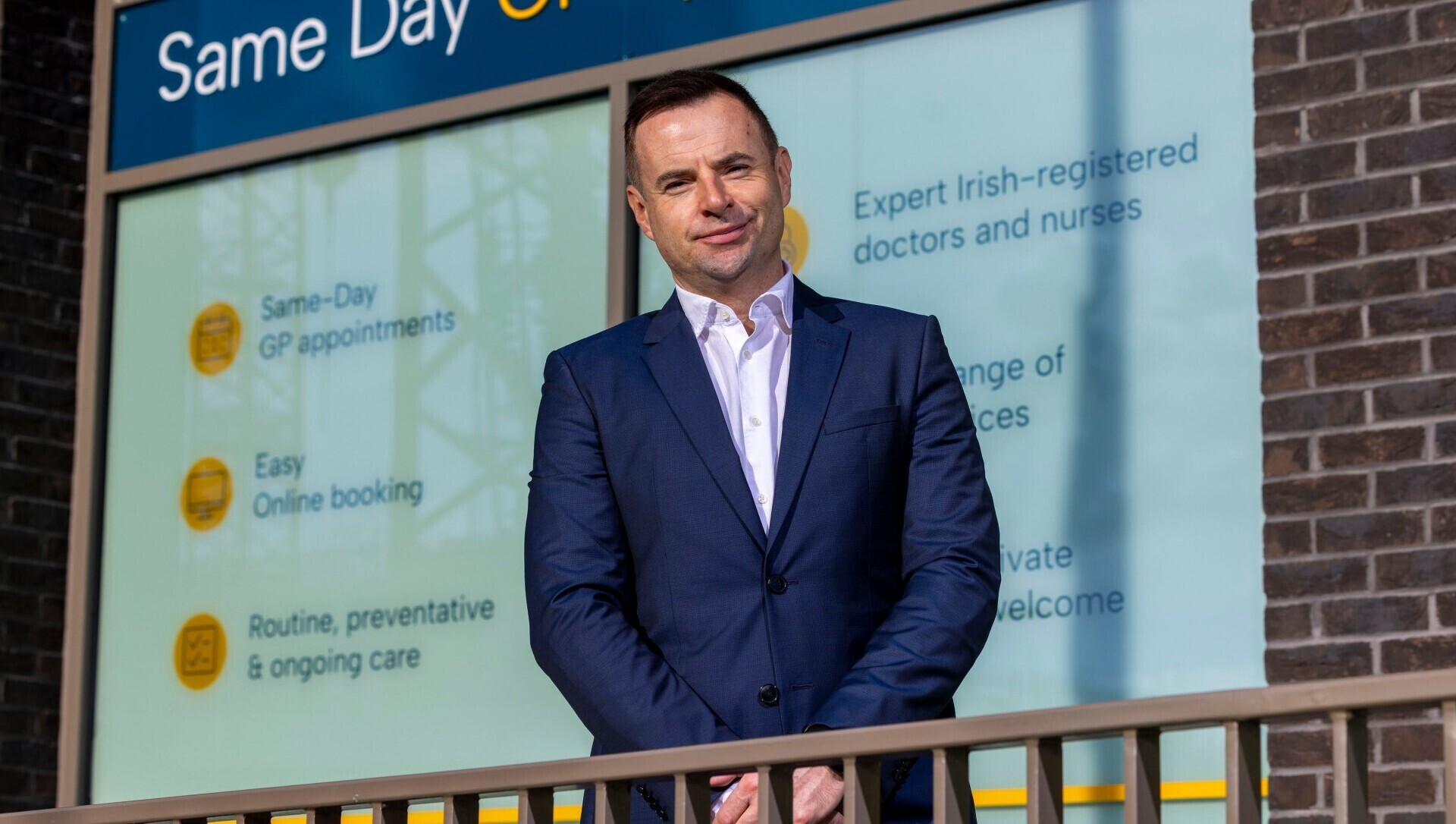
Cora Medical CEO Nigel McGuire at the Stoneybatter clinic. Picture: Fintan Clarke Photography/Press Association
An Irish company has unveiled a new solution to the GP crisis, which aims to open doors for doctors who have emigrated to return home to run practices, free of financial burden.
Cora Medical’s model is to establish new practices in communities badly in need of medical services, as identified by the GP-to-population benchmark.
It is designed to make it easy for qualified GPs who may have left the country to return and run practices for a salary.
Nigel McGuire, CEO of Cora, said there is a dearth of GPs in Ireland.
He said: “We should have one GP per 1,000 people, but the national average is one doctor for every 1,700.
“Some areas are operating at over twice that average, and people regularly face two-week waiting lists to simply see a doctor — if they can get registered with a practice in the first place.
“Our practices have simply not kept pace with our population and there are too many barriers to entry for newly-qualified GPs or those who may have moved abroad to practice.”
Part of the Bartra Group, Cora is establishing a network of primary care facilities, headed by chief medical officer Dr Nick Flynn, allowing people same-day access to see a GP.
Surgeries in Artane and Castleknock in Dublin have already proven to be successful, with further openings in Stoneybatter last week and Citywest, where the local area has 3,124 people per GP, in January.
Clinics in Terenure and Stillorgan will open in early 2027, and the company is investing €20m to initially grow its infrastructure to 20 clinics and 80 GPs.
Mr McGuire said: “We are not simply GP practices. We have a broad skillset and a growing team of specialists in the areas of minor surgery, female health, menopause, STIs, and skin issues, meaning that our patients can be treated within our ecosystem.
“This specialisation approach allows us to offer services to relieve strain on the public health service — we are partnering with the Mater Hospital to treat 600 patients on the dermatology waiting list in our Stoneybatter clinic.
“Almost all skincare referrals come from the GP community, but 80% of them do not need consultant care. That is where we step in with our specialist services, which will initially treat 10% of the people on the hospital’s waiting list.”
Cora aims to focus on ease of employment for Irish-qualified GPs, who are reluctant to return to Ireland due to the financial barriers of establishing practices, often at the same time as they are trying to secure mortgages.
“Unfortunately, the system expects GPs to also be employers and run small to medium enterprises, and that can be daunting for doctors wanting to return to Ireland or run their own practice,” said Mr McGuire.
“We are taking away the headaches of running a practice so that GPs can concentrate on leading a team and providing care while at the same time receiving benefits such as maternity, paternity and study leave.”

CONNECT WITH US TODAY



Be the first to know the latest news and updates