Emissions labels on airline search engines ‘have small effect’ on flight choices
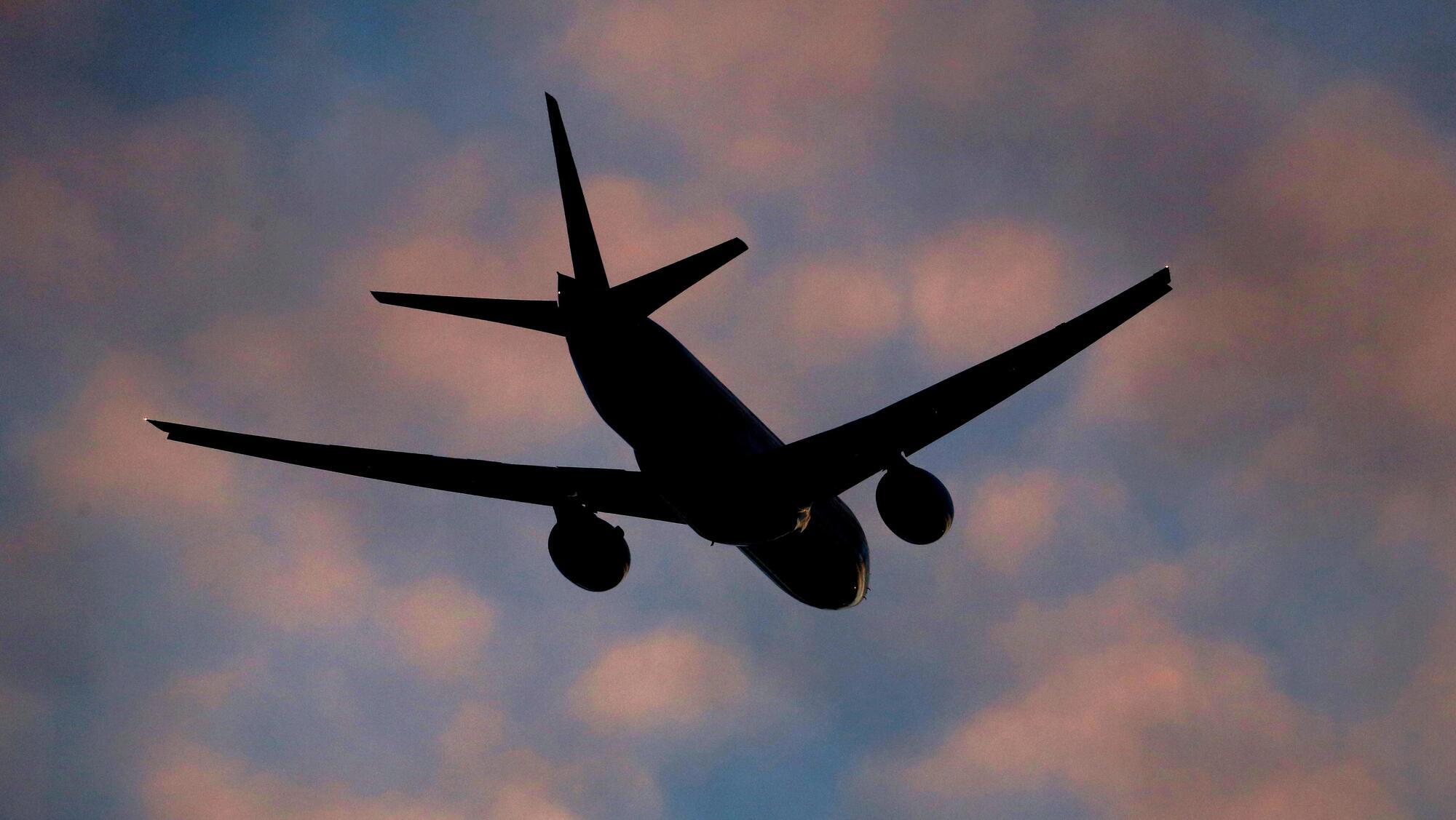
Emissions labels displayed on airline search engines have only a small effect on flight choices – and lead many consumers to misunderstand the impact of flying on the environment, according to new research. File photo.
Emissions labels displayed on airline search engines have only a small effect on flight choices and lead many consumers to misunderstand the impact of flying on the environment, according to new research.
The study, by the ESRI’s Behavioural Research Unit – funded by the Environmental Protection Agency – used a controlled experiment in which a nationally representative sample of 1,000 adults completed realistic online holiday-booking tasks.
Participants were randomly assigned to booking websites that displayed either no emissions information, a label stating the flight’s estimated carbon emissions, or an additional label comparing emissions to other flights on the same route.
The tested labels looked exactly like those currently in the market. The study found they have only small effects on flight choices and are widely misunderstood.
Read More
Among participants who saw no climate information, 22% booked the flight with the lowest emissions.
This was the same for those participants who saw labels stating the estimated carbon emissions.
The figure increased slightly to 27% among those shown relative emissions labels.
While the emissions labels did help a good number of participants to identify lower-emission flights, many others were instead confused by them.
The labels showing relative emissions for a given route led people to think that a long-haul flight with low relative emissions for its route was more climate-friendly than a short-haul flight with high relative emissions for its route.
Long-haul flights emit much more greenhouse gas because of how much further they travel.
The study revealed further misunderstandings of what the labels really mean.
Fewer than one in six participants correctly understood the benchmark used in relative emissions labels.
Most expected them to compare flights with the same number of stops, when in fact current labels include indirect flights to the same destination in the comparison.
Participants also showed poor understanding of the factors used to calculate flight emissions.
Dr Shane Timmons, senior research officer at the ESRI and co-author of the study, said: “Flying is one of the most emissions-intensive activities that people undertake, and a relatively small number of frequent flyers account for a disproportionate share of aviation emissions.
“The idea behind emissions labels is that better information allows consumers to make more climate-friendly choices.
“Our findings show that emissions labels help some consumers to distinguish between flights on the same route, but the impact is small and many consumers do not understand what these labels mean.
“Reducing emissions from aviation will require more than providing information to passengers.”
Dr Desmond O’Mahony, scientific officer at the EPA Behavioural Insights Unit, added: “This valuable research demonstrates that current flight emission labelling practices do not meaningfully support consumers in choosing lower emission flights and in some cases may increase misperceptions.
“Further research is needed to develop emissions labelling that informs rather than confuses consumers about the climate impacts of flying.”

CONNECT WITH US TODAY



Be the first to know the latest news and updates