Cork model aeroplane club flying high
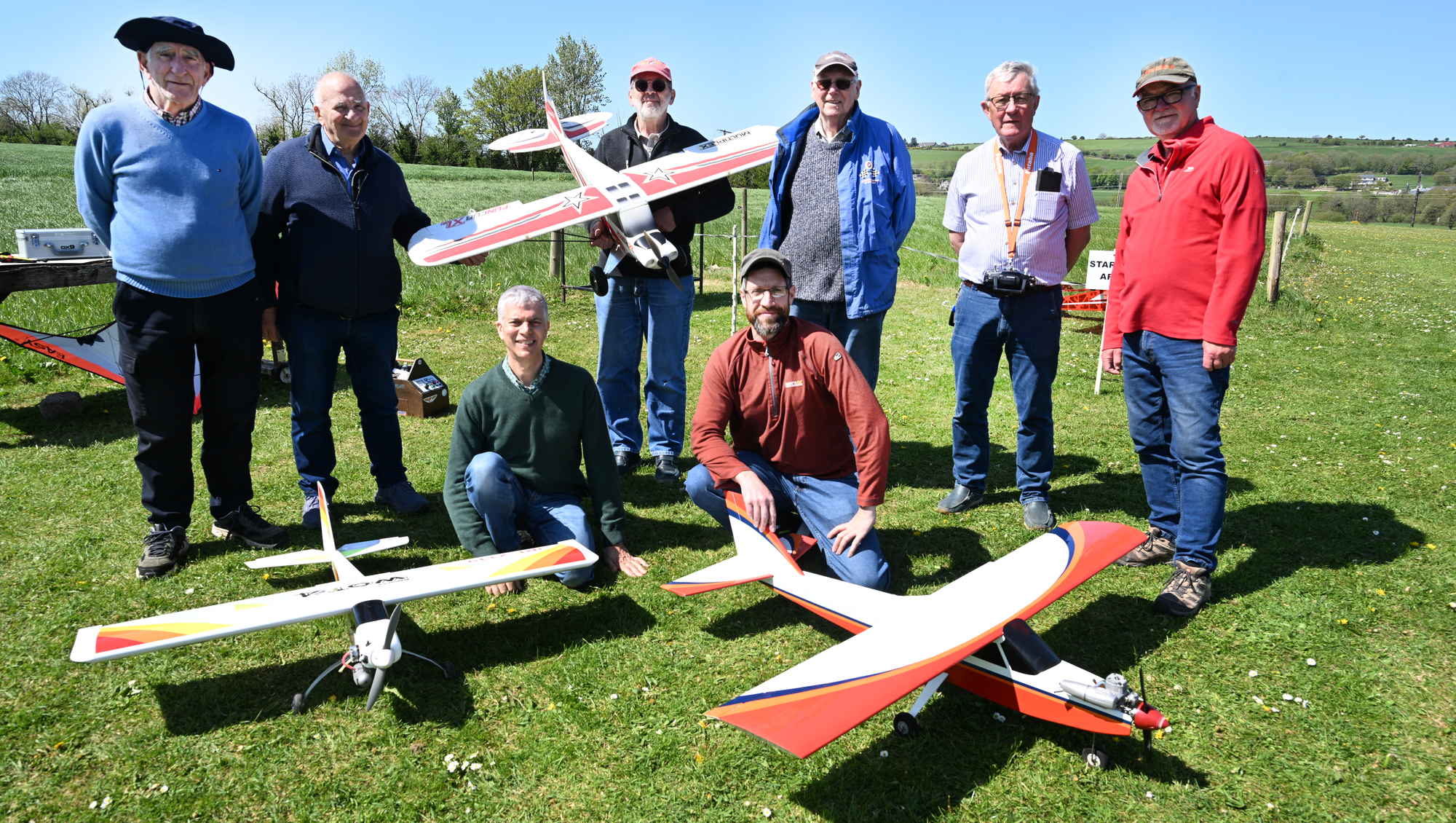
(Front left to right) Dave Duff and Edward Lowe (rear left to right) Robert Allen, Matt Quin, Club President, Les Gosnell, Barry Leach, Alex Hamilton and Ian Anderton at the Cork Model Aero Club site at Brinny, Co Cork. Picture: Larry Cummins
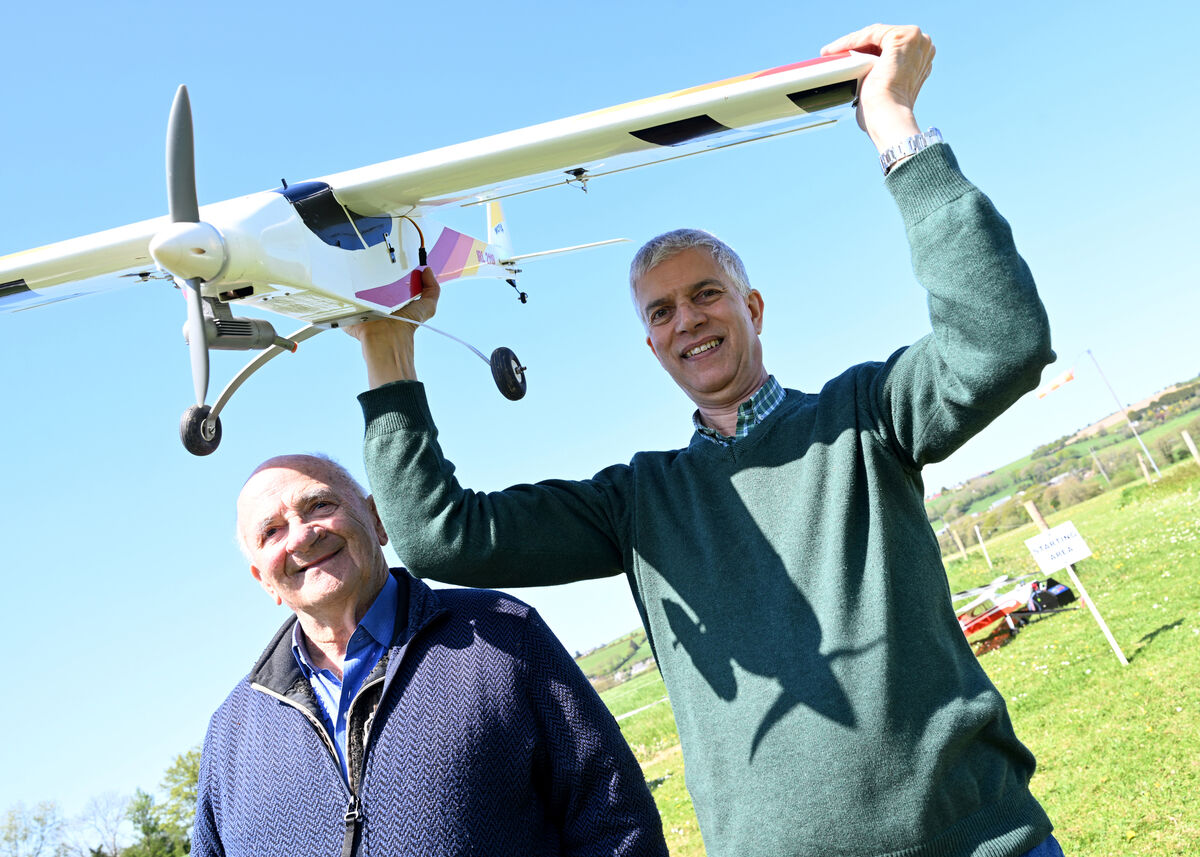
At almost 90 years old, Matt Quin has taken his love for model aeroplanes to new heights with a passion that began shortly after his beloved wife’s death.
The flying enthusiast is among the regulars at Cork Model Aero Club who are actively fighting to keep the sport alive amid dwindling membership.
After starting with the organisation 15 years ago, Matt has steadily worked his way up the ranks.
Registered with the Model Aeronautics Council of Ireland, he is among the oldest examiners in the country who is qualified to provide certification to members.
Similar to a traditional pilot’s check ride, members are required to meet certain criteria before their first solo flight.
This involves performing a list of manoeuvres to demonstrate competency and skill.
Speaking from the club's West Cork airbase, Matt said he hasn’t looked back since joining.
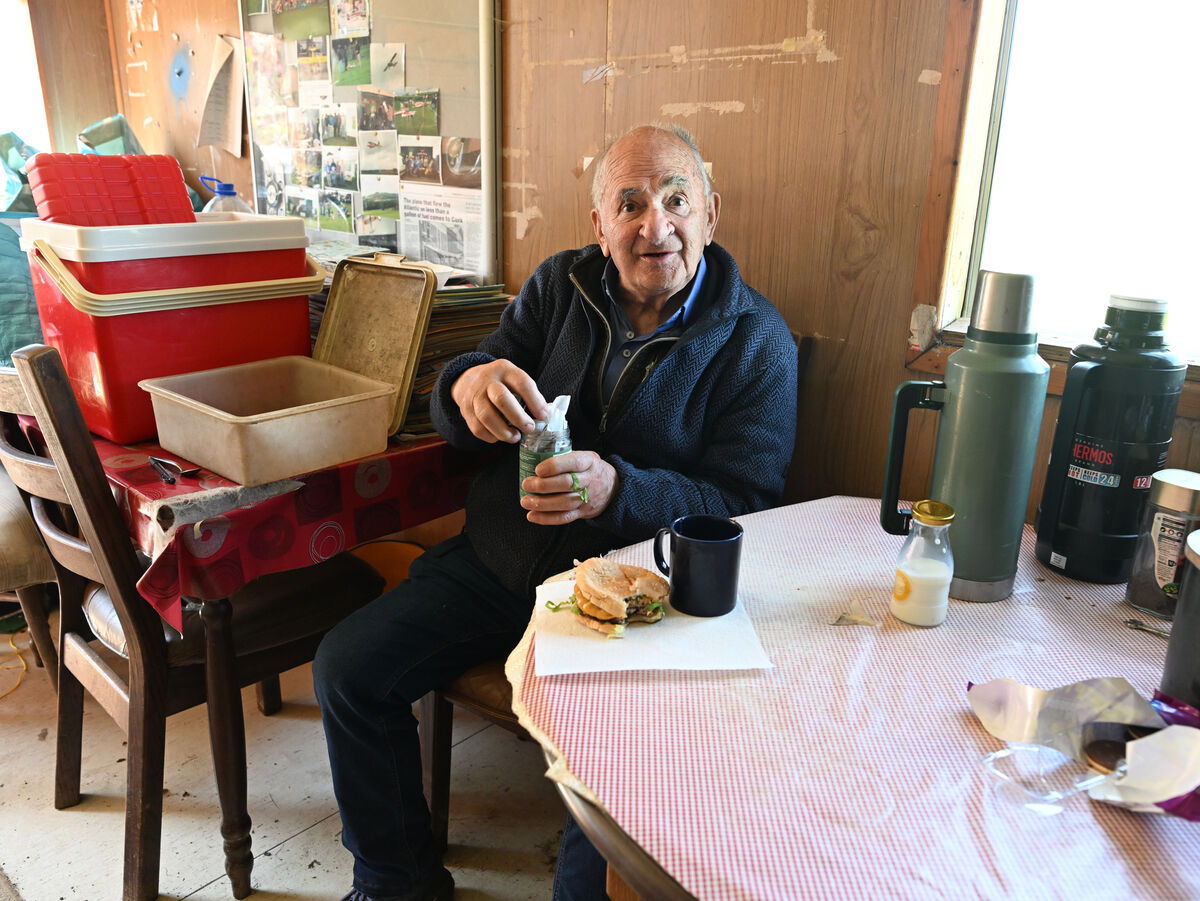
“My wife Violet died at 66,” he told the
“She had a rare disease that they couldn’t find a cure for. It meant she suffered a lot with health issues.
"I looked after her, but when she was gone, I knew I had to find something else.
They say it’s better to start golf with someone who is learning with you, but I could never find anyone.
"Then a friend told me about this place. I loved learning to fly, but the best thing about being here is the company.
"Old age is starting to creep in now. I had open heart surgery when I was 60 and I find it hard to walk with the arthritis, but I’m still coming here.”
Matt enjoys putting new members through their paces.
“The manoeuvres are easy enough, but to get the B cert is much more complicated.
"If you have a B cert you can fly in a public place or at a show, so it is nice to have.
"Most people who fail the test tend to blame it on the planes,” he said with a laugh.
The club has welcomed people from all walks of life since its inception in 1949.
A number of members enjoy flying at a competitive level, including former deputy principal and primary school teacher Eoin O’Callaghan.
“It was a friend who got me into it, so it was pure serendipity,” he told the . “His daughter and my daughter were in the same class. I went to see him and saw all these model aeroplanes on the shelf, and from that day on I was totally hooked.
"I’ve always had an interest in aviation. I was born and reared in Blarney St. I remember watching the planes fly overhead. I’ve also been to a lot of airshows in England over the years. Shortly after that, I bought my own model aeroplane.
"There was a man named Noel Barrett who had a model shop, who was very much the mover and shaker in the club.
"Seeing what my friend Paul had was the spur to action for me.”
Eoin specialises in aerobatic flying.
“There are a number of disciplines in the hobby. I have a particular interest in aerobatic flying where you do loops and rolls and draw shapes in the air with the model. This is just one circuit of the hobby.
"There is so much more, including scale models and drones. There is a group of us who meet four times a year in different parts of the country, and we fly in competitions.
"There is a minority interest in the hobby, and there are about 12 of us involved at this level. We’ve all had our successes and failures over the years, but it’s always an enjoyable hobby.”
He recalled introducing his pastime into the classroom for educational purposes.
"As deputy principal, I would have brought in the aeroplanes if they lent themselves well to a lesson,” he said.
“If I was doing a science lesson and the curriculum, on any given year, mentioned the idea of transport or some basic physics I was able to introduce them into the lesson.
"So many teachers have their own interests which they bring into the classroom to promote whatever the children are learning.
"With kids, you will do whatever you can to instil interest. That was in the pre-internet age when people built their own planes.
"I couldn’t tell you if any of them went into it afterwards. It’s a hobby that demands commitment and time.”
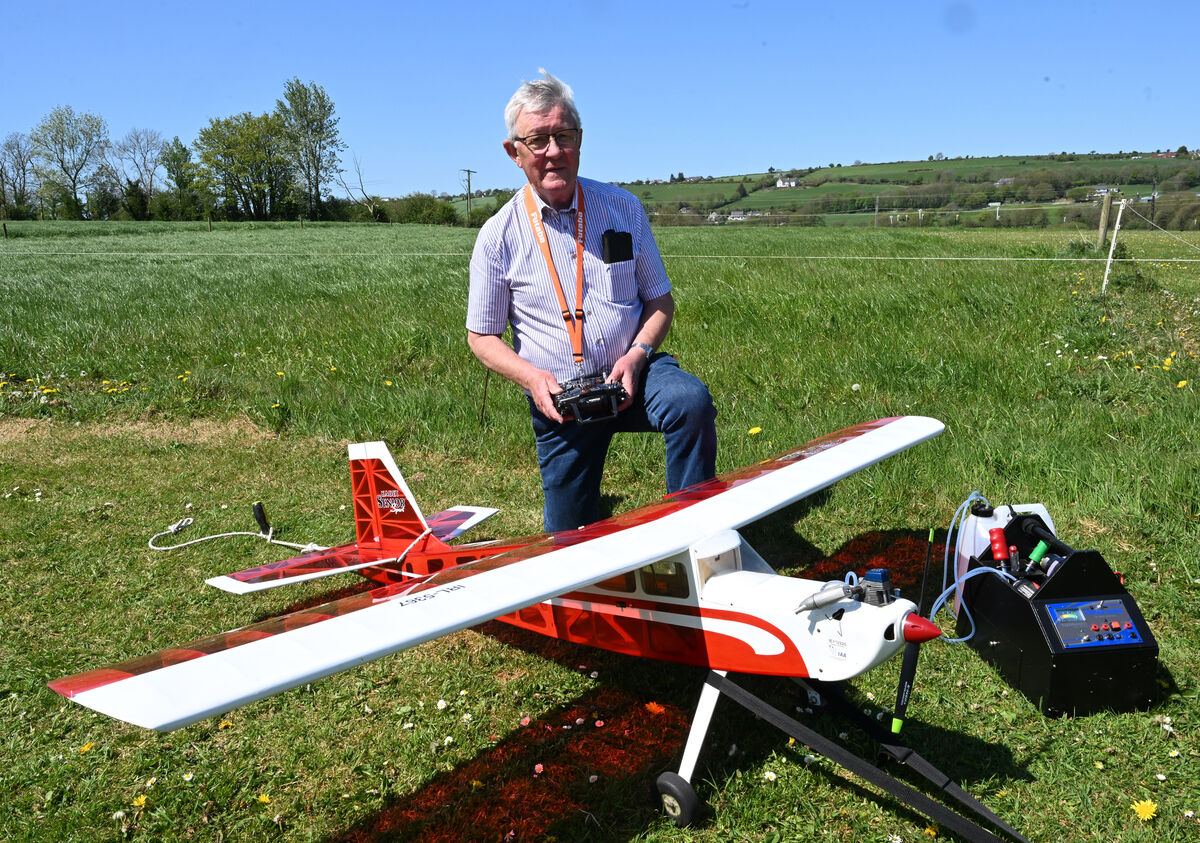
Not every flight goes off without a hitch.
“I have in the past lost a plane to radio failure, for example,” Eoin explained.
“In one of my earlier planes, the motor fell out as it was flying. The modern radios are so much more reliable now.”
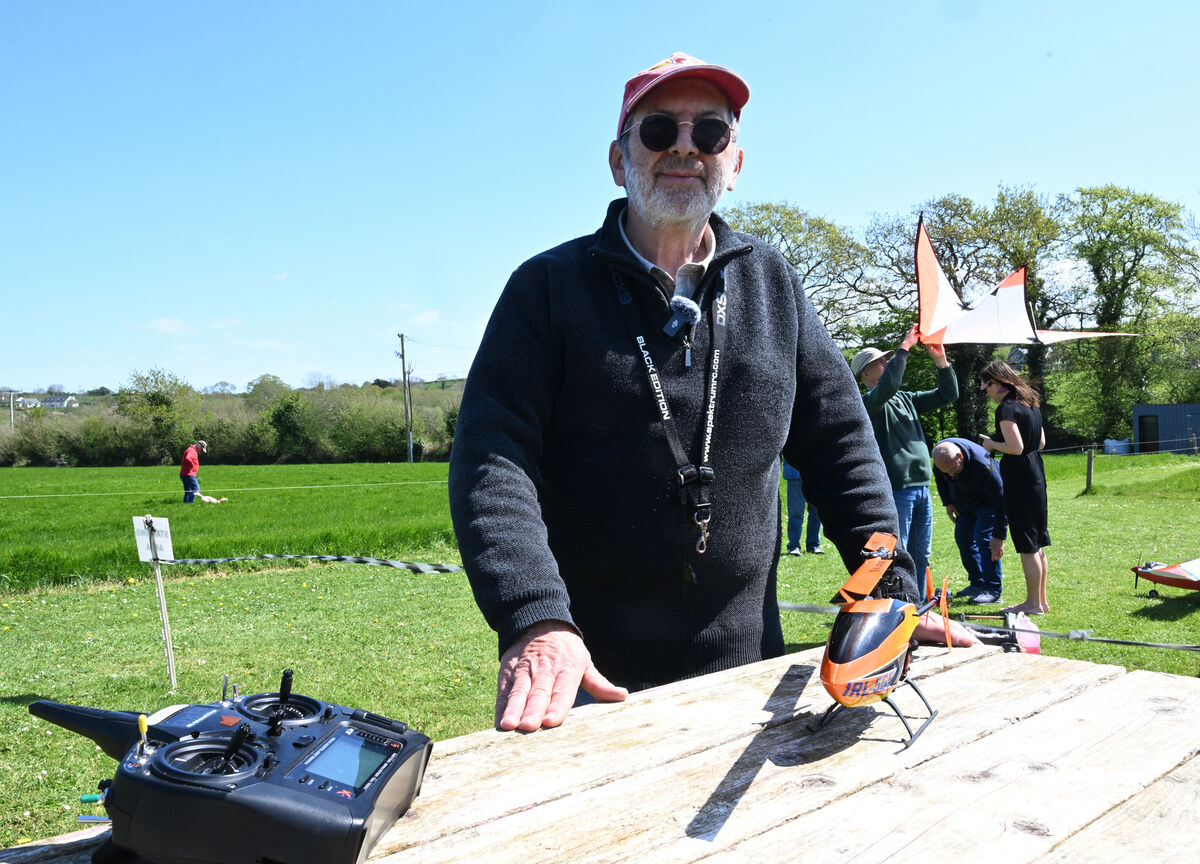
The airfield is a riot of colour with model aircrafts made from materials such as balsa wood, carbon fibre, plastic, and foam all on display. Models vary from planes tied together with rubber bands to radio-controlled replicas.
The novelty, however, isn’t what it once was.
Longtime member and club treasurer Les Gosnell explains: “Flying used to be very novel, but it’s not anymore. You can go into any supermarket and buy a drone and watch it fly.”
The club provides safe spaces for people who want to practise their hobby. It caters for unmanned aviation vehicles such as drones, gliders, helicopters, quadcopters, and fixed-wing planes.
"Members can avail of access to instructors and experienced pilots during sessions," says Gosnell. "They also have the opportunity to operate aircrafts which can only be flown in a dedicated facility. These include models with internal combustion engines."
It wasn’t until later in life that Al Hamilton experienced the joy of playing with toy aeroplanes.
“Most people here tried this when they were very small, but not in my case. It wasn’t until I was in my 30s that I tried free-flight gliders," he said.
"They were things you would launch from a hill and let go. You never knew where they were going to land. I always had a hankering to get into radio-controlled models.
"When I retired 18 years ago I decided to give it a go. After that, I looked into modelling. My nephew had a plane which he bought when he was 14, but he crashed it. It was left lying in a shed for 15 years, so I asked him if I could refurbish it.
"I did just that and learned to fly with it.
"I was taught by one of the members in the club, and came in here to do my test.
"There is a lot of red tape involved in so far, as you have to have a test and pass it and be registered with the Irish Aviation Authority.
"I did my test here in 2013. In order to pass you have to satisfy two examiners. There are about nine different manoeuvres involved, and most of them are quite simple.”
Teachers 'knew we were a little different'
Club secretary David Duff, who lives in Ballincollig, enjoys the nostalgia that comes with operating model aircrafts.
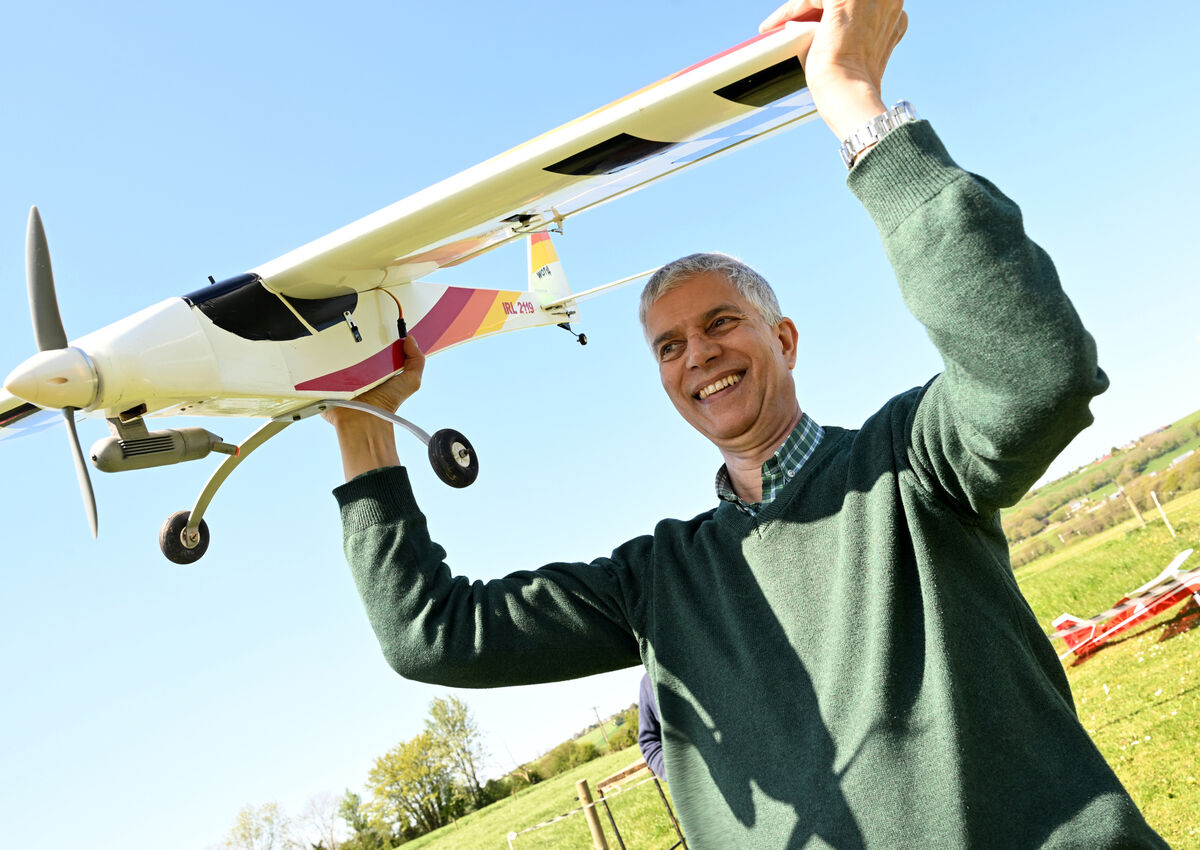
“I started back in the 80s when a group of us did planes at school on a control line. I was one of the bunch of strange kids who didn’t want to play hockey so we found ourselves another pitch instead.
"The teachers were used to it and knew we were a little different. Just like cars or motorbikes, model aeroplanes are in your blood. Twenty years ago I decided that I had to come back to it and I’m still here today.”
Club chairperson Edward Lowe admits it is becoming more difficult to attract younger members.
“Of course, this is a challenge, but there is also a sense of nostalgia about doing what you did with your dad as a child in adulthood.
"It’s a very different thing to going on to your Xbox or PlayStation. Access to interests online has detracted from young people’s interests in many ways. They will go on to YouTube, and that satisfies their curiosity.
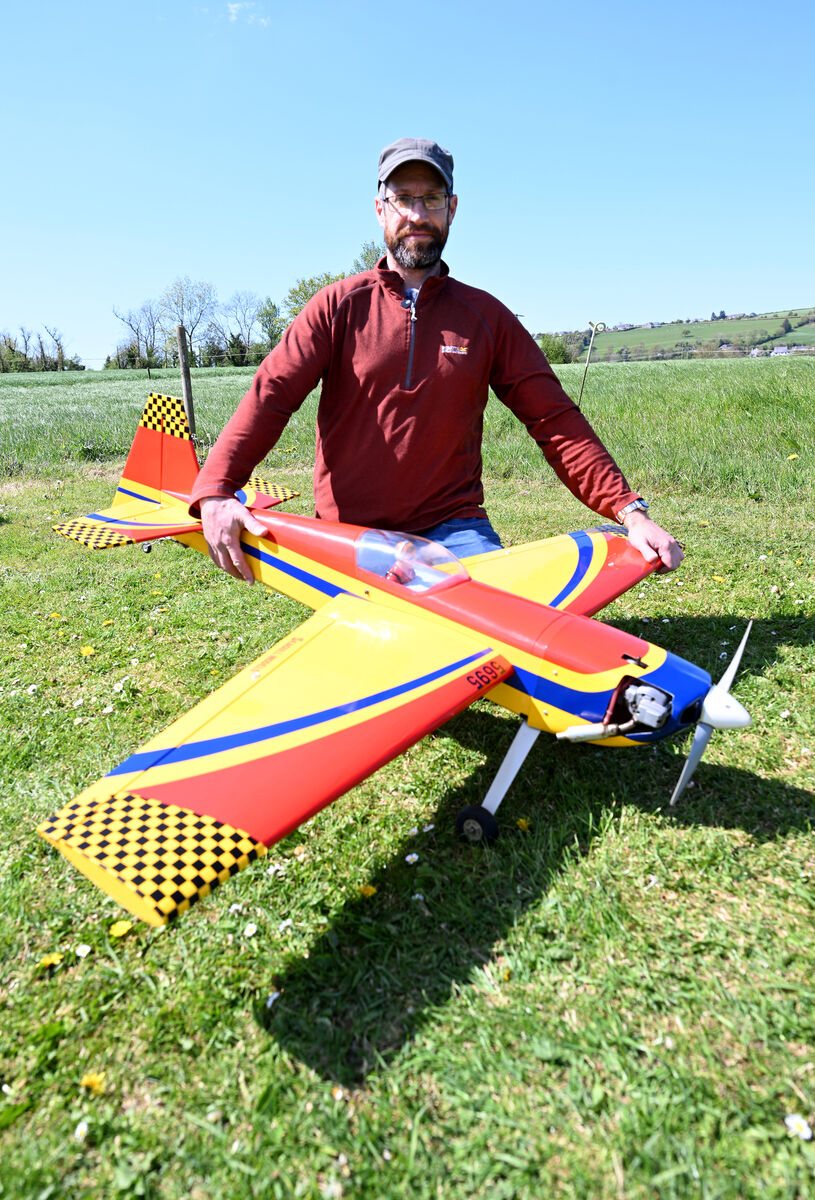
"They don’t have that extra push to go outside anymore. Activities now are definitely less tangible.”
The club is registered with the Model Aeronautics Council of Ireland, which is the governing body for radio-controlled model aircraft flying in Ireland.
The organisation promotes safe and responsible flying among its affiliated clubs. It also provides accreditation for flying skills.
The Model Aeronautics Council maintains a network of approved flying sites, which cater for everything from jets to gliders and more recently drones.
To find out more about Cork Model Aero Club, visit its official website

CONNECT WITH US TODAY



Be the first to know the latest news and updates