'Simply untenable': 1,200-bed DCU student development scrapped over soaring costs
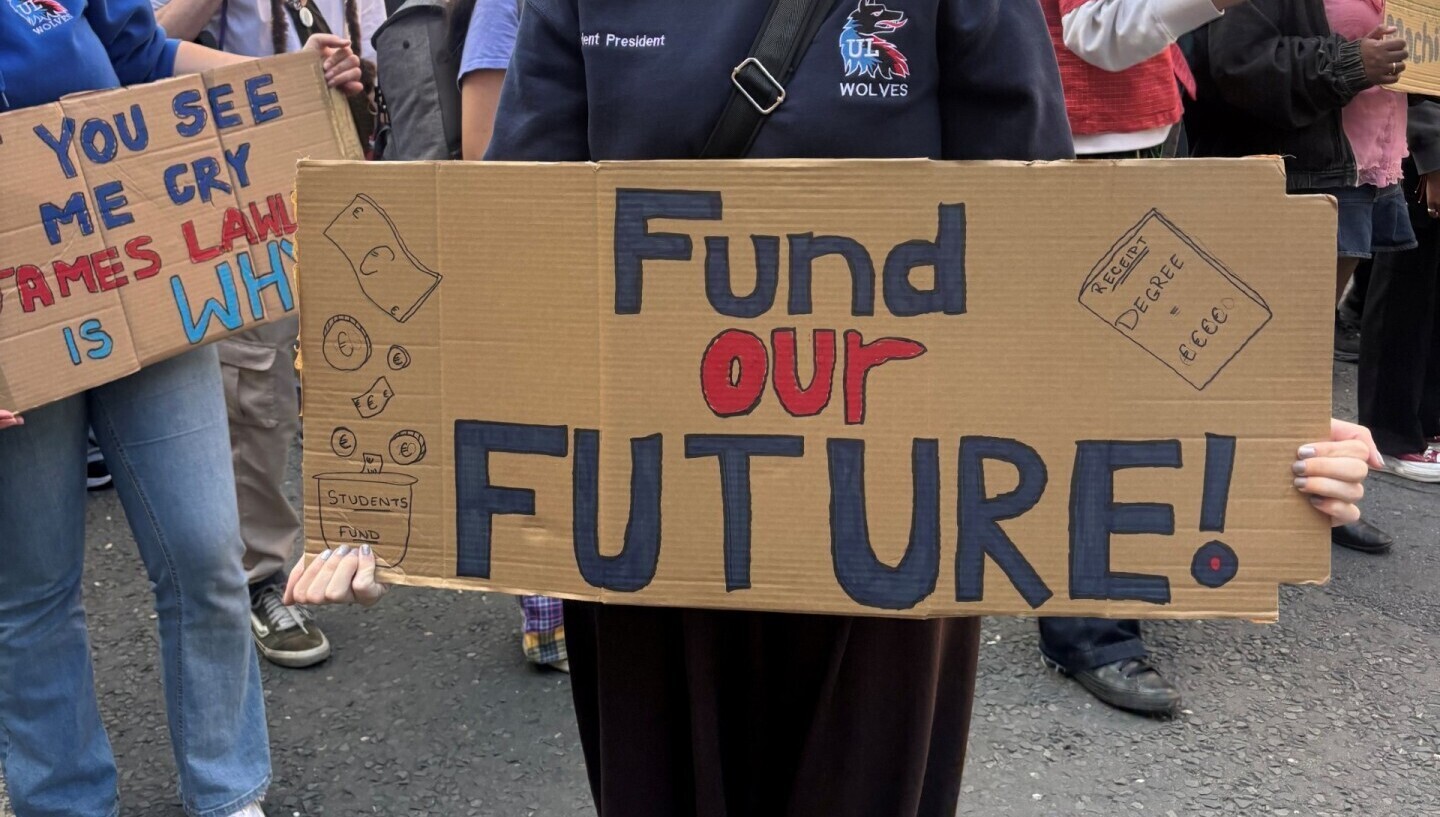
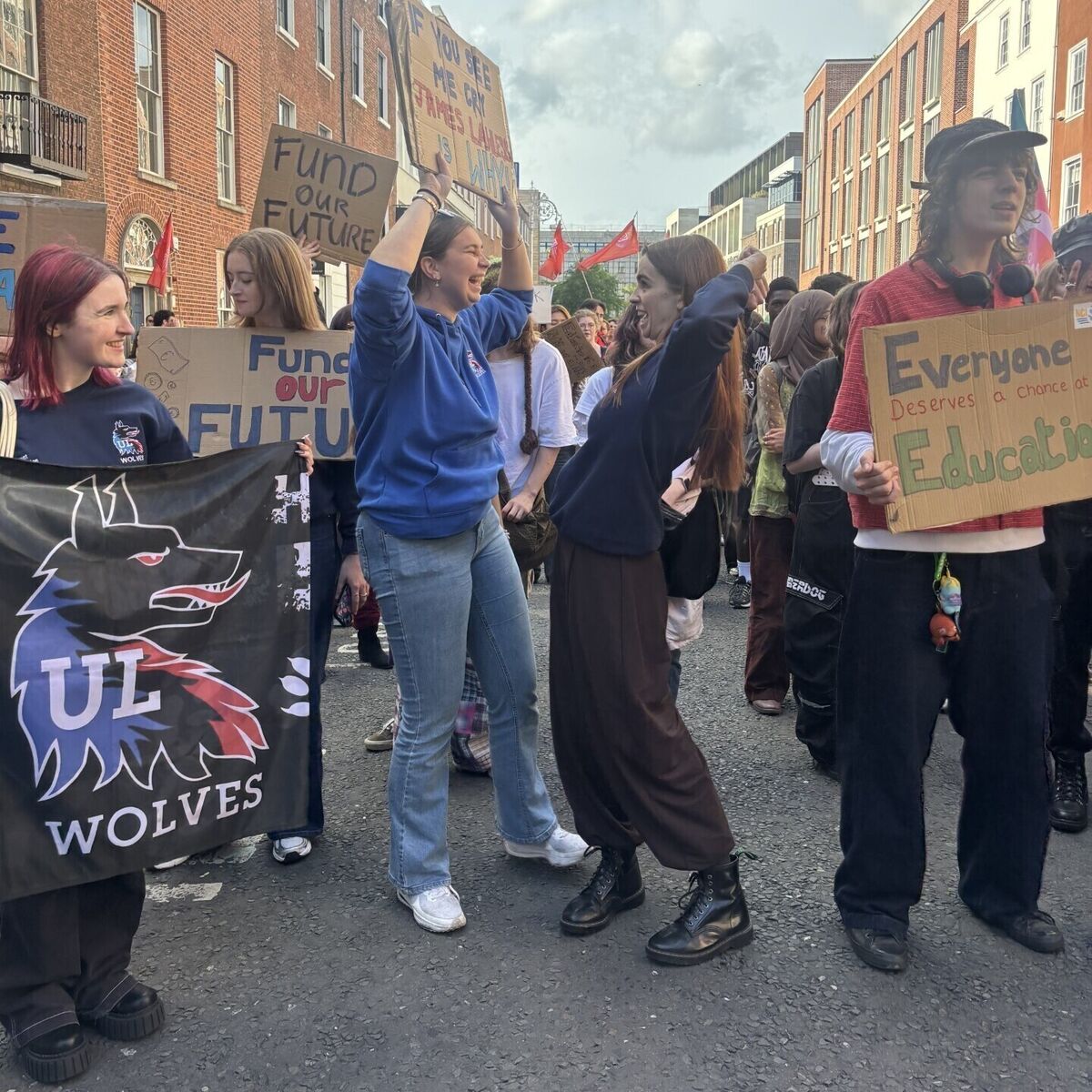
Students protesting outside Leinster House on Budget Day. Photo: Cate McCurry/PA
A planned 1,235-bed student accommodation project at Dublin City University that resulted in €4.38m in professional fees being written off is endemic of widespread challenges facing the student housing sector, an Oireachtas committee has heard.
DCU chief operating officer Declan Raftery told the Oireachtas committee on further and higher education that the project became “simply untenable” due to rising construction costs.
The development was to be delivered through a combination of State capital funding and university investment.
The previously reported that planning permission was granted in 2019, with the first phase of the project, comprising 405 bed spaces, brought to tender in 2023.
However, Mr Raftery said inflation in construction costs meant accommodation charges would have had to rise to about €16,000 for an academic year in order to make the project viable.
He said DCU was unable to “bridge the viability gap” between construction costs and capital grant supports. It would require €6.7m more in State funding in order to develop the project and bring rents down to €9,500 for an academic year.
“The department took a view that they couldn’t go any further because of availability of funds or value for money at that point in time,” said Mr Raftery.
The project has now been put forward to the Higher Education Institution Student Accommodation Programme, with hopes to be developed in conjunction with private developers.
Private-public partnerships form the cornerstone of a national student accommodation strategy launched by higher education minister James Lawless earlier this year. Under the plan, private developers would build on university-owned land.
People Before Profit TD Richard Boyd Barrett questioned whether collaboration with private sector involvement was necessary in addressing the student bed deficit. The Department of Higher Education aims to unlock 42,000 more beds in the space of a decade as part of the plan.
Sinn Féin TD Donna McGettigan said students would rather see the strategy “ripped up and thrown in the bin".
Mr Raftery suggested that accommodation could be delivered more effectively by universities because they could avoid corporation tax and take loans at low interest levels, positing that straight builds from the private sector would run into similar issues and price out students.
Deirdre Lillis, president of Technological University Dublin, said that in an ideal world, student accommodation would be 100% publicly funded.
Experts before the committee cited a funding gap in the higher education sector, which is estimated to be an accumulated deficit of €780m over four years.
Higher education institutions have long struggled to meet demand for student accommodation, the committee heard.
University of Limerick chief operations officer for Campus Life Services, John O'Rourke, said 5,500 students were unsuccessful in securing on-campus accommodation this year. He warned that shortages disproportionately affect students from lower socio-economic backgrounds.
"Student accommodation is therefore no longer simply a housing issue, it's an issue of higher education, student success and access to higher education," he said.
The rent-a-room scheme has created approximately 250 student beds for UL students over the past four years.
At the same committee meeting, MTU president Maggie Cusack said a lack of purpose-built student accommodation and transport infrastructure was creating an “appalling” gridlock centred around the college’s Bishopstown campus in Cork.
Ms Cusack said traffic was “creating a really poor student experience, quite appalling actually, thinking about the time our students are spending in cars".
“We’re literally driving all of the measures in the wrong direction, from climate to student experience."
Ms Cusack said housing was now the biggest barrier to student education.
"It saddens me to see large queues of traffic and to think that's the experience our students have day to day... We often think about what things cost, and I would challenge us to think of opportunity costs and what we're losing there."


CONNECT WITH US TODAY



Be the first to know the latest news and updates