Carbon emissions from flights out of Ireland's airports climbed 7% in first six months of year
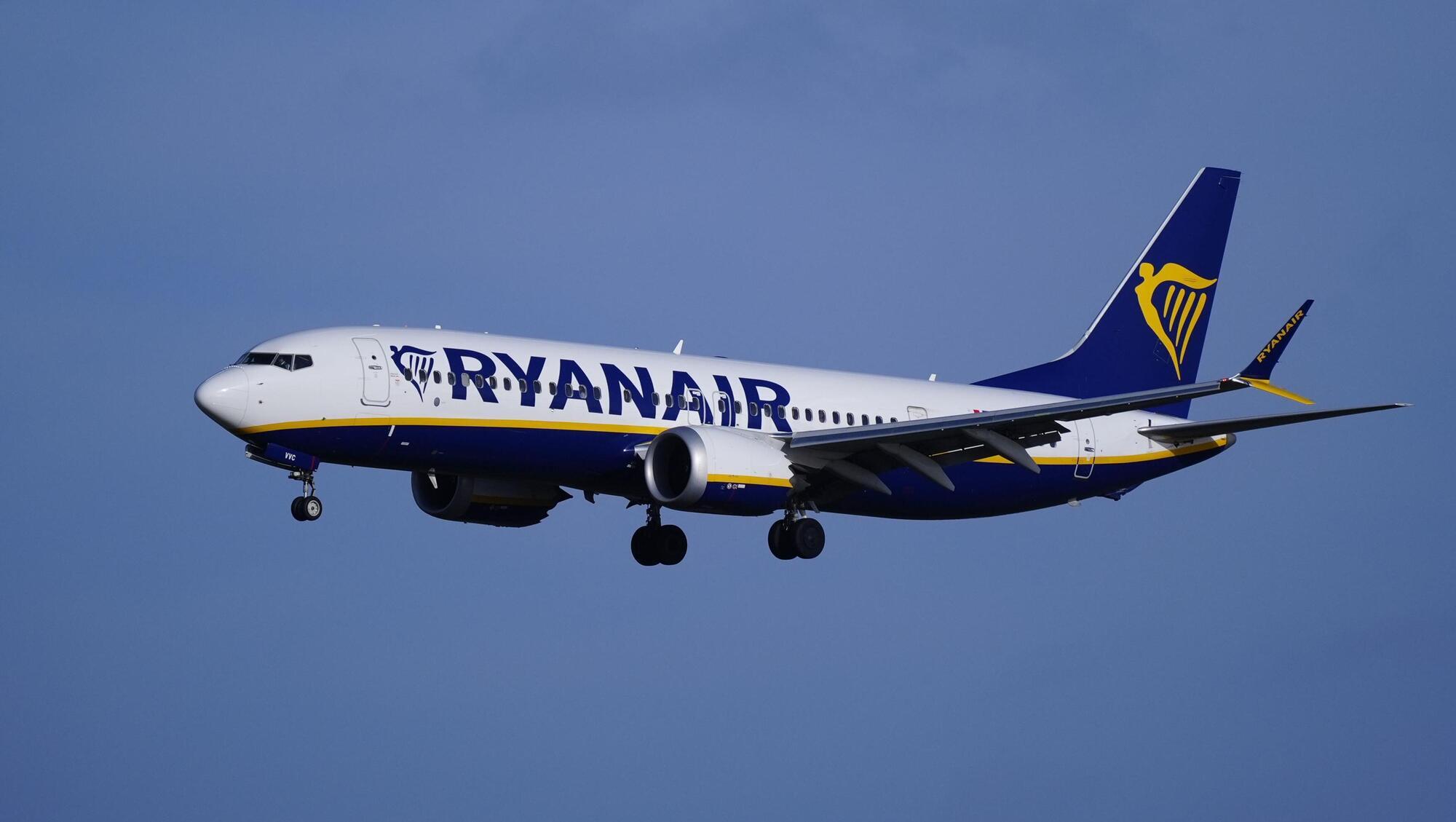
In the first half of this year, there were 157,515 flights from Ireland's airports, an increase of 6.7% on the same period last year. Picture: Peter Byrne/PA Wire
Carbon emissions from flights departing Ireland's airports rose by 7% in the first half of this year compared with the same period last year.
The Irish Aviation Authority’s first report on the operational environmental performance of Irish aviation entities found flights emitted 1.7 million tonnes of carbon dioxide.
The IAA said this was the highest level recorded since air traffic recovered from the covid-19 pandemic. In 2025, there were 316,784 flights to and from Irish airports, carrying 43.5 million passengers — the highest annual passenger total since the CSO began recording the data.
In the first half of this year, there were 157,515 flights, an increase of 6.7%.
While carbon dioxide is not the only climate-relevant output from aircraft engines, the authority said burning jet fuel also produced water vapour, nitrogen oxides, sulphur oxides, carbon monoxide, soot and unburnt hydrocarbons, and could create contrails.
“Emissions also arise from refining and transporting fuel to Irish airports,” the report said.
“Each of these has a different atmospheric lifetime and climate impact; most contribute to warming, while some can have a short-term cooling effect depending on conditions,” it added.
Meanwhile, Ireland performed better than the European average for continuous descent operations.
This involves an aircraft descending smoothly from cruising altitude with minimal level flight, reducing fuel burn, carbon dioxide emissions and noise.
Ireland achieved an average rate of 40.9% in the first half of the year, down slightly from 41.6% in 2025, but 6.9 percentage points above the European average.
The IAA said the performance rate was “strongly influenced by operations at Dublin Airport, which accounted for 63,000 descents out of a national total of 77,000 in [the first half of] 2026”.
"Dublin’s terminal airspace is more complex than that of other Irish airports and descending traffic is in part managed by a neighbouring air navigation service provider," it said.
Regional airports, including Donegal, Kerry and Ireland West Airport Knock, recorded stronger continuous descent operations rates of between 70% and 80%.
Performance among Irish-linked airlines declined from 42.7% in 2025 to 39.3% in the first half of this year.
However, Ryanair Group “significantly outperformed other operators”, recording a rate of 58.4% at Dublin Airport.
The IAA also said taxi times, which affect fuel burn and local emissions, improved at both Dublin and Cork airports.
At Dublin Airport, the average departure taxi time fell from 4.18 minutes to 4.11 minutes, while the average arrival taxi time dropped from 2.06 minutes to 1.90 minutes.
At Cork Airport, the average departure taxi time fell from 2.48 minutes to 2.35 minutes, while the average arrival taxi time decreased from 0.97 minutes to 0.80 minutes.


CLIMATE & SUSTAINABILITY HUB
CONNECT WITH US TODAY



Be the first to know the latest news and updates