EU-wide social media ban planned for under-13s
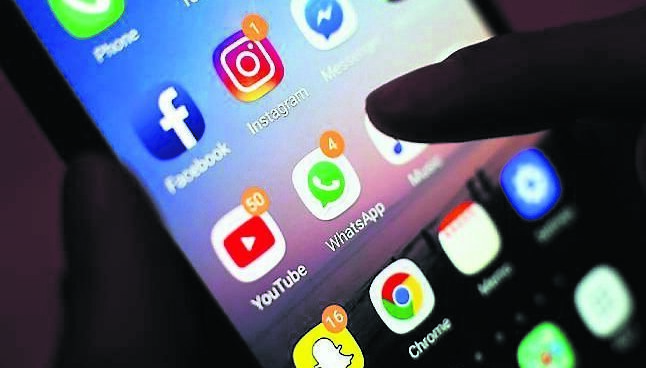
The measures would see a graduated approach based on age, with Ursula von der Leyen stating that social access would be banned for under-13s. File picture
A European-wide social media ban for children under the age of 13 and restrictions on those under the age of 15 is to be rolled out, with the president of the European Commission accusing tech giants of "capturing children".
The measures are unlikely to be introduced under Ireland's EU presidency, which runs until the end of the year.
In a strongly worded speech in which she warned that social media is resulting in "a great capture of our children" who are being "pulled ever deeper into feeds designed to keep them scrolling", Ursula von der Leyen announced ambitious plans to curtail the use of these platforms.
The measures would see a graduated approach based on age, with Ms von der Leyen stating that social access would be banned for under-13s.
So-called mini accounts would limit features and be set up and supervised by parents.
They would be available to people aged between 13 and 15 and would be limited to one hour per day.
Read More
A "safe design" would be an obligation for the platforms in relation to people between 15 and 18.
The proposals are aimed to cover social media, video sharing platforms, online gaming, and AI-powered services used by children and young people.
Ms von der Leyen said young people are spending between four and six hours looking at screens each day which is a "capture of their attention, their focus, their minds" and is "depriving children of their childhood".
In her so-called State of the Union address, Ms von der Leyen said: "What our children need is time to grow into themselves. To grow up with others. To be confronted with all of the emotions and choices that come with real life.
"They even need time to get bored. Because this is when they have to use their imagination. When they have to talk, agree, disagree, form an opinion, change an opinion.
"But when a child has a smartphone, all of this is taken away," she said.
In a wide-ranging speech, Ms von der Leyon also announced that:
- Canada will become the first associate member of the EU;
- Europe will set a goal to double the amount of renewable electricity generated by 2040, which could cut its fossil-fuel import bill by €260bn a year;
- The establishment of a European firefighting fleet will be explored to better deal with wildfires caused by climate change;
- A climate insurance alliance will be set up to address the fact that only around 25% of "catastrophe losses" due to droughts, floods, and other extremes in Europe are covered by private insurance.
While some countries, including France, have pushed ahead with national measures to limit social media for young people, the Irish Government has been advocating for a European-wide approach.
Welcoming the announcement, media minister Patrick O'Donovan said: "This ticks a lot of the boxes that I was looking for over the last year and a half in bilateral meetings with my colleagues and indeed with the commission vice president [Henna] Virkkunen, who has been extremely supportive of Ireland's position."
Mr O'Donovan said officials have already engaged with the European Commission on progressing the measures.
He said he would also be engaging with his Lithuanian counterpart as "there's going to have to be a bit of an overlap" between Ireland's presidency and that of Lithuania, which begins in January.
Children's charity Barnardos welcomed the measures, which will be contained in a new EU Kids Act.
However, it also raised concerns that the changes would rely on significant parental involvement for children aged 13-15.
Barnardos online safety programme co-ordinator Niamh McLoughlin said it remains to be seen how age verification will work in practice and ensure children’s privacy is protected.

CONNECT WITH US TODAY



Be the first to know the latest news and updates