Caitríona Redmond: Are you emergency ready? Here's my non-negotiables
Is the emergency booklet the new iodine tablet, or should we take some steps to put an emergency plan in place this winter. 
Believe it or not, it’s unsafe to drink directly from the hot tap in the attic’s storage tanks, so always boil water in emergencies, says Caitríona. 

Believe it or not, it’s unsafe to drink directly from the hot tap in the attic’s storage tanks, so always boil water in emergencies, says Caitríona. 

THE booklet slid onto the doormat last month. I picked it up, popped it into a drawer, and forgot about it until I did a clear-out this week. It feels hefty until you realise it’s double-sided — half in English and half in Irish.

Inside the drawer as well, I found a distinctive battered orange box, marked ‘iodine tablets’. I’ve safely disposed of those, don’t worry, but it really got me thinking about whether the newer emergency advice booklet was worth the paper it was written on.

From my perspective, if you don’t have an emergency plan now, you’ve missed a lot of weather-related news over the past two years.

Even though I was a small child when Hurricane Charlie hit in 1986, it was a significant weather event for those of us alive at the time. 

Maybe that, combined with the heavy snow of 1982, which I remember as a wonderful era, has contributed to my personal interest in weather and climate. To be fair, my mother doesn’t view living in a fairly rural area with little heating and two small children at the time through the same rose-tinted glasses.

More recently, storms have reminded us how fragile society’s hold on the Irish landscape is.

Remember the damage to Holyhead Port two years ago? In December 2024, Storm Darragh caused infrastructure damage between Ireland and the UK in the lead-up to Christmas, with knock-on effects on transport and deliveries.

Then, in early January 2025, Storm Éowyn arrived even stronger, causing record-breaking damage, particularly in the south and west. In the worst-hit areas, that meant spending up to 18 days without power, stuck in snow that arrived shortly after Éowyn blew through the country. The knock-on effects continue to be felt in the worst-impacted areas.

Earlier this year, we had more damaging storms, the worst of which were ‘Amy’ and ‘Chandra’. Now, we have a record-breaking ‘Super El Niño’ that has strengthened to unprecedented levels and is expected to peak before December. This natural climate phenomenon will affect global weather patterns. While its impact on weather in Ireland is less certain, more intense weather globally will certainly affect imported fresh and manufactured products to our island nation.

According to a study published last year by Maynooth University, supported by Met Éireann, climate change is increasing rainfall and flood risk. Small wonder that the Government and the EU want us to be prepared in the event of an emergency, which is where the booklet originated.

In the light of this, while the iodine tablets were a well-intentioned initiative that fell out of use over time, it’s fair to say that having a general household emergency plan is a sound idea.

Are we all going to be preppers now?

Well, a prepper is someone prepared for all eventualities, even societal breakdown. I’m an optimist who believes that even if we lose power, we have strong communities across the island that will pull together in the event of a catastrophe. That said, there is nothing wrong with reading the booklet in your language of choice and considering the advice it contains.

We are so used to everything working as normal that being disconnected from the internet, power, and water feels like a major inconvenience. But what if that were an issue for a prolonged period? How would we manage without our daily necessities?

For me, drinking water is one of the most important considerations. It can be as simple as the local pumping station losing power, but if the water stops running, how can you make sure you have safe, potable (drinking-standard) water? 

You may not realise that filter jugs only remove larger particles, and if tap water is contaminated, a standard carbon filter won’t protect people from bugs or diseases.

Believe it or not, it’s unsafe to drink directly from the hot tap in the attic’s storage tanks, so always boil water in emergencies. After boiling, you can filter it to improve the taste. It helps to boil water in bulk, then keep empty bottles on hand to pour the cooled, boiled water into and store for later.

As I camp regularly, I have empty bottles and something called a ‘life straw’, a small, portable filter that attaches to the neck of a bottle and lets you filter water directly. 

It’s an interesting gadget, which sits alongside my fire steel for lighting fires. There’s no way water can prevent me from starting a fire or lighting a candle.

You can get both from a reputable camping store.

Another of the emergency booklet’s most interesting recommendations is to keep a stash of cash on hand.

Recent research shows that less than 5% of pub transactions are made with cash, while the rest are a mix of debit card and contactless payments.

For my part, I rarely carry cash, but I can see how important it may be during an extended power outage. So yes, I’ll take the booklet’s advice and stash a small sum for emergencies.

Finally, remember that power banks and battery-operated appliances need proper maintenance to hold a charge over time.

Try charging your phone or another device once a week to make sure any power banks you use are in tip-top condition.

For anyone who hasn’t seen the booklet, or who’s lost it by now. You can find it here.

REDMOND RECOMMENDS

Every year as winter approaches, I fill a large waterproof box with emergency essentials I can turn to if disaster strikes. The whole family knows where it is, and hopefully we never have to use it.

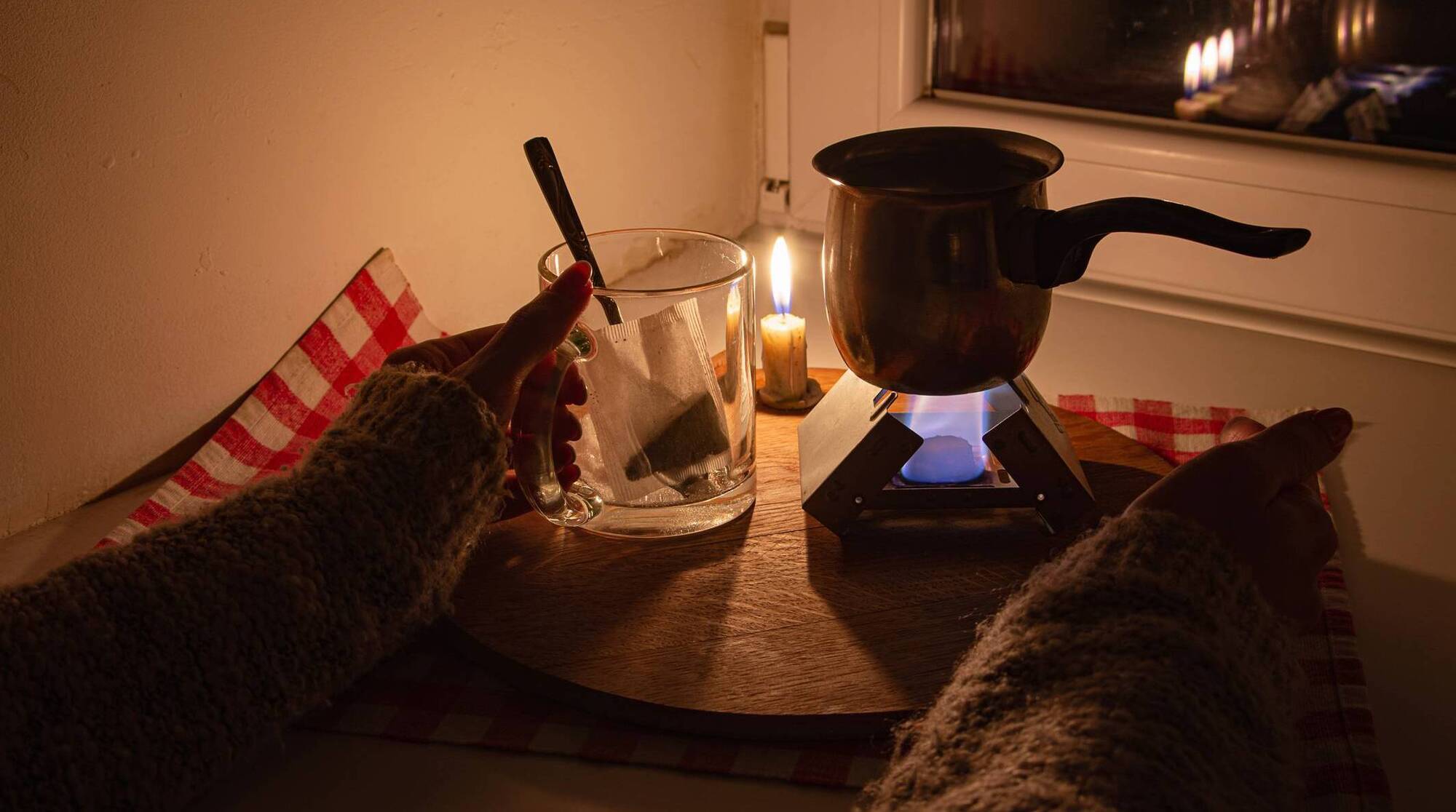
My non-negotiables are a wind-up radio and wind-up torch because they work straight out of the box, and a small gas stove so that I can boil water and cook for the family in a pinch.

For others, that may mean vital medication or games to keep the kids occupied. Think about what is important to you.

Here’s hoping we can put the box away next spring, never having had to open it or use the contents.

CLIMATE & SUSTAINABILITY HUB

More in this section

Lifestyle

Newsletter

Eat better, live well and stay inspired with the Irish Examiner’s food, health, entertainment, travel and lifestyle coverage. Delivered to your inbox every Friday morning.

Cookie Policy Privacy Policy Brand Safety FAQ Help Contact Us Terms and Conditions

© Examiner Echo Group Limited