Wind energy: Councils raked in almost €75m in rates from wind farms last year
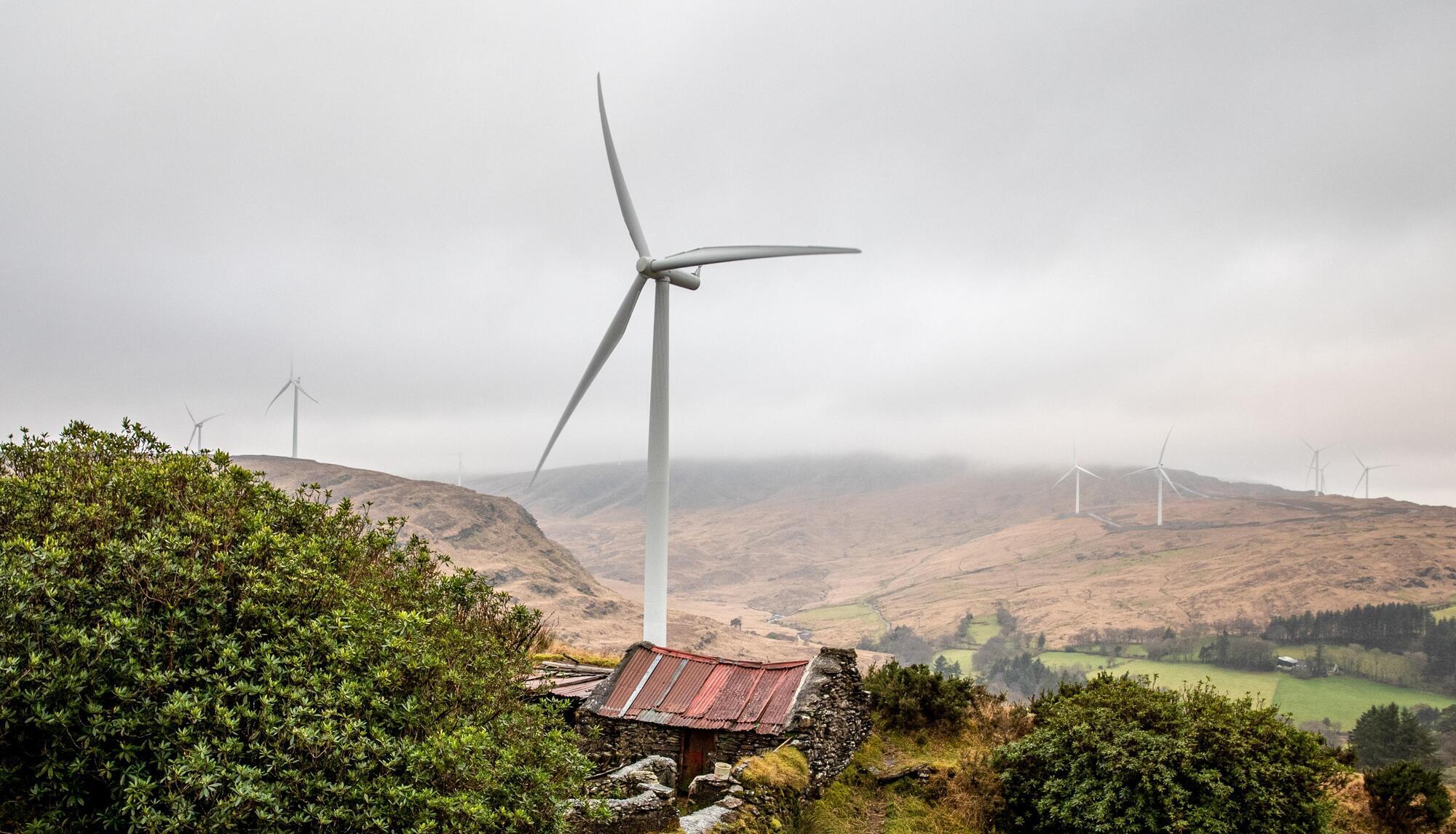
The ESB’s Grousemount Wind Farm, near Kilgarvan, Co Kerry and Coolea, Co Cork. The two county councils are in the top three of Ireland's top earners of commercial rates from wind farms. File picture: Neil Michael
County councils made over €74.8m in commercial rates from wind farms last year, up €5.6m on 2024 figures, according to a survey of Wind Energy Ireland data.
In many local authorities, income from wind farms accounts for between 15% and 30% of all commercial rates collected, making councils among the biggest financial beneficiaries of wind energy developments.
Kerry receives the largest amount, collecting just over €11m annually from wind farms, equivalent to more than a fifth of its total rates income.
The county also has the highest installed wind energy capacity in the State at 795MW — enough to power up to 800,000 average-sized homes.
Its wind farms generate around 1,589GWh of electricity annually, enough to meet the yearly needs of more than 380,000 homes.
CLIMATE & SUSTAINABILITY HUB
The second biggest council beneficiary is Offaly, which rakes in nearly €8m in rates every year, accounting for 30.9% of their total rate receipts.
Cork County Council receives €7.6m, accounting for 5.5% of their received rates while in Mayo, which gets €7.4m in rates, the money received accounts for 16.2% of their total take.
This article is part of the in the 'Irish Examiner' today, Monday in print and online here from 6am.
As counties Kildare, Longford, and Westmeath don’t have any wind energy capacity, they receive nothing in rates.
Fingal County Council in north Dublin receives the lowest amount in rates from its 1.3MW capacity, totalling just €5,137 last year. It has the lowest capacity in the country.
Councils aren’t the only recipients of millions in direct funding from wind power companies.
Communities living around wind farms nationwide also receive millions in funding every year. They received €6.5m in 2024.
This is largely because of the Government’s respective offshore and onshore renewable electricity support schemes (RESS).
Under both schemes, set up to help Ireland reach an EU-mandated target of at least 80% renewable electricity by 2030, the State guarantees a minimum and a maximum price for electricity supplied to the national grid.
The measure is funded by a public service obligation (PSO) levy on all electricity bills.
It gives certainty to firms that want to invest in wind energy in Ireland, by in effect giving a State-backed guarantee on their expected earnings for up to 16 years.
However, a condition of any wind project operating on either scheme is that they are required to establish a community benefit fund (CBF). The contribution is set at €2 per megawatt hour (MWh) of generation of RESS.
For example, a 10MW wind farm producing 30,000MWh per year would contribute around €60,000 to its CBF.
CBFs must make direct payments of €1,000 a year to all households located within a 1km radius of onshore wind projects, as well as lesser payments for homes 1km-2km of wind projects.
At least 40% of the fund has to support local projects focusing on initiatives aligned with the 17 United Nations Sustainable Development Goals.
In the case of Grousemount Wind owned by ESB subsidiary Kerry Wind Power Ltd, for example, its CBF pays out €145,605 every year to the wind farm community.
With an expected lifetime of 25 years, the estimated total community investment from the fund will exceed €4.7m.
Childcare facility Newbliss Childcare Services in Monaghan received a €30,000 investment through Energia’s Drumlin Park Wind Farm community fund. It will support the construction of an extension, increasing capacity for children between 18 and 24 months at a facility which often faced long waiting lists due to high demand in the surrounding area.
Other beneficiaries of CBFs from local wind farms include a new community hub in Limerick, new fencing, walkway, and flood lights for Mullinavat GAA Club in Kilkenny, a state-of-the-art kids’ playground in Cavan, and a new GAA pitch for a school in Donegal.
Communities in Galway, which receives €4.9m in rates from wind projects, received €1.1m in CBFs. Residents in Co Cork received the second highest amount in CBFs, at a total of €812,119.
The council areas that received nothing in rates or CBFs in 2024 were Kildare, Longford, and Westmeath.
As well as direct financial benefits to local communities, a number of wind farms are starting to emerge as popular tourist attractions.
These include Mountlucas Wind Farm in Offaly, which has a 21km network of traffic-free walking, running, and cycle paths, and the Galway Wind Park, which offers 48km of recreational trails through the Cloosh Valley.


CLIMATE & SUSTAINABILITY HUB
CONNECT WITH US TODAY



Be the first to know the latest news and updates