Going electric won’t clean up our hedgerows. So what can be done?
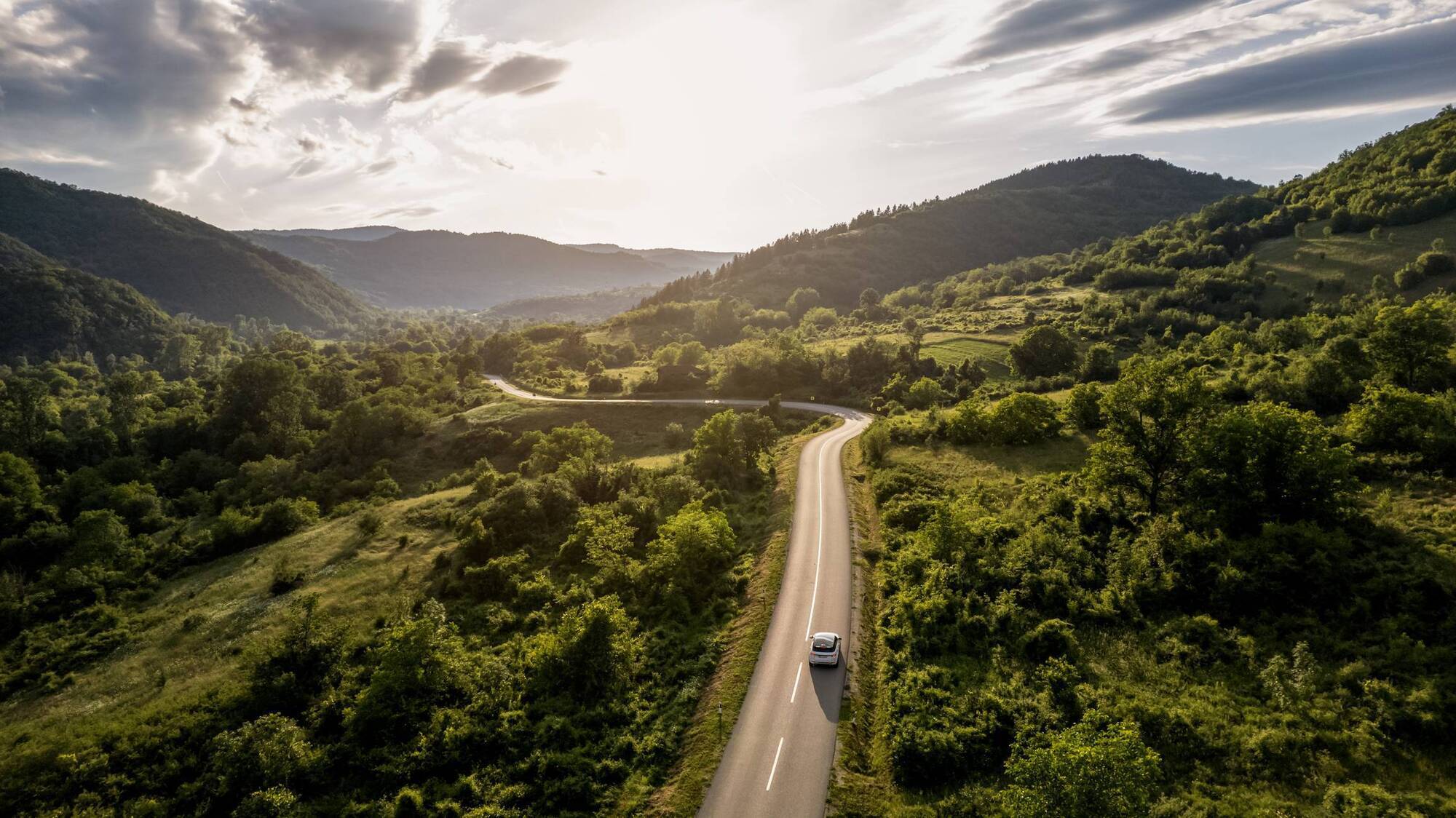
We tend to treat hedges as attractive boundaries, but they are busy doing a lot of work. They provide food and shelter for wildlife, connect fragmented habitats, store carbon, and slow water moving across the landscape. Beside roads, their leaves and branches can also intercept airborne particles
Michelle McKeown: "With more electric vehicles appearing on Irish roads, however, could the blackberry bush beside the road eventually become a cleaner place to forage?" Picture: iStock.

Michelle McKeown: "With more electric vehicles appearing on Irish roads, however, could the blackberry bush beside the road eventually become a cleaner place to forage?" Picture: iStock.

There comes a point every summer when Ireland’s hedgerows start handing out free food. Blackberries appear almost overnight, hanging in dark clusters along roads, boreens, and field boundaries. You begin by picking one or two and, 10 minutes later, your fingers are purple, your arms are scratched, and the container you brought is still mostly empty because you have eaten the evidence. Then the sensible part of your brain interrupts.

These are growing beside a road. Are they actually safe to eat? It is a fair question. Roadside fruit has long had a slightly dubious reputation. We imagine berries coated in diesel fumes, brake dust, and whatever else has been thrown into the air by passing traffic. With more electric vehicles appearing on Irish roads, however, could the blackberry bush beside the road eventually become a cleaner place to forage?

To some extent, yes. Electric vehicles have no exhaust pipe, which is rather important. Petrol and diesel cars release nitrogen oxides, fine particles and a complicated mixture of other pollutants directly into the air. These pollutants are particularly concerning in towns and cities, where traffic emissions build up around busy roads and where large numbers of people are exposed. Replacing a petrol or diesel car with an electric one removes those tailpipe emissions. That is good news for lungs, leaves, and anything else unfortunate enough to live beside a busy road. It is not, however, the same as removing pollution altogether.

Cars produce particles in other ways. Tyres wear down. Brake pads wear down. Road surfaces slowly break apart. Passing vehicles also lift dust that has already settled back into the air. These are known, rather unimaginatively, as non-exhaust emissions. The important point is that these do not disappear when a car becomes electric. However, electric cars generally produce less brake dust because regenerative braking allows the motor to slow the vehicle and recover energy. Tyres are more complicated. Electric vehicles are often heavier because of their batteries, and heavier vehicles can place greater pressure on tyres and roads.

Much also depends on the type of car and how it is driven. A small electric car moving gently through town is a very different proposition from a large electric SUV being launched away from every traffic light as if qualifying for the next grand prix. So, although electric vehicles are cleaner, they are not pollution-free.

This is where the hedgerow comes in. We tend to treat hedges as attractive boundaries, but they are busy doing a lot of work. They provide food and shelter for wildlife, connect fragmented habitats, store carbon, and slow water moving across the landscape. Beside roads, their leaves and branches can also intercept airborne particles.

In effect, hedgerows can act as living filters. That can help reduce the amount of pollution travelling beyond the road, particularly where a hedge is dense and positioned well. The problem for the hedge is that filtering pollution usually means catching it. Dust and particles can settle on leaves and fruit, including blackberries. This does not mean every roadside blackberry should come with a public health warning.

A study published in 2024, led by Dr Chamberlain and a team at Canterbury Christ Church University in the UK, looked at wild blackberries collected beside a main road in Kent and tested them for copper, cadmium, and lead. The researchers compared washed and unwashed berries and found that washing reduced lead levels. Importantly, all the measured lead concentrations were below the relevant food safety limit, even before the berries were washed. That is reassuring, although it is not a universal guarantee. One roadside in England cannot tell us what is happening beside every road in Ireland. Conditions vary enormously. A quiet country lane is not the same as a motorway.

A hedge beside farmland is not the same as one near an industrial site. The history of the soil also matters. Lead is a useful example. Leaded petrol has been banned for decades, but the lead deposited during the years when it was widely used did not vanish along with the petrol pumps. It can remain in roadside soils for a very long time, particularly beside older, heavily trafficked roads. Plants may also take up some contaminants through their roots, although this varies according to the metal, the soil and the plant species involved. Blackberries are not generally considered especially dangerous accumulators under ordinary conditions, but fruit growing on contaminated land is a different matter.

The sensible advice, then, is probably much the same as the advice your gran would have given, although possibly with fewer references to heavy metals. Avoid picking berries beside very busy roads, motorways, or obvious industrial sites. Choose fruit from quieter lanes, walking routes, or hedges set back from traffic. Pick above the height most dogs can reach, for obvious reasons. Wash the berries properly when you get home. And do not pick every last one. Birds, insects and small mammals have been waiting all year for them, too.

The move towards electric vehicles should improve roadside air quality, particularly by reducing exhaust pollution. That is a genuine environmental and public health benefit. But it will not turn every roadside into a pristine foraging site. Cleaner transport involves more than changing what powers the engine. It also means reducing unnecessary journeys, making vehicles lighter, improving public transport, and creating places where walking and cycling are realistic choices. In the meantime, our hedgerows will continue quietly cleaning up after us. The least we can do is wash the blackberries.

  • Chamberlain, LK, Scott, H, Beddoe, N, and Rintoul-Hynes, NLJ (2024) Heavy metal contamination (Cu, Pb, and Cd) of washed and unwashed roadside blackberries (Rubus fruticose L.)’, Integrated Environmental Assessment and Management, 20(6), pp. 2107–2115. doi: 10.1002/ieam.4981.

x

More in this section

Revoiced

Newsletter

Had a busy week? Sign up for some of the best reads from the week gone by. Selected just for you.

Cookie Policy Privacy Policy Brand Safety FAQ Help Contact Us Terms and Conditions

© Examiner Echo Group Limited