'A powerful tool': Use of artificial intelligence on trial in Ireland's justice system
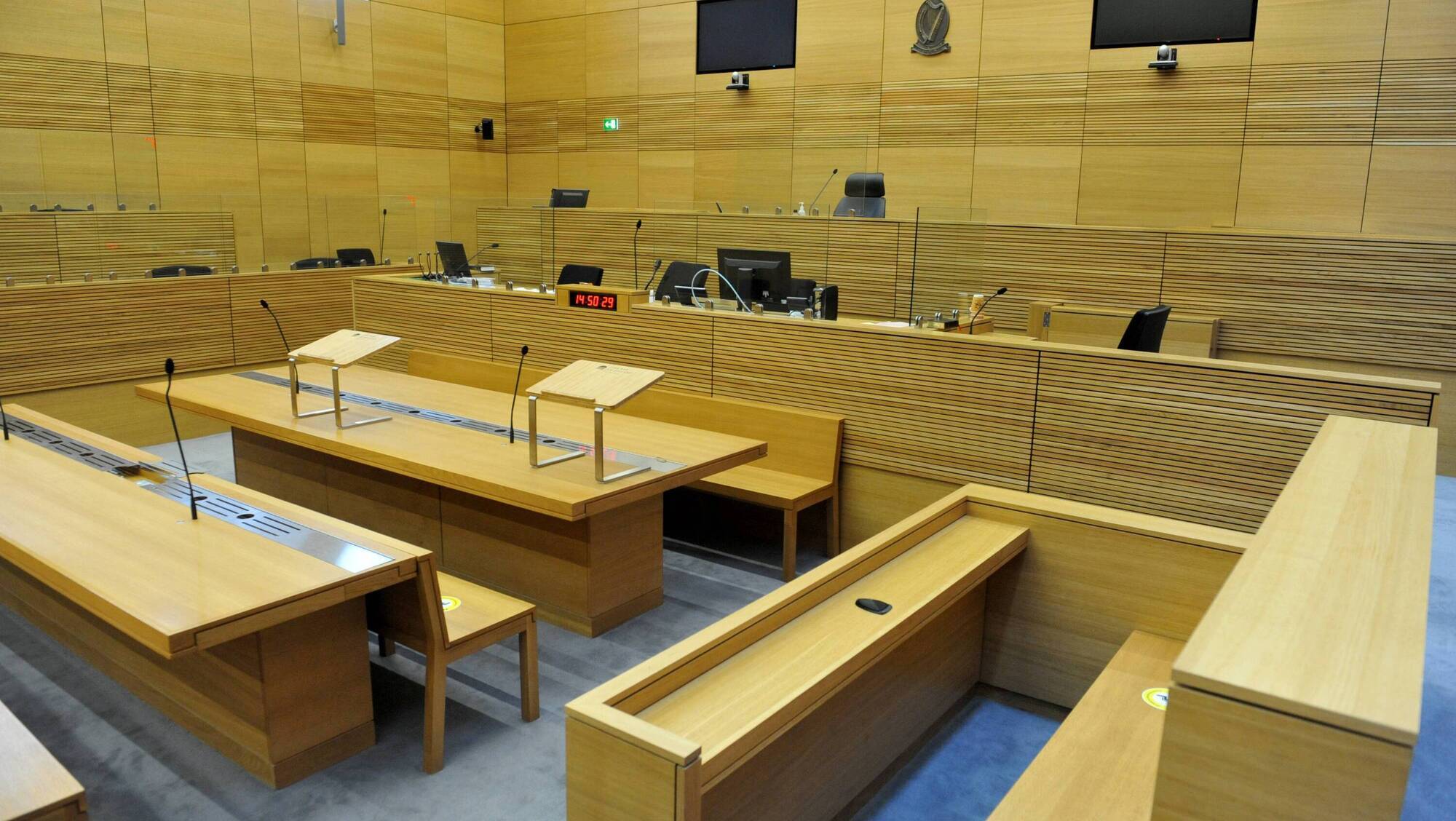
'The Courts Service is working with the judiciary through the Judicial AI Group, established under the AI Governance Framework, to develop clear and accessible guidance on the responsible use of AI,' a spokesperson said. Picture: Larry Cummins
When Gemma O’Doherty lost her case in the Court of Appeal earlier this year, the ruling was among the first to gain widespread attention for its criticism of the use of artificial intelligence in submissions.
The ruling dismissed an appeal taken by O’Doherty against the High Court’s refusal to strike out defamation proceedings brought against her by Jimmy Guerin, a councillor and brother of murdered journalist Veronica Guerin.
In the ruling, the three-judge court said O’Doherty had used AI to prepare her written submissions that included “hallucinations” of non-existent cases.
“Hallucinations” is a word used to describe when an AI model, particularly generative AI, gives false or misleading details that appear plausible.
Last month, the use of AI popped up again when a ruling highlighted AI use in the case of Smart Mortgages v Raymond Clarke and Irene Clarke.
“During the course of oral submission, the court had a concern that the words used in the second defendant’s written submissions were not hers," the ruling stated.
"When she was finished her oral submissions, she was asked if her submissions were written with the assistance of artificial intelligence.
"Initially, she denied it, stating: “No, I know my own case, so it’s my own words.”
When pressed further, the defendant again reiterated she knew her own case and she did not use AI for her arguments, but “did use it a little”.
When pressed again, she accepted AI had been used “for some of it, yes”.
The ruling found: “As was pointed out by the Court of Appeal in its recent decision in Guerin v O'Doherty ... where a party uses AI to assist in carrying out research or in the preparation of written legal submissions, they must ensure that they do so responsibly and that they do not, even inadvertently, mislead the court by advancing propositions or relying upon supposed authorities which in fact have no foundation at all.
"Furthermore, where they do use the assistance of AI, they must expressly inform both the other party and the court of their use of AI in this regard.”
However, Mr Justice Mark Dunne accepted in the Smart Mortgages v Raymond Clarke and Irene Clarke case, the defendant did not try to mislead the court.
Read More
In a bid to deal with the issue, the Courts Service confirmed engagement is taking place with the Bar Council to "better understand the practical challenges arising from the use of AI by legal practitioners”.
“The Courts Service is working with the judiciary through the Judicial AI Group, established under the AI Governance Framework, to develop clear and accessible guidance on the responsible use of AI," a spokesperson said.
In May, the reported comments made by Ms Justice Eileen Roberts when chairing a webinar on generative AI by the Dublin Bar Solicitors Association.
She outlined the judiciary plans to produce a “detailed practice note” for legal practitioners on what is expected of them in court in relation to the use of AI.
Last December, the Law Society of Ireland published its guidelines on the use of generative AI for legal professionals.
It followed the 2024 publication of the AI guidelines for judges from the Office of the Chief Justice.
Earlier this year, the Bar Council announced it had selected Newcode as its AI provider and would use its legal Agentic AI platform as a dedicated service for Irish barristers, “delivering intelligent, auditable and context-aware workflows”.
Barrister Tomás Keys, a member of the Bar Council of Ireland’s AI oversight committee, said the selection of Newcode followed a process of testing different providers over the past year.
“From the Bar of Ireland’s perspective, it is very important to have robust governance in place in relation to the use of it, but also a recognition that if used properly, it can be a very powerful too," Mr Keys said.
“What we have now with Newcode is that they have developed a specific training model for anyone who is going to sign up and use it in the Bar of Ireland.
"I understand there are currently 500 members using the platform, and all of those members are currently undergoing mandatory training, which is being rolled out.”
There are about 2,100 members of the Bar of Ireland, meaning almost a quarter have signed up to the AI system.
Within the Courts Service itself, a number of areas are being examined for the roll-out of AI, with engagement under way with counterparts in the UK and the North to share experiences on appropriate and responsible use of AI tools.
Last month, in the UK, the Ministry of Justice announced the piloting of AI legal assistants in courts across the country to tackle the rising backlog of cases.
The project is to be trialled in controlled environments before being used by judges and lawyers.
Meanwhile, probation officers in England and Wales have also been equipped with an AI tool that automatically records and transcribes conversations with offenders.
A statement from the Courts Service in Ireland to the said: “Several proofs of concept have not proceeded to production because accuracy, completeness, or the risk was not acceptable.
"This includes current non-deployment of the staff chatbot and anonymisation of judgments work, while the judicial Case AI Assistant proof of concept was not considered fit for purpose in the latest June 2026 assessment.”
A public information chatbot was also deemed not fit for purpose, with “incorrect or incomplete information and proportionality of a separate service” noted.
However, testing of an interpretation and translation service is now under way, although “further development and evaluation” is required.
The most successful has been a digital audio recording AI assistant, which the Courts Service said “remains authoritative”.
The roll-out of AI in Ireland's justice and law sector comes as artificial intelligence is now being used in divorce cases in Tasmania, Australia, to help people reach a settlement without having to go to court.
More than 17,000 cases have been brought to the tool since it was set up in 2020.
In England, a case was brought to court in May using the work of a so-called “artificial intelligence lawyer” from Garfield AI, an AI-powered law firm authorised and regulated by the Solicitors Regulation Authority.
Tamires Camal Taquidir, a freelancer who had provided HR-related services to a hospitality business, managed to successfully pursue £7,000 in fees that were owed to her by using Garfield’s service to prepare and issue court proceedings.

In the US, a case is currently under appeal after the family of a man killed in a road rage incident in Arizona used a victim impact statement as an opportunity to show a video of their dead relative professing to forgive his killer.
The video was produced by AI, using voice recordings, videos, and pictures of the man.
Also in the US, a study undertaken in 2024 by Tulane University researchers in New Orleans found judges appeared to discriminate against black offenders in the cases examined by the researchers.
Outlining the research, a statement from the university said: “Judges generally sentenced Black and White defendants equally harshly based on their risk scores alone. But when the AI recommended probation for low-risk offenders, judges disproportionately declined to offer alternatives to incarceration for Black defendants.
“As a result, similar Black offenders ended up with significantly fewer alternative punishments and longer average jail terms than their White counterparts — missing out on probation by 6% and receiving jail terms averaging a month longer.”
This case was referenced during a session in March of the Oireachtas Committee on Artificial Intelligence, which examined the implications for the law and justice sector arising from AI use.
Sinn Féin TD Johnny Mythen referenced the US difficulties, but representatives from the Courts Service advised such a situation would not be possible here as automated sentencing using AI is not allowed under the EU AI Act.
However, the progress of the roll-out of AI in the Courts Service is dependent on a modernisation programme aimed at moving away from the current emphasis on paper-based processes.
The Courts Service said: “Focus continues to be on the modernisation programme to transition the courts from a paper-heavy system to one that is digital first (but not digital only), with the continued exploration of AI as a tool to add value in a responsible manner where opportunities arise.”

CONNECT WITH US TODAY



Be the first to know the latest news and updates