World Cup referees add on much more stoppage time in second half than first, Cork researchers find
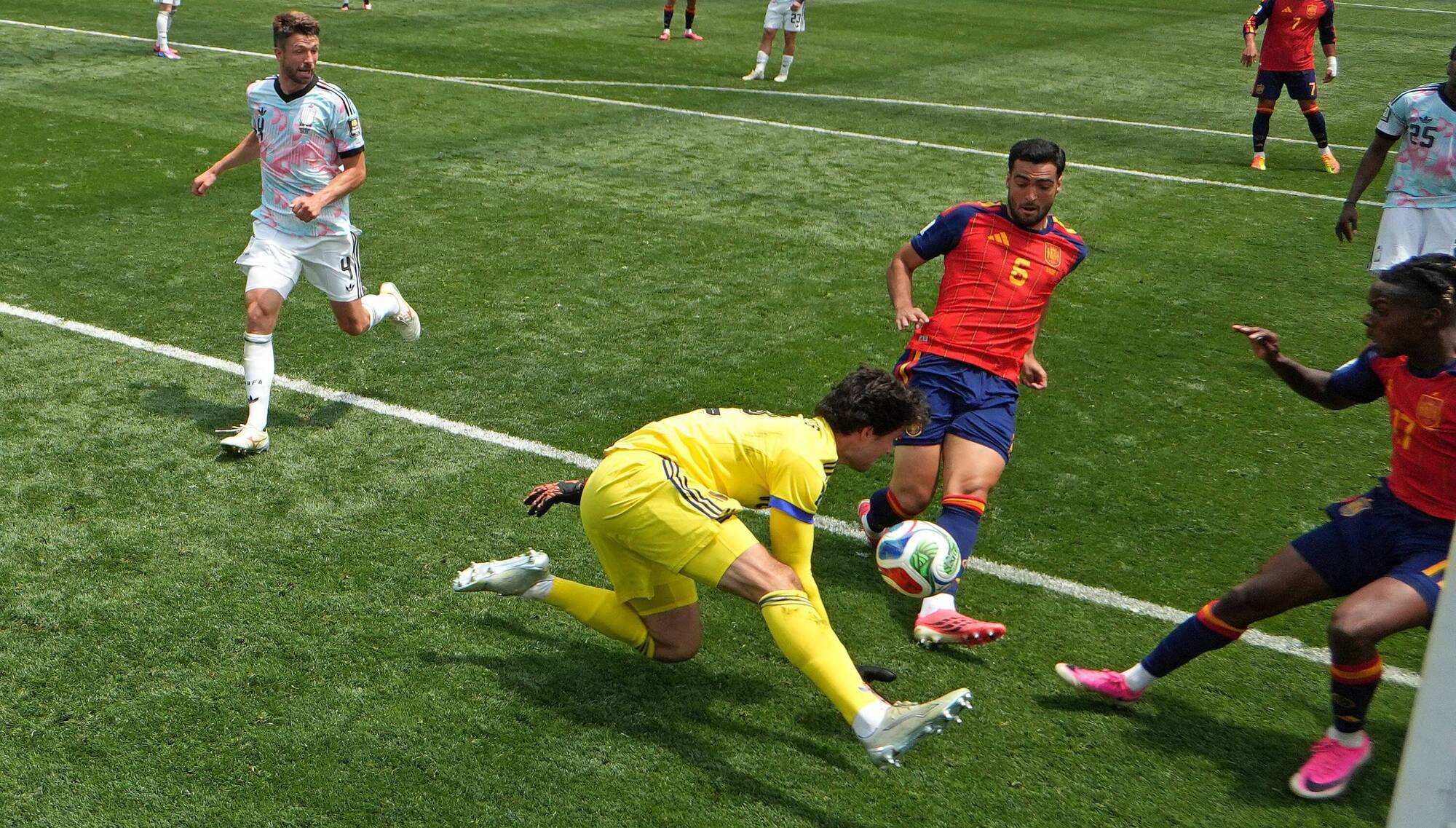
Findings show that in some cases, up to two minutes of unexplainable added time was found in the second half and close contests were shortened in the first halves. Picture: David Ramos/Getty Images
Soccer referees consistently add on significantly more stoppage time in the second half than first half of matches, according to University College Cork academics who studied data from World Cup and European Championships.
Robert Butler and David Butler from the department of economics at UCC, found when matches were tight, referees tended to add on even more time in the second half, particularly at the World Cup.
The findings show that in some cases, up to two minutes of unexplainable added time was found in the second half and close contests were shortened in the first halves.
The research examined additional time at two major tournaments: the 2022 Fifa World Cup in Qatar and 2024 Uefa European Championship.
The paper, published in the , was a collaboration by the UCC researchers and Carl Singleton (University of Stirling), which examined how time-wasting is shaping modern football and potential rule changes.
The analysis compared how much stoppage time was added in the first and second halves of matches, controlling for stoppages, goals, player treatments, substitutions, VAR interventions and other within-match events.
Read More
Overall, both the World Cup and Euros samples show that on average, almost 200 seconds more are played in the second than the first halves of matches.
The patterns captured by the research also found social pressure and the stakes of the moment could influence referees.
The authors said: “We hypothesise that under changing social and psychological pressure, especially when the game’s outcome is on the line, referees face heightened pressure near the end of matches, as outcomes become imminent.
"Some might argue that it’s natural for referees to treat each half differently. According to the laws of the game, the same standards apply.
"Any systematic difference is a violation of consistency and evidence of bias, however unintentional."
They said the discrepancies raised concerns about the effectiveness of time-wasting strategies in the sport.
“More broadly, our results contribute to the discussion of decision-making under pressure and implicit biases in high-stakes environments."
They said future research could look to isolate specific types of stoppages, comparing the expected amount of additional time to the actual amount played.
“Such analysis could then determine whether time-wasting tactics in fact are rewarding those that seek to engage in this strategic behaviour or whether referees are successfully adjusting their decisions to maintain consistency and fairness.”
CONNECT WITH US TODAY



Be the first to know the latest news and updates