'Climateflation': Food prices could soar as extreme weather takes mounting toll
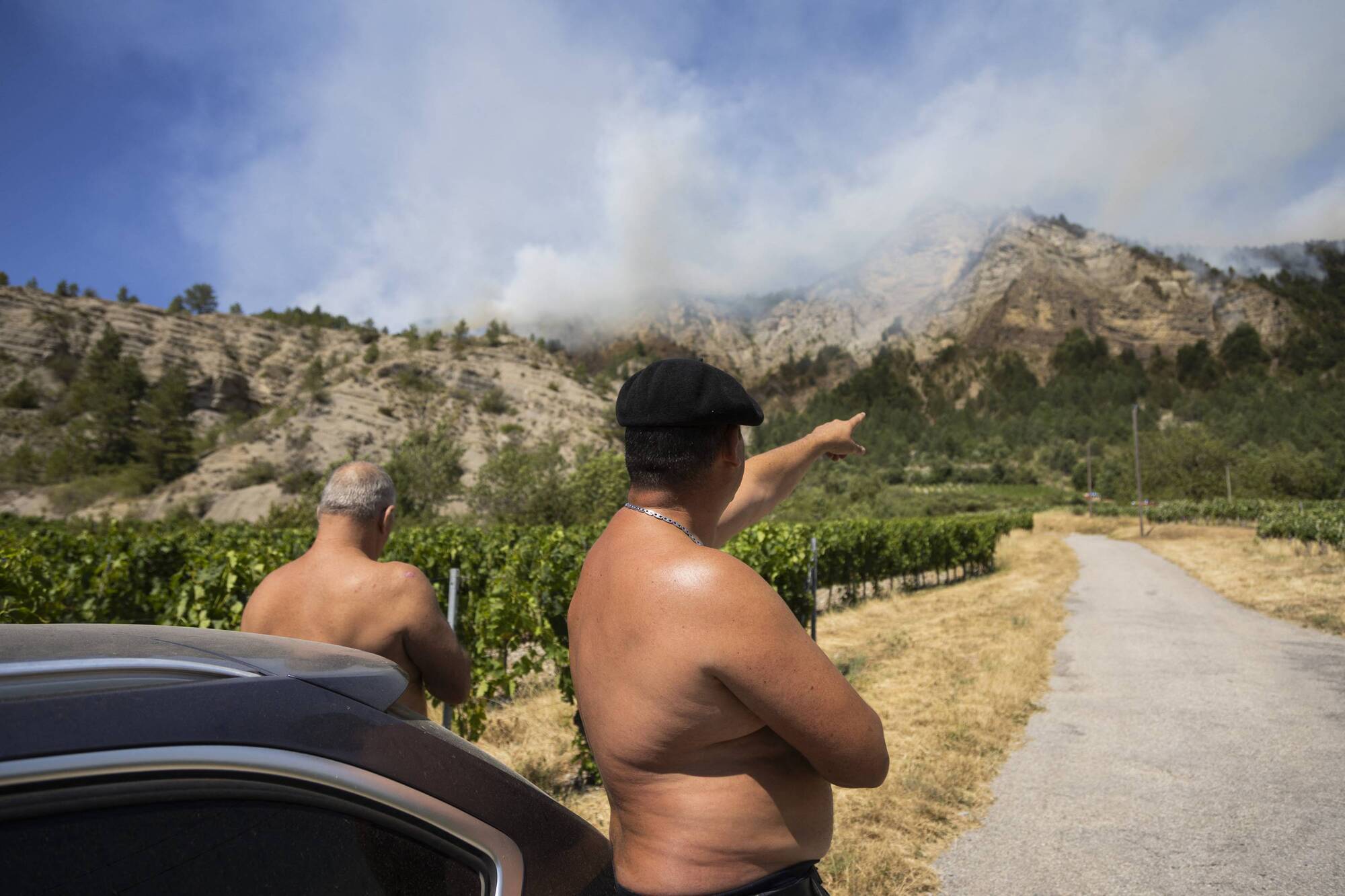
Two villagers came to observe the progress of the wildfire. France, Drome, Aurel, July 8, 2026. A wildfire is currently burning in the Drome region, where it is dangerously approaching the village of Aurel. (Photo by Thibaut Durand / Hans Lucas / AFP via Getty Images)
Economists are warning that a “super” El Niño weather cycle this year could cause a severe shock to global food prices lasting into 2028.
It comes as Ireland's heatwave looks likely to push long into the coming week, as wildfires and extreme temperatures continue to take their toll on Europe.
As the Iran war pushes up world food prices to the highest level in three years, economists said supply chains faced “two shocks at once” stoked by extreme weather linked to global heating.
Scientists have said the 2026-27 El Niño – which forms when changes in wind patterns allow warmer water to spread across the central and eastern equatorial Pacific – has a historically unprecedented chance of developing into a “very strong” event fuelling heatwaves, flooding and stormier weather.
Informally described as a “super” or “Godzilla” El Niño, the US National Oceanic and Atmospheric Administration (NOAA) confirmed last month that warming conditions were taking hold in the Pacific and that there was a 63% chance of sea surface temperatures exceeding 2C above normal later this year.
At a time when households around the world are already feeling the pinch from soaring living costs, experts say an extreme El Niño could add further to the pressure. The prospect of a renewed inflation shock is also rattling central banks, adding to concern that interest rates could be kept at elevated levels.
“El Niño puts ‘climateflation’ back on the agenda,” analysts at the Italian bank UniCredit wrote in a research note. “Europe’s recent heatwaves are a reminder that the climate baseline is already shifting. El Niño could add a new layer of pressure later this year, as it amplifies the effects of global warming.”
The naturally occurring phenomenon has a history of affecting harvests and the food supply network. More than a century ago, an El Niño that would probably have been the most severe on record prompted catastrophic droughts across China, southern Africa, Brazil, Egypt and India. Causing famine conditions in a situation worsened by colonial rule, millions were killed, including more than 6 million people in India in 1876-78.
El Niño events in 1981-82, 1996-97, 2015-16 and 2023-24 have been some of the strongest on record. However, NOAA projections indicate the 2026-27 cycle could be even more severe – elevating the risk of droughts and flooding hitting harvests, and food supply worldwide.
According to analysts at Goldman Sachs, the strength of this El Niño could cause a 15.8% surge in global food commodity prices. That would have a knock-on effect worldwide, including for consumers in Europe, where it predicted food prices could rise by 1.3% across the eurozone.
However, the full effect will take time because of how the cost of climate impact percolates through global food supplies. As a result, Goldman Sachs said the consequences could take until the second half of 2028 to be “fully realised”.
Most of the delay is down to the timing of extreme weather hitting food production, given the differing planting, growing and harvesting cycles for different types of crops. Logistical challenges – including water levels in canals and rivers used for key shipments – will also have an impact.
Deadly wildfires that have swept through Spain's Almería province have so far killed 12 people and burned more than 6,000 hectares. At least 23 people are missing.
On Saturday afternoon, after high winds eased, firefighters were able to start gaining control of the flames. On Sunday, Andalusia’s regional government head, Juan Manuel Moreno Bonilla, said the fire had been contained and its perimeter secured.
At least 1,400 people have been evacuated from their homes due to the blaze, which has involved more than 500 firefighters and emergency workers.
Most of those killed are thought to be British and Belgian nationals, along with one Spaniard. Forensic scientists in Madrid are using samples from the bodies of the victims and DNA samples from the families of those reported missing to try to identify the dead.
It is one of the deadliest wildfires in Spanish history, with officials saying the damage to the landscape made it look “like a bomb has gone off”.
- The Guardian

CLIMATE & SUSTAINABILITY HUB
CONNECT WITH US TODAY



Be the first to know the latest news and updates