Ireland on heightened alert as Ukrainian president Volodymyr Zelenskyy arrives for talks
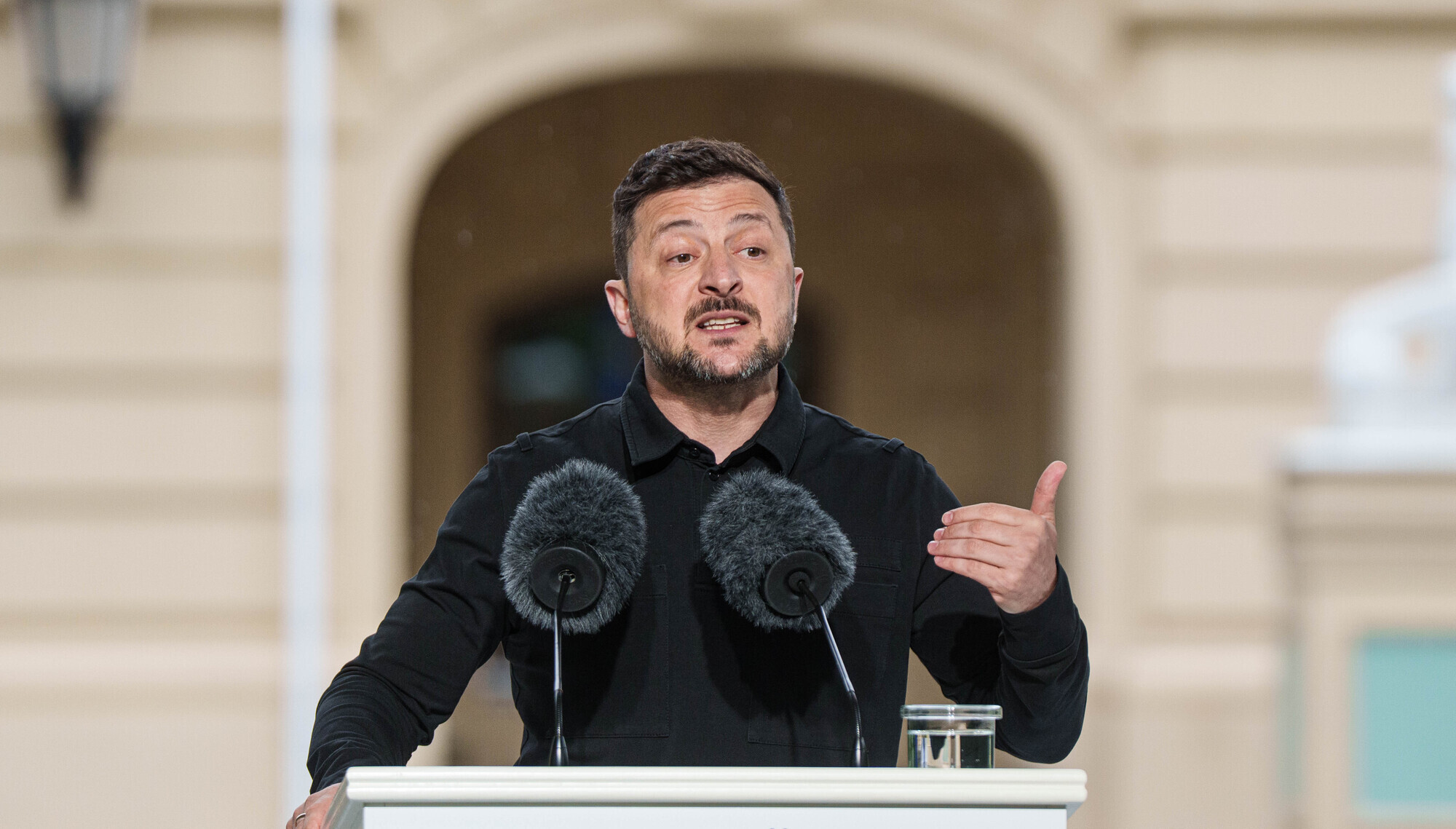
The surprise arrival of Ukraine's president Volodymyr Zelenskyy comes alongside the previously announced visit of European Council president Antonio Costa, with Taoiseach Micheál Martin due to hold bilateral meetings with both leaders. Picture: Evgeniy Maloletka/AP
Ireland starts day one of the EU presidency on heightened alert with the surprise visit later on Wednesday of Ukrainian president Volodymyr Zelenskyy.
The visit immediately tests Ireland’s security forces — An Garda Síochána and the Defence Forces — in their capabilities to protect the Ukrainian delegation while in Irish territory and ensure the security of meetings with the Government.
The National Cyber Security Centre will also be on alert for any attempts to breach government or public sector websites or digital infrastructure in a bid to harm its reputation.
The surprise arrival of Mr Zelenskyy comes alongside the previously announced visit of European Council president Antonio Costa, with Taoiseach Micheál Martin due to hold bilateral meetings with both leaders.
Mr Martin said that supporting Ukraine would be an “important priority” during Ireland’s EU presidency term.
“In our meetings today, we will also be discussing how to increase pressure on Russia so that the cost of continuing its illegal war becomes unsustainable,” Mr Martin said.
Read More
Mr Zelenskyy will arrive at Baldonnel Airport, where he will be greeted by Tánaiste Simon Harris.
The two will take part in a short meeting, with the Fine Gael leader also expected to say that Ireland will use its presidency to strengthen solidarity with Ukraine.
Mr Harris will add that Ireland will seek to progress Ukraine's future membership of the EU during its six-month presidency, while also working to strengthen the new Ireland-Ukraine economic forum.
Speaking before the public announcement of president Zelenskyy’s visit, Garda Commissioner Justin Kelly said Ireland was “not immune” to the experience across Europe, where police and intelligence agencies have documented Russia’s paid use of “proxies”, such as local criminals, to carry out acts of their behalf.
But he said the Garda Security Service was “ready for that” and that it had worked on its capabilities and benefited from good relationships with partner countries in terms of intelligence.
Detailing the garda preparations for the presidency, the commissioner also said there was now “world-class counter-drone protection in Ireland”.
He said Government investment in garda drone and counter-drone equipment and training had “substantially increased” since the drone incursion that took place last December after a plane carrying Mr Zelenskyy passed into Irish airspace on its way to Dublin Airport for an official visit.
The reported subsequently that Irish security forces suspected that Russian intelligence — or groups acting on their behalf — were most likely behind the incident, but because the drones were never recovered they were unable to gather evidence.
Gardaí have purchased state-of-the-art counter-drone equipment, including mobile van units, operated by members of the Special Tactics and Operations Command.
The commissioner also highlighted investment in a new garda surveillance aircraft and an armoured tactical truck.
The foreign affairs and security agenda in the Government’s programme for the EU presidency, published over a week ago, is dominated by the Russian war in Ukraine.
Asked about the threat from Russia, including reports from European police and intelligence agencies of Russia’s paid use of proxies, such as local criminals, to carry out acts on its behalf, Mr Kelly said:
“In relation to the threat from Russia, Russia’s war of aggression against Ukraine has reached our shores here. [Regarding] the threats of proxies around Europe, we are not immune to it here.
“I’m limited around the level of detail I can go to, but we are ready for that, we have worked on all our capabilities, and we have really good relationships with some of our partners abroad.”
On other threats to the presidency, the commissioner said that public disorder arising from a “trigger event” — such as Monday’s arson attack on a mosque — was one of the “biggest concerns” for gardaí.
Mr Kelly said they will “certainly be on the alert” for social media disinformation following such events and that a key garda response will be “coming out really quickly” with accurate information.
He pointed out that there was “no indication”, at the moment, that there was any “right-wing or anti-immigration” aspect to the arson attack on the mosque in Dublin.

CONNECT WITH US TODAY



Be the first to know the latest news and updates