€1.3bn spent on school prefabs and other ‘temporary fixes’ in the last six years
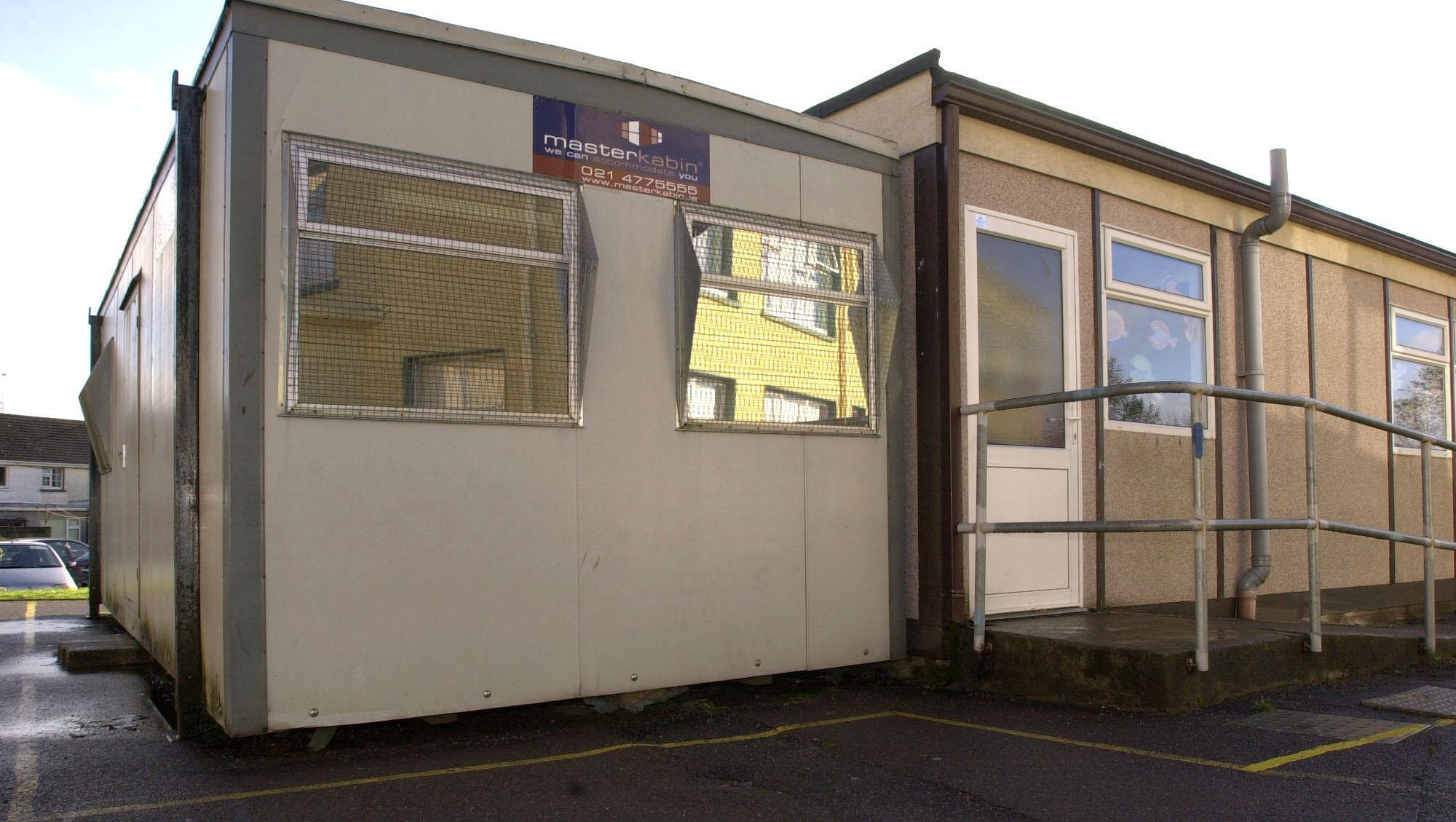
Temporary accommodation, such as prefabs, is often used by schools waiting under the school building programme. It is also used when additional capacity needs to be created quickly, including when children need access to a school place. Stock picture: Brian Lougheed
The Department of Education is facing calls to explain its bill for accommodation as it emerged €1.3bn has been spent on rented lands, buildings, and modular accommodation for schools since 2020.
Temporary accommodation, such as prefabs, is often used by schools waiting under the school building programme. It is also used when additional capacity needs to be created quickly, including when children need access to a school place.
Between 2020 and 2025, the department spent €222m on renting lands and accommodation for schools, including rented buildings and rented modular accommodation.
From 2021 to 2025, the expenditure on its modular programme, which includes the installation of modular units and all associated site works and fees, amounted to €1.14bn.
In 2021, €73m was spent on the programme. This spend had more than quadrupled by 2024, growing to €299m. A further €288m was incurred in 2025.
The average cost for a modular unit for a primary school classroom is now €367,000, excluding Vat, according to the department, with the cost of associated site works varying depending on site conditions.
Read More
Since 2021, it has completed 595 purchased modular projects. A further 198 projects are at an advanced stage of delivery and construction.
The details were provided in an update to the Dáil’s Public Accounts Committee (PAC) , which had requested a breakdown on the department’s spend on rented and prefab accommodation.
Earlier this year, the Government agreed to provide additional funding of €646m to the Department of Education to address shortfalls, which will be paid for by levying other departments.
Labour’s education spokesman, Cork North Central TD Eoghan Kenny, said that modular accommodation and temporary arrangements have an important role to play in responding to urgent demand.

“However, temporary measures were never intended to become a long-term substitute for proper planning and investment,” he said.
Mr Kenny, who is also a member of the PAC, said that taxpayers are entitled to ask “how we have reached a point where more than €1.3bn has been spent on temporary school accommodation solutions, while communities continue to wait for permanent educational infrastructure”.
“No one disputes the need to accommodate children quickly,” Mr Kenny said.
In its submission to the committee, the department said it has committed to conducting a strategic review of the rental of school infrastructure.
The review involves an “examination of the economy, efficiency, and effectiveness” of the current prefabricated accommodation rental agreements, including duration, cost, business rationale, operation, and methodology. This review is expected to be completed by the end of the year.
A spokesman for the department said modular accommodation is one of the delivery mechanisms used by the department to provide permanent accommodation.
It is “an investment” in permanent accommodation in the same way as other traditional forms of construction, he added.
“It is not temporary accommodation.”
The department has a number of frameworks in place to deliver modular accommodation, all using modern method of construction (MMC) for primary, post-primary, and special education needs school accommodation.
“MMCs is a more efficient way of building compared to traditional brick-and-mortar construction,” he said.
Rental expenditure equates to around 2% of the overall expenditure on the capital programme in 2024 and 2025, he added.
- Jess Casey, Education Correspondent

CONNECT WITH US TODAY



Be the first to know the latest news and updates