Naval Service hopes to have powers to board Russian 'shadow fleet' before EU presidency begins
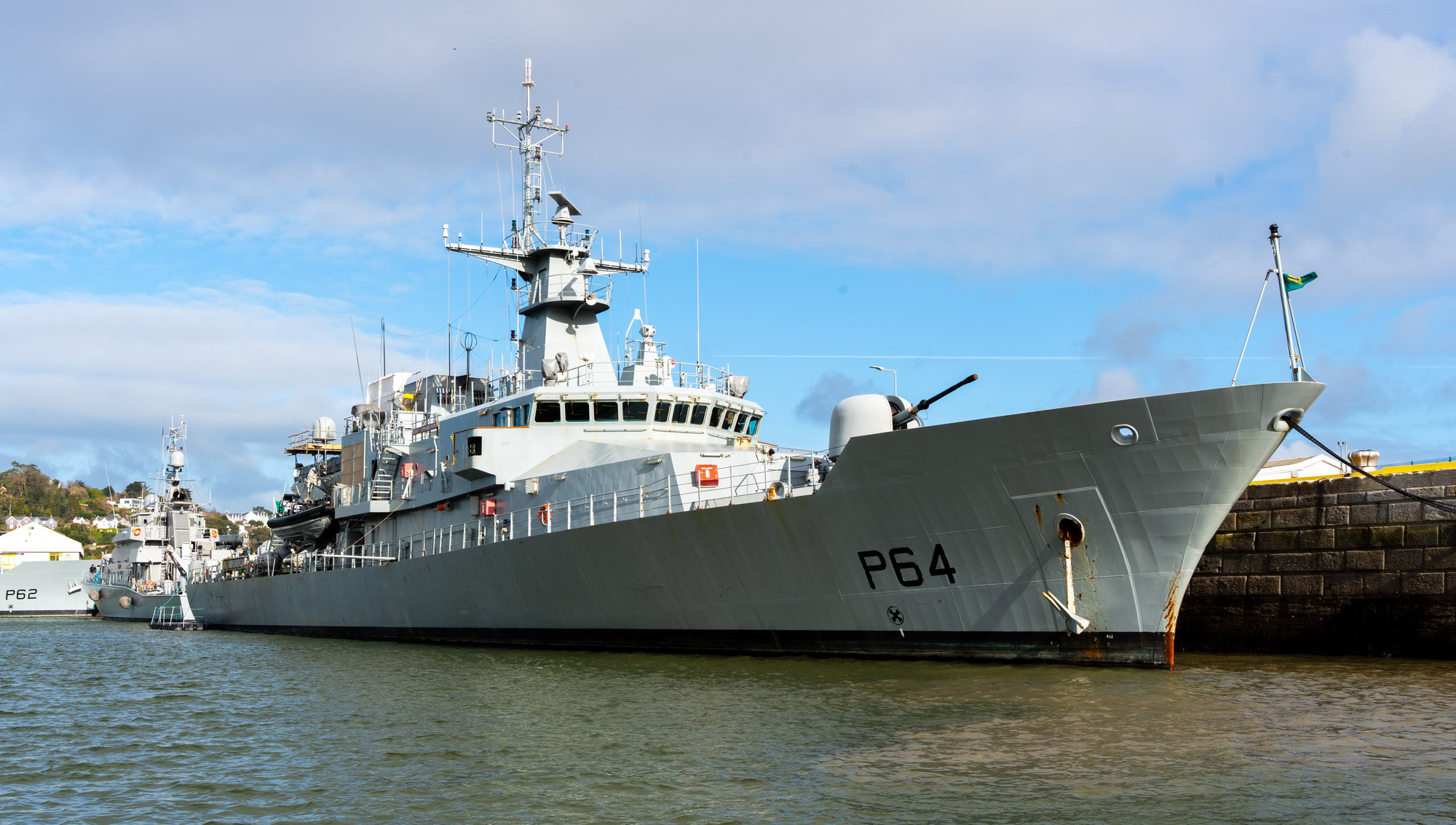
The new powers will allow the Naval Service to: board vessels; inspect documents, equipment and activities on board vessels; direct a vessel to leave a specified area or alter its route where necessary. Picture: Noel Sweeney
The Government hopes new powers to allow the Naval Service board Russian “shadow fleet” vessels in Irish waters will be enacted before Ireland’s Presidency of the EU starts on July 1.
The plans were announced last February by defence minister Helen McEntee in response to the increased security, and environmental, threat posed by these old ships, that were suspected of being used to transport Russian sanctioned oil.
There are also suspicions the shadow vessels could also potentially endanger underwater cables or be used as a base from which to operate drones. Separate to that is the serious risk of environmental pollution from the vessels.
The proposals contain a broad power to board a “foreign ship” in Ireland’s territorial waters (12 nautical miles from the coast) where their presence is considered “prejudicial” to the country’s security.
They also contain the power to board vessels in Ireland’s Exclusive Economic Zone (which extend south and west to 200nm), where the country’s “sovereign rights” are being put at risk.
Read More
These rights centre around natural and economic resources in these waters and include installations and structures. The Government says this includes critical marine infrastructure, such as sub-sea pipelines and cables and wind farms.
The new powers will allow the Naval Service to: board vessels; inspect documents, equipment and activities on board vessels; direct a vessel to leave a specified area or alter its route where necessary.
Naval officers can also require a vessel to cease activities that may threaten critical infrastructure or the marine environment, including in the EEZ. It does not include the power to seize a vessel and bring it to an Irish port.
Some military experts have said that using these powers in the EEZ could be legally and operationally challenging for the Naval Service.
In addition, the Naval Service and the Air Corps have limited resources to carry out a boarding, which requires co-ordinating naval units, helicopters, air surveillance and special forces.
Before the chief of staff can authorise a boarding he must obtain the permission of the defence minister.
In Britain, where the Royal Navy have been given similar powers, there have been media reports that no suspected Russian dark vessels have actually been boarded over fears it might breach international maritime law.
In a statement to the , the Department of Defence said: “Minister McEntee is focused on ensuring that members of the Defence Forces will have enhanced powers to safeguard, protect and defend the security of the State in the maritime domain.
“The amendments to the Defence Act 1954 in relation to maritime powers for the Defence Forces are being progressed as part of the Criminal Law, Civil Law and Defence (Miscellaneous Provisions) Bill 2026.”
It said the bill had passed committee stage in the Dáil. “While the passage of the legislation through the parliamentary process is a matter for the Houses of the Oireachtas, the minister is keen that the proposed legislation is progressed in an expeditious manner.
“It is a priority for the Minister and the Government to ensure that the Defence Forces have the powers they need to respond to emerging threats in our waters, particularly from vessels linked to the Russian Shadow Fleet.”
The Department of Justice — which is responsible for the 2026 bill — said: “Minister (Jim) O’Callaghan is hopeful of securing enactment of the Criminal Law, Civil Law and Defence (Miscellaneous Provisions) Bill before the summer recess.”
It confirmed that the bill had passed Committee stage in the Dáil and was due for Report stage this week.
- Cormac O'Keeffe is security correspondent for the

CONNECT WITH US TODAY



Be the first to know the latest news and updates