Former air corps member tells Defence Forces Tribunal of being 'scalped' and 'tubbed'
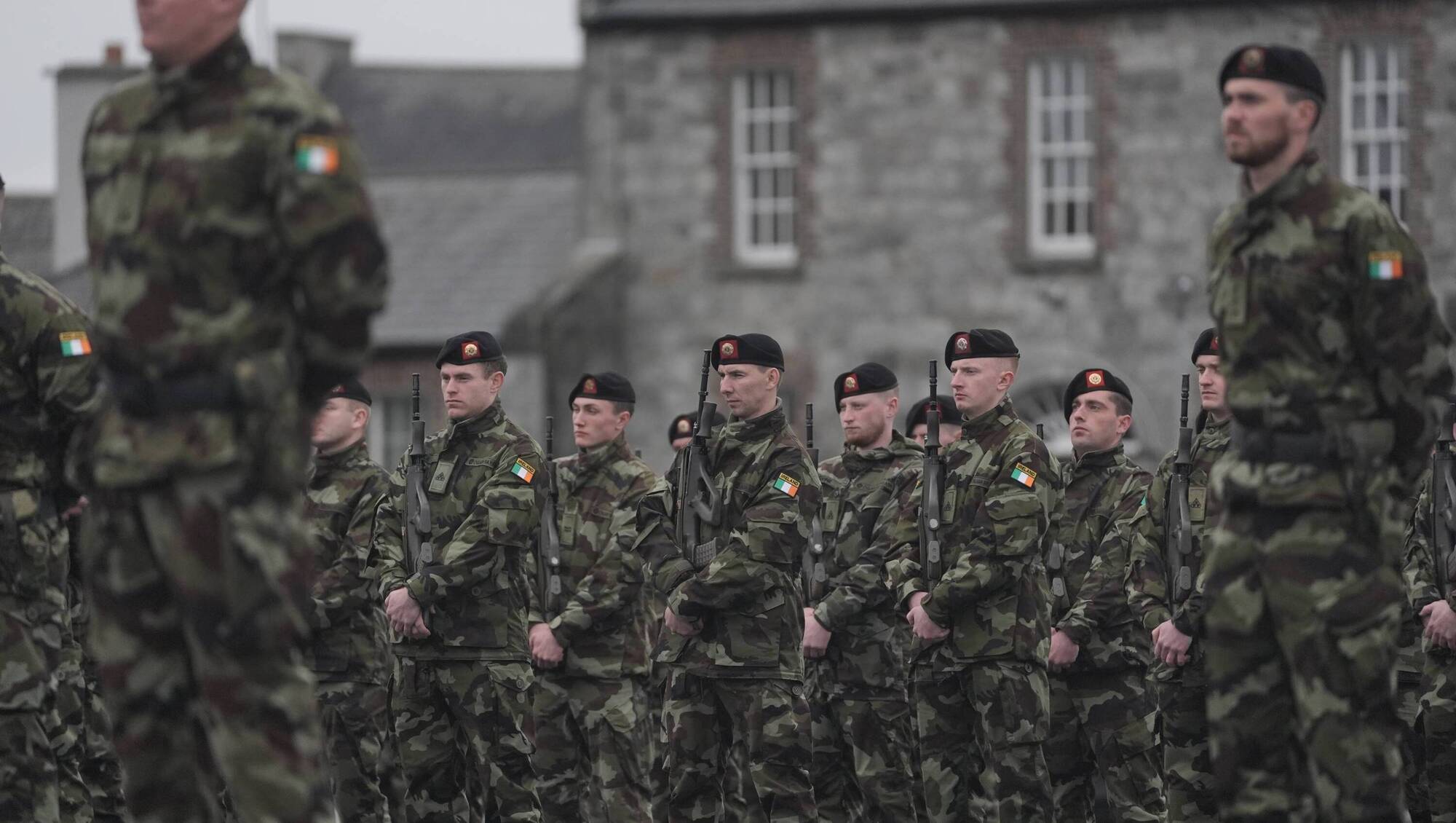
The first module of public hearings, at The Infinity Building in Smithfield, Dublin, began last week as part of the latest phase of the tribunal established in June 2024 by then tánaiste and defence minister Micheál Martin following a report detailing allegations of brutal and 'sadistic' abuse. File picture: Brian Lawless/PA
Anybody who complained about anything in the Defence Forces faced losing their job, said a former member of the air corps who claims he was “scalped” by a senior officer.
Paul Kavanagh, giving evidence in the second week of public hearings at the Defence Forces Tribunal, said he was the victim of a number of bullying incidents — some of which, he claimed, senior officers were aware.
He claimed senior officers in the air corps knew personnel were “tubbed” — thrown into large tubs of chemicals and engine grease as a brutal form of so-called hazing, or initiation at Baldonnel Aerodrome, in Co Dublin.
He too was a victim of tubbing — where he was grabbed and thrown “head first” into a large tub filled with oil and grease and even “a dead crow”.
The practice has been referenced before by other former air corps.
He was asked if senior officers in the Air Corps were aware of this specific practice, and he replied: “Totally, yeah.” He added that “no action was taken”.
Read More
“Nobody pulled us aside and said this shouldn’t happen.
“(Tubbing) was prevalent in the 1990s and early 2000s in Baldonnel.”
Another incident he did not complain about, he said, was one when he and five other recruits were locked in a room in 1988 and had all had their hair shaved off, like “Sinead O’Connor”.
But he said that he did not complain about this and other incidents because he did not know who to complain to and even if he did, he claimed he was warned it would end his career in the Defence Forces.
He said that even if somebody succeeded in the Redress of Wrongs internal Defence Forces grievance process, it wouldn’t matter.
“They could win the redress but the army doesn’t forget at the end of the day,” he said.
“I never went forward to Redress (of Wrongs). I’ve seen what happened to lads. They never really progressed after Redress (of Wrongs) whether they're right or wrong.”
Mr Kavanagh claimed that shortly after he joined as a recruit in 1988, at age 22, he started being bullied by someone who was related to an officer at the barracks where he was stationed.
But he did not complain. “There was nowhere to go with a complaint,” he recalled.
“A good lad with intelligence would keep his mouth closed.
“You couldn’t make a complaint (or) you’d just lose your job.”
He also said anybody who complained would be regarded as “a crybaby”, and that nobody pointed out how to complain in the early years of his career.
Mr Kavanagh, who was medically discharged last year, recalled how, when he visited an army psychiatrist in 1991, he said he was pulled aside afterwards by another soldier.
“He said to me, Paul, I wouldn't be going up seeing him, because if he sends a report back in connection with what you're saying, or whatever, you could be downgraded.
“You could lose your job, or you'd be shortlisted, you wouldn't get promotion, and stuff like that, it'd be detrimental. So I didn't go see him again. Mental health issues were taboo.”
Of the head-shaving incident, he recalled: “The door was locked in this room.
“I knew something was going down.
“There was a chair in the middle of the room.
He said a few days later, he and the other men were brought before other officers and told “not to say anything about this to anybody”.
He said that, looking back over his career, while more people are more aware of the complaints process now, “the more career-minded they are, the more they stay quiet to safeguard their career”.
He said he thinks the complaints system should be entirely external.
But when asked if people who complained would still be regarded as “crybabies”, he replied: “They probably would.”
The first module of public hearings, at The Infinity Building in Smithfield, Dublin, began last week as part of the latest phase of the tribunal established in June 2024 by then tánaiste and defence minister Micheál Martin following a report detailing allegations of brutal and “sadistic” abuse.
Those allegations, contained in the March 2023 Independent Review Group (IRG) Defence Forces report, included claims of the rape of both male and female soldiers.
This module of the tribunal will investigate whether complaints of abuse in the Defence Forces were “actively deterred” or whether there was a culture that discouraged the making of such complaints.

CONNECT WITH US TODAY



Be the first to know the latest news and updates