Remains of eight more infants recovered at Tuam mother and baby home burial ground
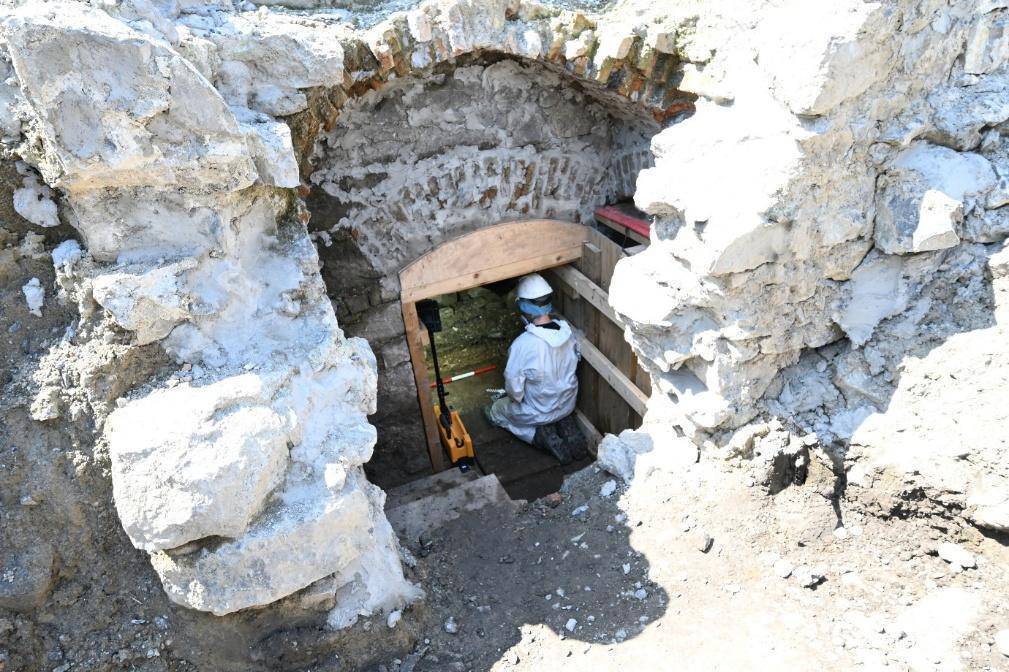
Tuam Mother and Baby Home Update. A member of the Forensic excavation team working in the subterranean vaulted structure. Credit ODAIT
The remains of eight more infants have been recovered from the burial ground at the site of the former Tuam Mother and Baby Institution, bringing the total number of remains recovered during the State excavation to 77.
The latest discoveries were revealed in a technical update published on Friday by the Office of the Director of Authorised Intervention, Tuam (ODAIT), which is overseeing the forensic excavation of the former institution site in Co Galway.
The infants were recovered during painstaking hand excavation in an area identified in historical records as a burial ground. While all of the latest remains were found in coffins, previous excavation reports have shown that some coffins contained the remains of more than one child.
The findings are significant because the area currently under excavation is not the location most commonly discussed in public discourse on the Tuam site. Instead, investigators are working in a separate burial ground which was later covered over, tarmacked, and used as a roadway and access route through the former institution grounds.
The latest discoveries therefore relate to children buried within this previously unmarked burial area rather than within the underground chamber that first drew international attention to the site.
The excavation follows the publication in 2014 of research by local historian Catherine Corless, which found records showing that 796 children died at the former mother and baby home, operated by the Bon Secours nuns and overseen by the state between 1925 and 1961, with no burial records identified for the vast majority of them.
Her findings sparked an 11-year campaign by relatives and survivors, seeking a full forensic investigation of the site and answers for families.
As excavation work continues, archaeologists have also uncovered evidence of earlier burials beneath some of the infant remains. These are believed to date from the 19th-century workhouse which occupied the site before the Mother and Baby Institution was established. ODAIT said it is consulting with the National Museum of Ireland regarding those remains.
In a second excavation area, known as Tent 2, investigators have identified evidence of additional child or infant-sized graves after the removal of modern layers of material. Further hand excavation is continuing.
The forensic team has also recovered disarticulated human bones, including both adult and infant remains. Officials say it is not yet possible to determine whether these relate to the institutional period or to the earlier workhouse until detailed forensic analysis has been completed.
Alongside the excavation, efforts to identify the dead continue. Some 22 additional DNA samples were collected from relatives during the latest reporting period, bringing the total number obtained to 55. ODAIT teams travelled to Britain, the US, and Canada to meet family members and encourage participation in the identification programme.
For families still awaiting answers, each update is a reminder of the uncertainty that remains.
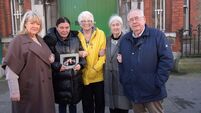
Anna Corrigan, whose mother Bridget Dolan entered the Tuam institution twice and whose brothers John and William Dolan are believed to have died there as infants, said families know they must wait for the excavation and forensic analysis to be completed before they can learn the fate of their loved ones.
Ms Corrigan's brother John died at the institution, while William has no burial record but is marked as “dead” in the nuns' ledgers.
"It's a very difficult time," she said. "We still have to wait until the end of the process to get the answers we're looking for.
“We just want to find the children who were discarded in such a brutal way and want to also make it clear that the children currently located in coffins were concreted over so it is disturbing when some say ‘what’s the problem these kids were in coffins’, they may be in coffins but they were concreted over and cars driven over them, we haven’t even got to the green site yet, it’s deeply disturbing what they did to those kids."
The excavation began in July 2025 and was originally expected to take around 18 months. It involves a combination of machine excavation to remove modern layers and painstaking hand excavation by forensic archaeologists and anthropologists.
However, with significant areas of the approximately 5,000 sq m site still to be examined and new discoveries continuing to be made, there is growing expectation that the work could extend beyond its original timeframe.
CONNECT WITH US TODAY



Be the first to know the latest news and updates