30,000 speeding offences from single camera an ‘aberration’, says minister
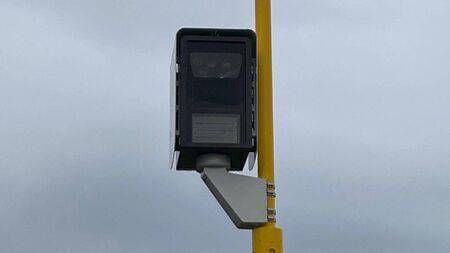
A static speed camera on the N25 at Glenmore, Co Kilkenny recorded 30,599 offences over a 12-month period. File picture
Justice minister Jim O'Callaghan has described it as an “aberration” that over 30,000 speeding offences were detected by a single static camera in one year.
Mr O’Callaghan said he has asked officials to examine why two speed cameras generated significantly more detections than all others, including one on the N25 at Glenmore, Co Kilkenny, which recorded 30,599 offences over a 12-month period.
The second-highest number of detections was recorded on the N80 at Graiguenaspiddoge, Co Carlow, where 15,880 speeding fines were issued over an 11-month period.
By comparison, a static camera on the N17 at Ballinsmaula, Co Mayo, generated 11,476 fines between May 2025 and April 2026, while a camera on the N22 at Farnanes, Co Cork, recorded 3,369 detections.
In a reply to a parliamentary question from Labour TD George Lawlor, Mr O’Callaghan admitted the figures for some static cameras were significantly higher than others.
“It is hard for me to contest that the figures indicate there are aberrations in different parts of the country,” he said.
Mr O’Callaghan said that, when he first saw the figures, he asked Department of Justice officials to investigate why some cameras were generating significantly higher numbers of fines than others.
“I assume people who receive fixed charge notices for speeding are speeding, hear me out on this, but it may be the case that they are given insufficient time for the change of speed limit from one area coming into another area,” Mr O’Callaghan said.
“I do not think it is because people are safer drivers in one area than in another. I suspect the reason is the positioning of the camera, perhaps coming out of an area that permits a faster speed limit into an area that is perhaps very close, with a slower speed limit.”
The justice minister said static speed cameras are “vital” to ensuring road safety and that it is not about “catching people out”.
Mr Lawlor said the cameras need to be operated “fairly”, calling for an independent investigation to be carried out. He said people were being “captured and entrapped” by the cameras, describing it as a “major” problem.
“People who are driving in a 100km/h zone arrive at an 80km/h sign and are almost immediately captured by the camera and not given a chance to obey the law.
"People who were driving below 100km/h and were captured by this camera, many of whom were decelerating, should be fairly treated,” Mr Lawlor said.
He said €4.9m in revenue was generated from fines based on the camera in Glenmore, which was “off the charts”.
Mr Lawlor said Kilkenny County Council had opted to change signage around the speed camera, saying this is a “clear admission” of liability and acknowledges there is an issue. “The whole system needs a reset and a restart,” Mr Lawlor said.

CONNECT WITH US TODAY



Be the first to know the latest news and updates