Jobs, life expectancy and religion: Census 1926 reveals how much Ireland changed in a century
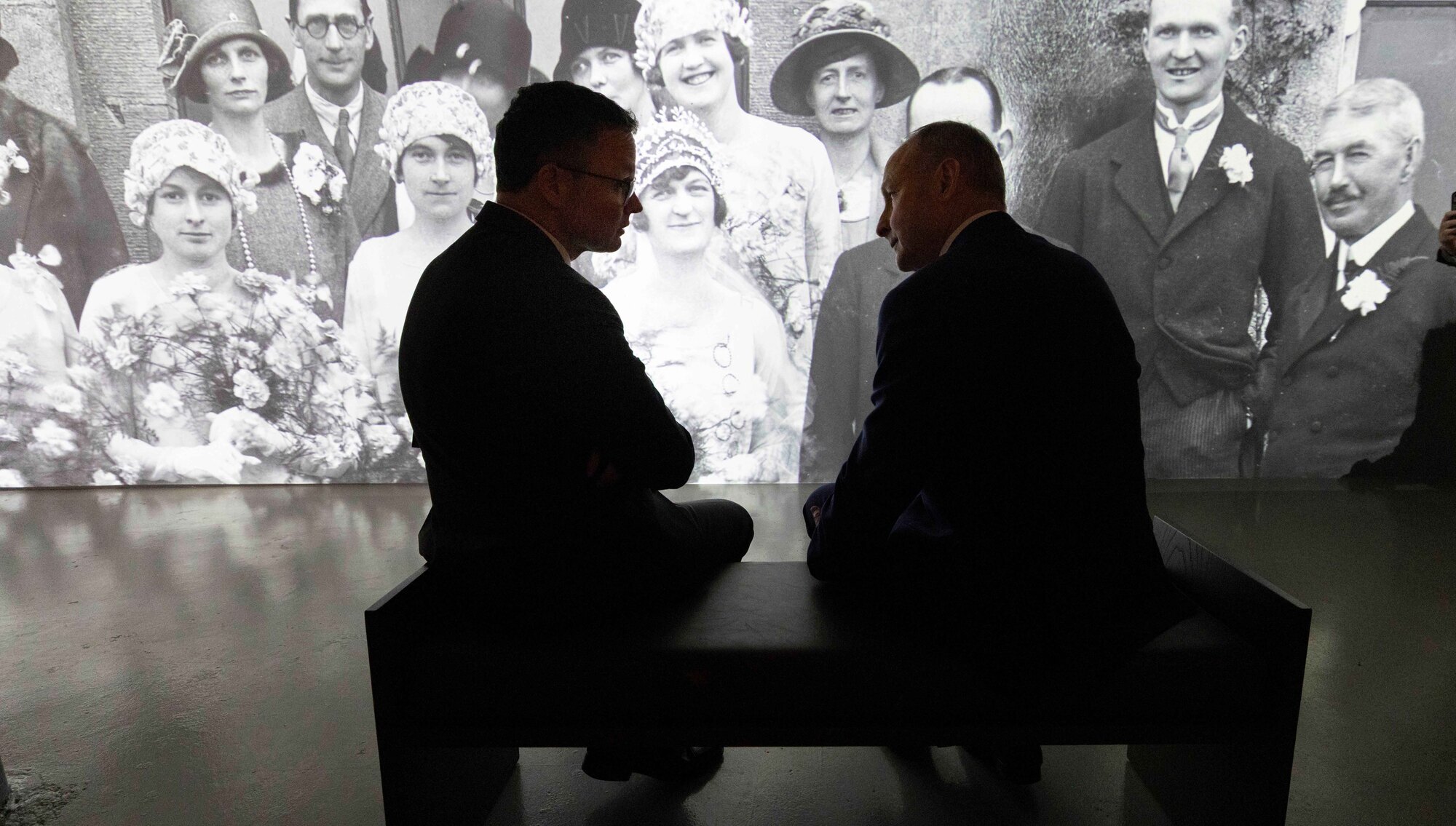
Culture minister Patrick O’Donovan and Taoiseach Micheál Martin at the official launch of the 1926 Census on Saturday. Picture: Maxwells
One million more people at work, higher life expectancy, and a more diverse population show how the country has changed significantly in the past century, new statistics suggest.
To mark the release of data from Census 1926 by the National Archives at the weekend, the Central Statistics Office (CSO) published figures to show how different life was in Ireland 100 years ago.
“As the first census carried out by the Irish Free State, it records the demographic and social conditions of the time, including population size, religion, occupation, migration, and Irish language,” CSO statistician Maria Yasin said.
“With the tables now digitised and freely available to everyone on the CSO’s open data portal, we can compare the Census 1926 figures with those from Census 2022 and see how these areas have changed over the past century.”
The figures show Ireland’s population was 2.97 million in 1926 but had risen 73% by 2022, which the CSO said marks a clear shift from long-term decline to sustained population growth.
Life expectancy for men back then was 57 years, but this had risen to 81 almost a century later. Similarly, life expectancy for women has increased from 58 to 84 years.
Men made up almost three-quarters of the workforce in 1926 (74%) compared to just 53% in 2022. While there were 1.3 million people in work in 1926, this rose to 2.3 million a century later.
In terms of jobs, agriculture dominated the labour force back then, with 51% of all workers employed on farms. More than 200,000 sons or daughters were listed as assisting farmers working on family land. By 2022, just 4% of people in Ireland worked in agriculture.
“Not only have the types of jobs changed substantially over that time, but so too has the number of people at work and the gender profile,” Ms Yasin said.
“Some notable jobs in 1926 included 10,852 horse vehicle drivers, 1,441 saddlers, 1,012 coopers (cask and barrel makers) and 211 chimney sweepers, of which one was female.
“We also can see the early signs of modernisation as there were 10,291 motor vehicle drivers, 4,609 motor mechanics, and 2,475 electrical fitters recorded in Census 1926.”
The data also shows how Dublin-centric Ireland’s population has become. While it was already the largest population centre at 17% of the country’s population in 1926, this has risen to 28%.
And while the populations of Kildare and Meath have more than tripled in the last 100 years, Leitrim (down 37%), Mayo (down 20%) and Roscommon (down 16%) saw significant falls.
The CSO said patterns of migration were also fundamentally different, with inward migration very limited in 1926 and 97% of the population having been born in Ireland. In 2022, 80% of Ireland’s population had been born in this country.
Furthermore, it said Census 1926 marked a “historic milestone for the Irish language”, with the steady decline in the previous 70 years reversed for the first time. Just under one in five (18%) of people were recorded as Irish speakers.
On religion, Ms Yasin added: “The census recorded a far more uniform religious profile, with 93% of the population recorded as Roman Catholic. In 2022, the equivalent figure was 69%, and that census included a broader set of religious categories, reflecting a more diverse population.”

CONNECT WITH US TODAY



Be the first to know the latest news and updates