Arthritis sufferers 'need earlier diagnosis, better communication, and stronger supports'
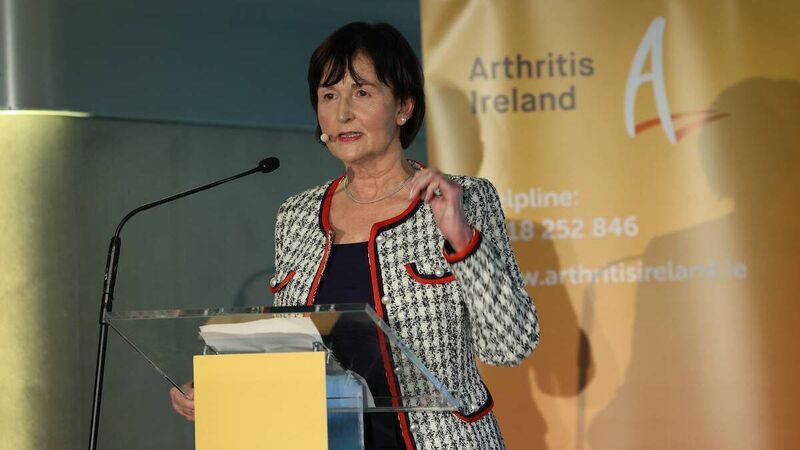
Claire Kinneavy who has lived with arthritis for over 40 years said the survey reflects the long-term reality faced by many people. Picture: Arthritis Ireland
Early diagnosis of arthritis with better access to support is urgently needed for people struggling in silence with the “hidden illness”, Arthritis Ireland has said.
Over half of people living with arthritis have mental health difficulties because of how symptoms affect them and one in four face challenges in romantic relationships, a survey it published on Monday shows.
People who wait over a year to see a rheumatologist for the first time are left in poor health at a much higher rate than those who see a doctor early on.
People with more severe symptoms now were “nearly twice as likely to wait over a year for their first rheumatology appointment” as those in better health.
Chief executive with Arthritis Ireland, Gráinne O’Leary, described this illness as “profoundly debilitating, exhausting, and isolating”.
She warned: “Too many people are struggling in silence because arthritis is a hidden illness and its impact is often underestimated.”
She called on employers and policymakers as well as healthcare workers to recognise the real impact of arthritis for people.
“We need earlier diagnosis, better communication, and stronger supports across healthcare, workplaces and communities so people with arthritis can live well and remain independent,” she said.
The survey had feedback from over 1,400 people of all ages around Ireland, with 85% being women. The survey notes this imbalance is not a reflection of patient numbers but more likely to do with interest in surveys.
It found 43% of people with “poor health” due to arthritis waited over a year for a diagnosis compared to 32% of people with “fair or excellent health”.
Anyone diagnosed within six months of symptoms appearing was “far more likely” to report better health now. The waiting times for appointments were not linked to how often people had a flare up of symptoms.
Overall 70% said they had problems sleeping and 51% struggle with their mental health. Some 39% said arthritis has “strained” or impacted relationships with a spouse or partner.
Just over 20% said they have difficulties in having sexual intercourse.
Symptoms such as joint pain reported by 59% of people and fatigue reported by 44% are the most urgent daily problems. This results in 56% saying they struggle to be physically active.
One patient, Claire Kinneavy, has lived with this for nearly 45 years.
She said:
She has rheumatoid arthritis and Sjögren’s disease which is when the glands making tears or sweat stop working properly.
Arthritis has a “huge impact”, she said, stressing this is not just about daily pain. It can also affect “work, community and family life”, she said.
The survey asked people about the impacts of different forms of arthritis.
Fibromyalgia and axSpA affected people the most severely while other forms such as OA and Raynaud’s lead to lower impacts even though they are quite common.
Some 43% of people with fibromyalgia experienced a flare up in the previous seven days, which it said was “significantly higher” than for other groups.


CONNECT WITH US TODAY



Be the first to know the latest news and updates