Commission facing Big Tech's 'very well-resourced legal teams' in data protection cases
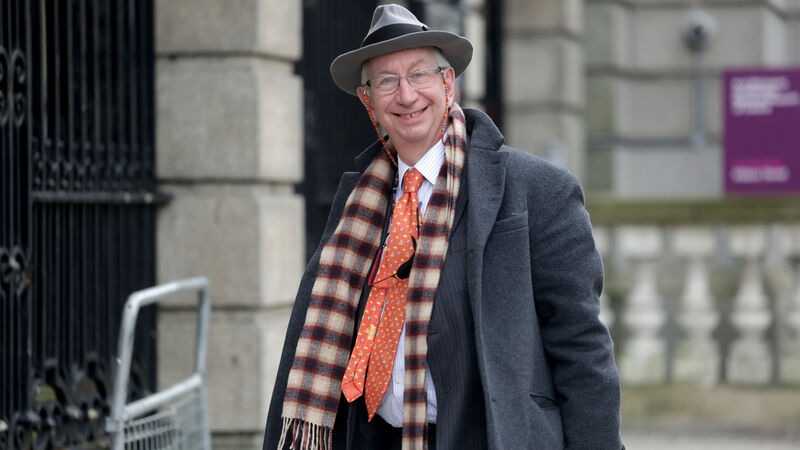
Jeremy Godfrey, chairperson of Coimisiún na Meán arriving at the Dail for the Joint Committee on Artificial Intelligence to discuss recent issues around 'nudification' apps, deepfakes and consent and AI: truth and democracy. Photo: Leah Farrell/© RollingNews.ie
Ireland’s Data Protection Commission is not standing on a “neutral field” as it battles to regulate to the “extent that we want to”, one of its commissioners has said.
Des Hogan told an Oireachtas committee on Tuesday that his organisation stands up against “very well-resourced legal teams” when big tech firms challenge the fines it has imposed for breaching data protection rules, with the judicial reviews being taken against most of those decisions “a difficulty”.
“We have levied over €4bn in fines,” he said. “We are being appealed in each [of these] apart from two cases for large platforms. We’re being challenged in all of the other ones.
“The question is, does the State want to field similar teams when defending inquiries, and that is a question which we're [asking]. I think we should, they should be defended.
Read More
"There will be some decisions which are overturned by the courts. That's just the natural run of things. But by and large, we feel that they're defendable.”
The Oireachtas AI Committee heard from representatives of the Data Protection Commission, Coimisiún na Meán and Google on Tuesday on the topic of deepfake images, with the latter company also speaking on truth and democracy.
During the discussion, Mr Hogan rejected criticisms regarding the appointment of a former tech giant lobbyist to a top role at the organisation.
A cross-European group of privacy experts and digital wellbeing advocates wrote to the DPC to express their strong “misgivings” regarding the appointment last year.
When questioned about the issue by People Before Profit’s Paul Murphy, he said he took exception to the criticisms as the person in question would have been through a top-level, independent process.
“Having been through it myself, I think it's just important to put that on the record,” he said. “I don't accept those criticisms at all. Otherwise we wouldn't have anyone applying for jobs in this country.”
Elsewhere in the hearing, Coimisiún na Meán executive chair Jeremy Godfrey said future legislation could look at banning platforms that deploy AI systems that have the capability to produce intimate imagery of real people or child sex abuse material.
It comes after the Grok undressing controversy that has prompted both an investigation from the DPC and from the European Commission, which Coimisiún na Meán is assisting. Neither party would comment on the specifics of the case at Tuesday’s meeting.
Under questioning from Fine Gael’s James Geoghegan on how that differed from the law as it currently exists, Mr Godfrey said it is currently unlawful for the user to generate the images and such a prohibition would prevent people from being provided that ability.
“How is it conceivable that in the creation of the AI act that the legislators involved didn't have in their contemplation the vista that we are arrived at now?” Mr Geoghegan asked.
Mr Godfrey said he couldn’t answer for the legislators behind the AI act, but added: “It's not surprising, [given] how fast things are moving, that things will emerge that weren't contemplated.”

CONNECT WITH US TODAY



Be the first to know the latest news and updates