Oldest prehistoric settlement in Ireland and Britain discovered in Co Wicklow
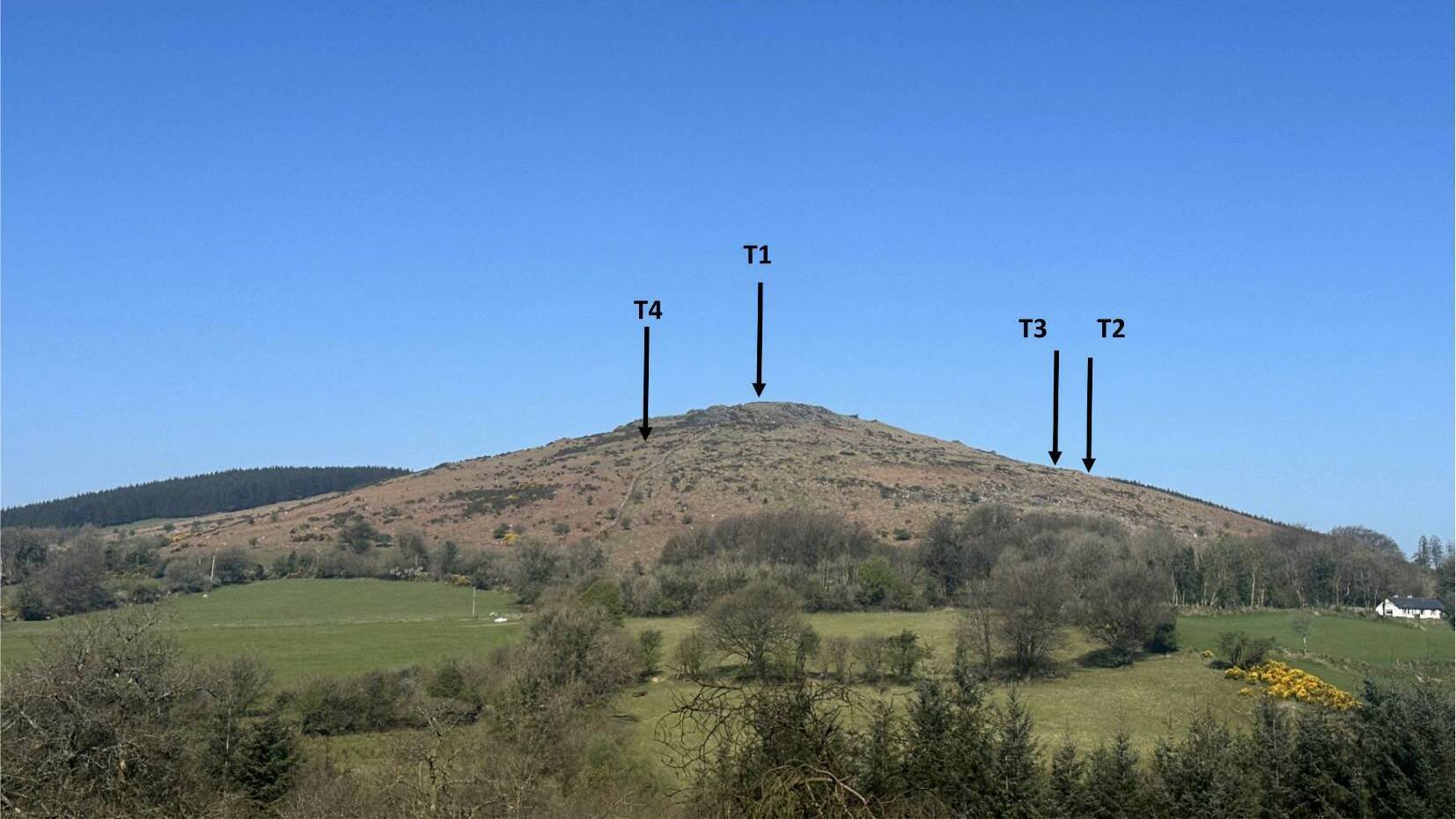
Brusselstown Ring hillfort with test trenches marked. The County Wicklow hillfort has been declared the largest, nucleated settlement in prehistoric Ireland and Britain by researchers at Queen’s University Belfast.
The largest and oldest settlement in prehistoric Ireland and Britain has been identified as a hillfort near Baltinglass in Co Wicklow.
Researchers at Queen’s University Belfast have published a new study proposing this site as Ireland’s earliest “proto-town” which predates the Viking towns that had been considered Ireland’s earliest urban settlements by two millennia.

The mountainous south-west Wicklow area had long been of interest to archaeologists, but this latest research work has led to new discoveries, they said.

“There has been extensive survey work at the site over the past two decades, but critical questions regarding the date, development and function of both the enclosing elements and the internal settlement remained unanswered, which is why we embarked on this new series of excavations,” lead author of the research Dr Dirk Brandherm said.
HISTORY HUB
If you are interested in this article then no doubt you will enjoy exploring the various history collections and content in our history hub. Check it out HERE and happy reading
“Our discoveries challenge previous conceptions of prehistoric settlement organization, showing a level of social complexity, community cohesion, and regional importance not fully recognised before.”
The Baltinglass hillfort cluster was described as one of the most complex and exceptional prehistoric landscapes, featuring a “necklace” of up to 13 hilltop forts as well as other enclosures spanning the early Neolithic period to the late Bronze Age covering 3,700-800BC.
The researchers used existing data from Brusselstown Ring, near Baltinglass, as well as undertaking new excavations.

Work on the ground had identified 288 potential sites for huts but aerial surveys from 2017 to 2022 identified more than 200 “topographical anomalies” that would be consistent with prehistoric house platforms.
Further research on the ground located 98 potential roundhouse footprints within the inner enclosure and over 500 more between the inner and outer enclosing elements.
Even if not every one of the anomalies represented a roundhouse, this would still make it the largest nucleated prehistoric settlement in Ireland and Britain by some distance, according to Mr Brandherm.
The project also unearthed new evidence of a boat-shaped topographical anomaly that could have been a water cistern that is consistent with Iron and Bronze Age cisterns from other parts of Europe.

While fieldwork is ongoing at Brusselstown, the confirmation of the water cistern would be a major discovery, researchers said.
“Such new evidence considerably enriches our knowledge of how people lived and organized themselves, contributing to broader histories of settlement, social interaction, and landscape use,” Mr Brandherm added.
“I very much hope that this new knowledge will not only add to our knowledge but help us preserve Brusselstown Ring as a site of major national and international heritage importance, connecting us to the island of Ireland's deep past."