Leaving Cert reforms 'not as quick as we would like', says children's ombudsman

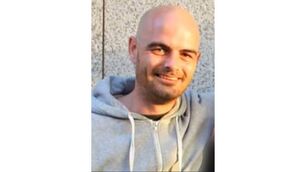
The Ombudsman for Children Dr Niall Muldoon says Senior Cycle redevelopment is 'crucial' File picture: Maxwells
Any further delays to Leaving Cert reform would put children in a position to miss out on the best possible opportunities, according to the Ombudsman for Children.
Dr Niall Muldoon cautioned against any delays to the roll-out of changes as part of progress on Senior Cycle redevelopment, the first of which are due to come onstream from this September.
The children's human rights watchdog is advocating for a move towards what he describes as a "holistic" approach to assessment. “There’s progress being made but it's probably not as quick as we would like it to happen,” he said.
Redevelopment is “crucial”, he said, adding that it is an indication of a move towards a more child-focused approach to help students meet their full potential. "That potential is there in various different ways, in different places. It's not always on the paper at the end of a three-hour long exam.”
Some teachers have called for a pause on changes to the Leaving Cert as part of Senior Cycle reform, due to begin further roll-out from September.
Chief among their concerns are rapid advancements in artificial intelligence (AI) software coupled with the introduction of new project work, called Additional Assessment Components (AACs). Under the reforms AACs will be worth 40% of a students’ overall grade in a subject.
Both the Teachers' Union of Ireland (TUI) and the Association of Secondary Teachers Ireland (ASTI) have called for a pause on changes, while the Irish Science Teachers’ Association (ISTA) has also raised concerns.
From this September, AACs are due to be introduced in chemistry, physics and biology as well as business studies. In the science subjects, the AAC is intended to take the form of a research project based around an experiment.
The National Council for Curriculum and Assessment (NCCA) recently published guidelines that clear the way for students to use AI as source material in their project work once referenced properly.
However, teachers have raised concerns around authenticating work, given the advancements in AI. Other concerns about the roll-out of AACs include a lack of lab space and equipment, as well as health and safety responsibilities.
Speaking to the , Dr Muldoon said it is crucial that teachers are supported properly during the process.
“And that they are resourced properly and given the time to be trained, and that all needs to be worked out but we have been working it out since 2015. Another pause would again put children in a position where they miss out on the best possible opportunities.”
The next step of the reform process should include the CAO system, he added. "We’re moving in that direction. We’re starting to revitalise apprentices; we’re starting to revitalise further education and recognise their importance. From my point of view, it should happen soon enough as well.
“We have to focus on those children who are outside of the norm. We really need to see that reform in further and higher education.”
CONNECT WITH US TODAY



Be the first to know the latest news and updates