Dee Forbes decided on reclassifying work of Derek Mooney, media committee told
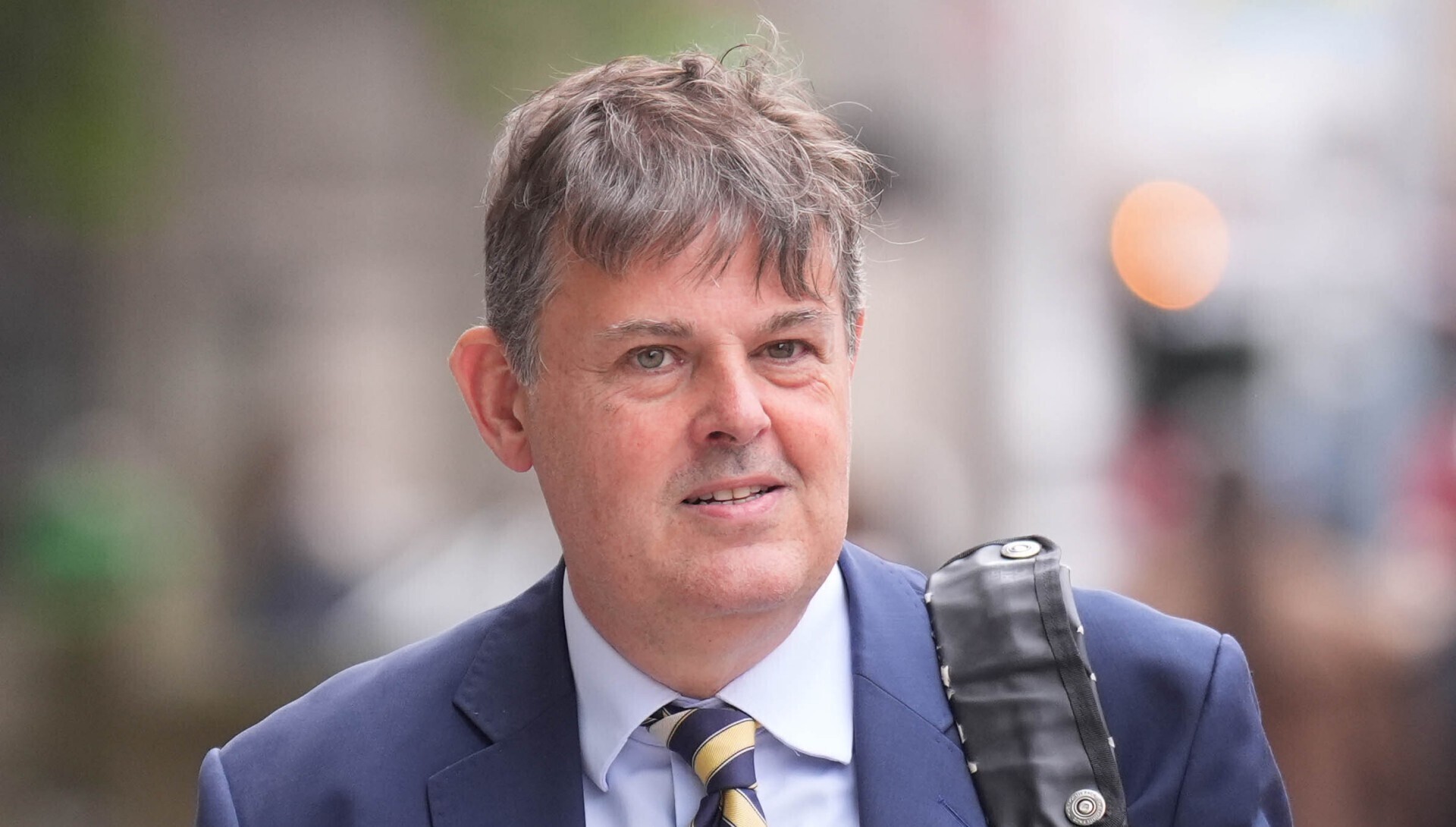
RTÉ director general Kevin Bakhurst arrives at Leinster House for the meeting with the Oireachtas media committee on Wednesday. Picture: Niall Carson/PA
Former RTÉ director general Dee Forbes decided that Derek Mooney be reclassified as a producer, the Oireachtas media committee heard on Wednesday.
RTÉ director general Kevin Bakhurst confirmed the decision to reclassify Mr Mooney was taken in 2020 because “he does more producing than presenting”.
Senior RTÉ executives, including Mr Bakhurst and deputy director general Adrian Lynch, are appearing before the media committee on Wednesday, following revelations about the reclassification of Derek Mooney's work.
Mr Bakhurst said the correct protocols and procedures were followed regarding Mr Mooney, after RTÉ revisited its list of top 10 highest-earning presenters to include Mr Mooney last week.
“We took a different view, which is he’s well known as a presenter. He should be in the top 20,” Mr Bakhurst said at the Oireachtas media committee, responding to Sinn Féin’s Joanna Byrne.
Mr Lynch said the instruction to reclassify Mr Mooney was given “per DG [director general]”.
Read More
Mr Mooney was reclassified as a producer in 2020, so had not been accounted for in the list of RTÉ’s highest-paid presenters.
The revision places him eighth on the updated 2024 list, with earnings of just over €197,000, and seventh in 2025, with earnings exceeding €202,000.
Mr Bakhurst said Mr Mooney did not benefit “financially” from how he was classified.
Ms Forbes left RTÉ in 2023 amid scandal surrounding secret payments to Ryan Tubridy.
She did not make an appearance before the Oireachtas media committee, with solicitors acting on her behalf saying she was “not fit or able” to engage.
Earlier, Mr Bakhurst said it was "misleading" to describe multi-annual funding provided to the broadcaster as a bailout.
Mr Bakhurst told the media committee that the €725m provided to RTÉ across three years was not a bailout.
“Comprising of both licence fee and exchequer funding, this funding is a critical financial support to a national public service. To describe this as a ‘bailout’ is at best misleading.
“At worst it suggests that the organisation is only worthy of support as a mitigation against financial crisis.”
Mr Bakhurst said that of the €225m received in 2025, Government funding represents 18% while the remainder comes from licence fees.
“We are serious about making improvements and addressing issues as they arise. When looking at this issue, rigour and thoroughness was front and centre of our deliberations,” Mr Bakhurst said.
“As this outcome confirms, that may create challenges, especially in terms of surfacing legacy issues and practices. It is regrettable that a sincere attempt to be more open has come to be categorised as a scandal.”
Mr Bakhurst said the “complexity of RTÉ’s historical approach to contracts and employment can often appear opaque and confusing”.
“We find ourselves addressing decades of variable approaches and practices. Notwithstanding the complexity, I and RTÉ remain fiercely committed to the transparent reform of legacy matters in the interests of both RTÉ and its staff, and in the interest of best practice reporting too.
“We will correct what deserves correction.”
Mr Bakhurst said the gains the broadcaster has made in recovering public trust is not something they “take for granted”.


CONNECT WITH US TODAY



Be the first to know the latest news and updates