Clinic looks for doggie blood donors as it prepares to install Ireland's first animal dialysis machine

Vets Erin Lagarde and Laura Cuddy with donor dog Faye. All doggie donors are rewarded with a treat afterwards. Picture: Gareth Chaney
One of the country’s top animal hospitals is on a mission to recruit doggie blood donors as it gets ready to install Ireland’s first animal dialysis machines.
The treatment will be available in Veterinary Specialists Meath branch, which is owned by Cork native Laura Cuddy and her husband Turlough McNally. The couple also have an animal hospital in Eastgate Little Island, Cork which they opened in May of last year.
Laura and Turlough have worked on everything from a monkey’s caesarean section in the US to fracture repairs on emus. Since establishing their vet business in Ireland they have led the way in terms of MRI and CT scans for exotic animals, and cancer-detecting equipment.
Now, they are going one step further, bringing animal dialysis to Ireland.
It comes more than a century after the first practical demonstration of dialysis in 1914 which was carried out on dogs and rabbits, which paved the way in developing the treatment for humans.
Ms Cuddy said that while blood donations were already a part of the critcal care services they provided, even more donations will be needed to allow them provide dialysis — and as a result they are on the hunt for healthy dogs to act as donors.
"Essentially you are taking out the toxins but because you are removing so many toxins you have to replace some blood in the process."
"Traditionally, there is no centralised blood bank in Ireland. In order to facilitate the service, we depend on public donations so people bring their pets on a philanthropic basis to donate blood.
“It’s amazing how generous people are for taking time out of their day to drive to us so their pet can give blood. A lot of people do it because they know it’s for the greater good.
"A lot of people involved in the veterinary industry like to help out. We also have pet owners who hear about blood donation services. Their own pet might have undergone a transfusion so they understand the importance of donations.
"We have a blood donor register and if we’re in need we can ring those on it and ask them to bring in their pets to give blood. We have to depend on the goodwill of people."
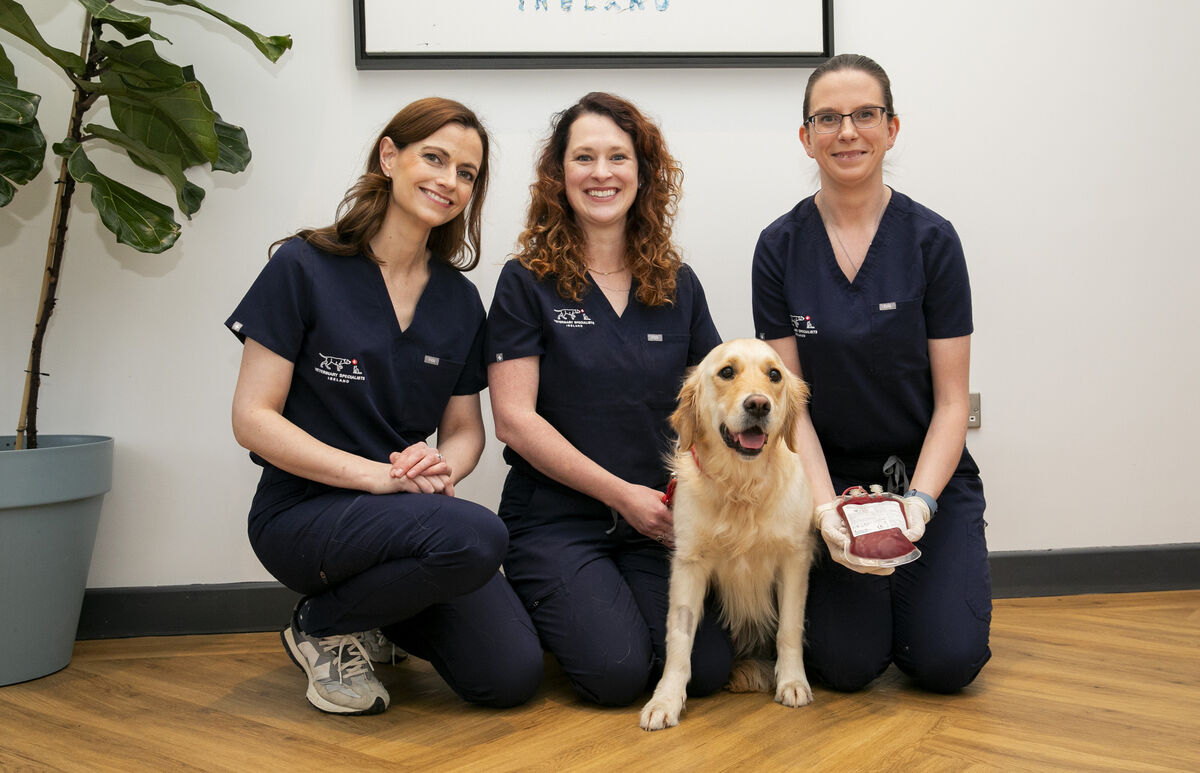
Dogs undergo a rigorous selection process as part of the donation programme. And of course, like humans, not every donor is suitable, and there are also may be the fear of needle factor. As a result each doggie donor has to be assessed very carefully, and has to be more than 25kg to qualify.
"It’s important to be sure they are the right temperament and it won’t cause them any problems or distress. We will always take them for a trial first. If the dog is frightened a donation will not proceed.”
"Usually they are okay about it because they know there is a treat coming at the end. They always have a local anaesthetic in their neck so they don’t feel the needle going in.”
She explained how the initiative works.
Vet Erin Lagarde, who has relocated from New Orleans to work in the hospital’s critical care unit, said she is looking forward to seeing Irish pets benefit from the facility’s new dialysis machines.
“The intention of dialysis in pets is not to do it long term. Really, it's when they have suffered a kidney injury as it gives them more time to recover. The goal is to have them return to normal or near normal health.
Erin has a wealth of experience and has even carried out dialysis on a sealion in the US. She, her husband who is also and vet, and their family have moved to Ireland. And how long does the dialysis take?
If we decide that they need or would benefit from dialysis then we have to place a special IV that allows us to take blood from the body and put it through a filter. We then return the purified blood back to the dog or cat. Generally that process can take about four to six hours or so. It’s usually done about three times a week at first until they make a full recovery. We use the same machines that are made for people
"If we decide that they need or would benefit from dialysis then we have to place a special IV that allows us to take blood from the body and put it through a filter. We then return the purified blood back to the dog or cat. Generally that process can take about four to six hours or so. It’s usually done about three times a week at first until they make a full recovery. We use the same machines that are made for people."

CONNECT WITH US TODAY



Be the first to know the latest news and updates