Harsher sentences for domestic and sexual violence come into effect
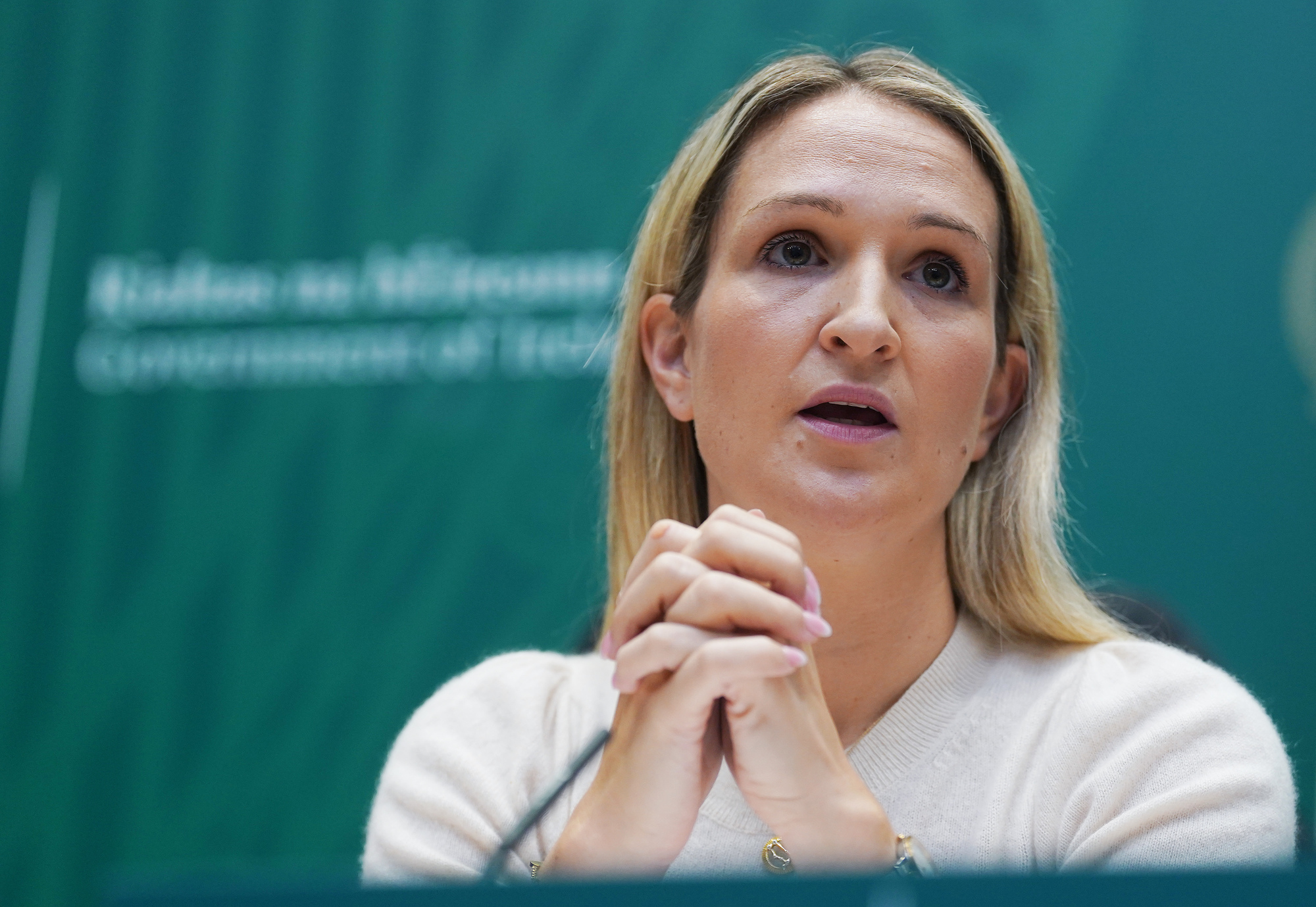
Justice Minister Helen McEntee said introducing standalone offences for stalking and strangling are 'significant'.
A new offence of stalking, with a maximum sentence of up to 10 years, has come into effect in Ireland on Wednesday.
Justice Minister Helen McEntee announced that the Criminal Justice (Miscellaneous Provisions) Act 2023 — which introduces a range of new criminal offences, and tougher sentencing — has now come into effect.
The Government said this marked a milestone in its efforts for zero tolerance of domestic, sexual and gender-based violence.
The new act means the from today, November 1:
- The maximum sentence for assault causing harm, a common offence in domestic abuse cases as well as in other assaults, increases from five years to 10 years;
- The scope of the existing harassment offence is widened to include any conduct that seriously interferes with a person’s peace and privacy, or causes alarm, distress or harm;
- A new standalone offence of stalking, with a maximum sentence of up to 10 years, is created and in effect;
- A standalone offence of non-fatal strangulation or non-fatal suffocation with a maximum sentence of up to 10 years, and a standalone offence of non-fatal strangulation or non-fatal suffocation causing serious harm with a maximum sentence of up to life imprisonment, often indicators of further, potentially lethal violence against a woman, are created and in effect;
- The maximum sentence for assaulting or threatening to assault a garda or other on-duty emergency workers increases from 7 to 12 years;
- The maximum sentence for conspiracy to murder increases from the current penalty of 10 years to life imprisonment to further toughen the laws around gangland crime.
Ms McEntee said the commencement of the act underlined the Government’s commitment to building safer communities.
“This means tackling gangland criminals, ensuring our gardaí and emergency workers are supported in the work they do and having zero tolerance for domestic, sexual and gender based violence.”
She added that introducing standalone offences for stalking and strangling are "significant".
"Similarly, while stalking is already illegal, we are creating a standalone offence, defined in terms of causing either a fear of violence, or serious alarm and distress that has a substantial impact on a person’s day to day activities."
The act also introduces a range of provisions that will provide better protection for gardaí and strengthen the laws designed to tackle serious and organised crime.
These include:
- Increasing the maximum sentence for assaulting or threatening to assault a police officer from seven to 12 years. The increase in maximum sentence will apply where the assault in question is against an on-duty garda or emergency service worker, such as hospital staff, prison officers, members of the fire brigade, ambulance personnel or members of the Defence Forces;
- Increasing the maximum sentence for conspiracy to murder from the current penalty of 10 years to life imprisonment. The maximum sentence for conspiracy to murder has been set at 10 years since 1861. It is used when two or more people form a plan to murder another person but are stopped before they can carry it out.
Ms McEntee added: “I would like to thank Minister of State James Browne, my colleague Minister Simon Harris and colleagues in the Dáil and Seanad and officials in my department who all played a key role in ensuring the swift passage of this legislation through the Oireachtas.”