High rate of concussion among Ladies GAA footballers, study finds
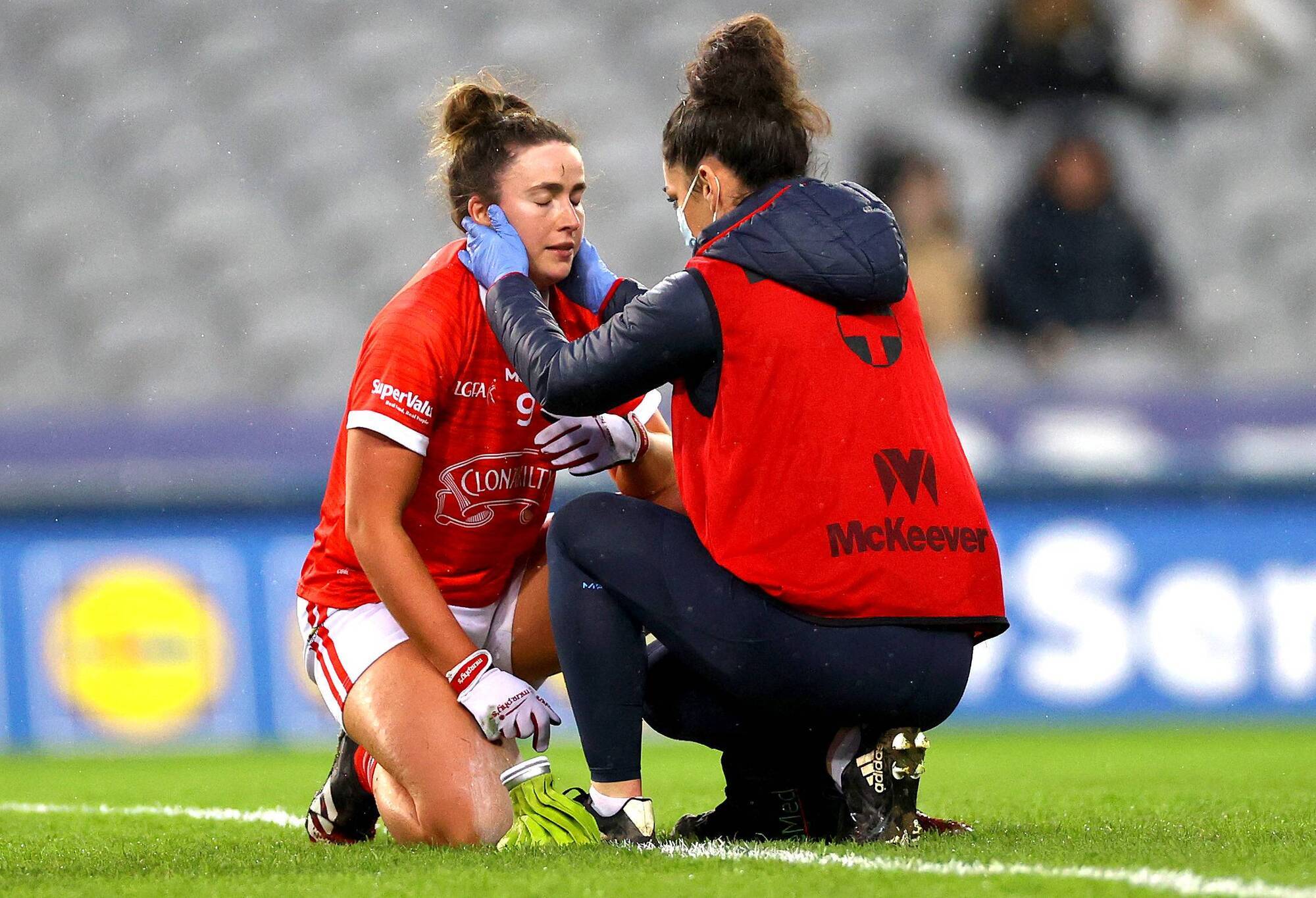
Concussion experts say female sports players are thought to be at greater risk of concussion than their male counterparts – and are also more likely to suffer from longer-lasting symptoms. File picture: INPHO/James Crombie
One in four intercounty Ladies Gaelic footballers sustained a sports-related concussion or a suspected concussion across a season.
A new DCU study found over half of these elite players did not receive medical clearance before going back to playing — this rose to 77% of non-elite players of the female game.
The study examined 657 female players at both club and intercounty levels across a single season which included 134 intercounty players.
The study, funded by the Ladies Gaelic Football Association and the Irish Research Council, showed that concussion is relatively common in Ladies Gaelic Football, said Dr Róisín Leahy, lead author of the study.
“Many players are not receiving adequate concussion care, particularly beyond the initial post-concussion stage," she said.
“Poor concussion management can have serious implications so it is important that players and coaches are aware of the importance of recognising and removing players from play with a suspected concussion.”
She also stressed the benefits of a graded individualised return to play and ensuring players receive medical clearance before returning to sport.
“Improving access to medical support for Ladies Gaelic football players is also important, and ensuring athletic therapists, physiotherapists and doctors are available pitchside.”
Concussion experts say female sports players are thought to be at greater risk of concussion than their male counterparts — and are also more likely to suffer from longer-lasting symptoms.
The new study of Ladies Gaelic Football players by the School of Health and Human Performance in DCU found one-fifth of all players sustained a suspected or diagnosed sports-related concussion (SRC) during the previous season.
The research, published in the clinical journal of sports medicine, found the rate of concussion or suspected concussion was higher among inter-county players with 26% compared to 15% of their non-elite counterparts in the sport.
“There are several reasons why county players may have reported more concussions than club players, such as differences in style of play, player fitness, increased time spent playing sport, and therefore increased exposures, or improved access to medical personnel,” said Dr Leahy.
Overall, the survey found 35% of players with a diagnosed or suspected concussion reported returning to play on the same day. Just over 2% didn’t remember. When it came to following the graded return-to-play programme, 63% admitted they didn’t adhere to the guidelines. 3% didn’t remember.
“Continuing to play with symptoms of a concussion, such as playing on the day of injury or returning to play too soon, is associated with a longer recovery time and more severe symptoms”, said Dr Leahy.
“Returning to play before a concussion is fully healed may also lead to second impact syndrome, a very rare but potentially life-threatening neurological condition.”
The online survey distributed to Ladies Gaelic Football clubs found only 3.5% of players adhered to all sports-related concussion management recommendations.
The study noted that sports-related concussion is a form of mild traumatic brain injury that presents with a broad range of functional neurological impairments without structural brain damage. Dr Leahy said players who had sustained a concussion most often reported eye-related and migraine-type symptoms.
Although most sport-related concussions are self-limiting and are expected to resolve within 14 days in adults, 6% to 16% of patients experience symptoms lasting longer than one month.
“Owing to limited resources in community sport, there is also a need for clinicians to provide education on how to recognize and appropriately manage possible SRCs to players and coaches”, said the researchers.
The study found nearly 10% of county players and just over 10% of non-elite players suffered more than three or more sports-related concussions while 18% of county players and 14% of non-elite previously suffered two concussions related to playing the GAA sport.
Just over 85% of concussions were sustained during matches by inter-county players, and 86% in the case of non-elites footballers. When it came to inter-county players, 94% said the location of the impact was the head or the neck — this was 78% for non-elite players.
The study said clinicians working with Ladies Gaelic Football teams should be aware that a high number of players experience sports-related concussions. They added that they should keep up-to-date on best practice advice on identification and management.


CONNECT WITH US TODAY



Be the first to know the latest news and updates