Photographs of Irish Civil War colourised in new book
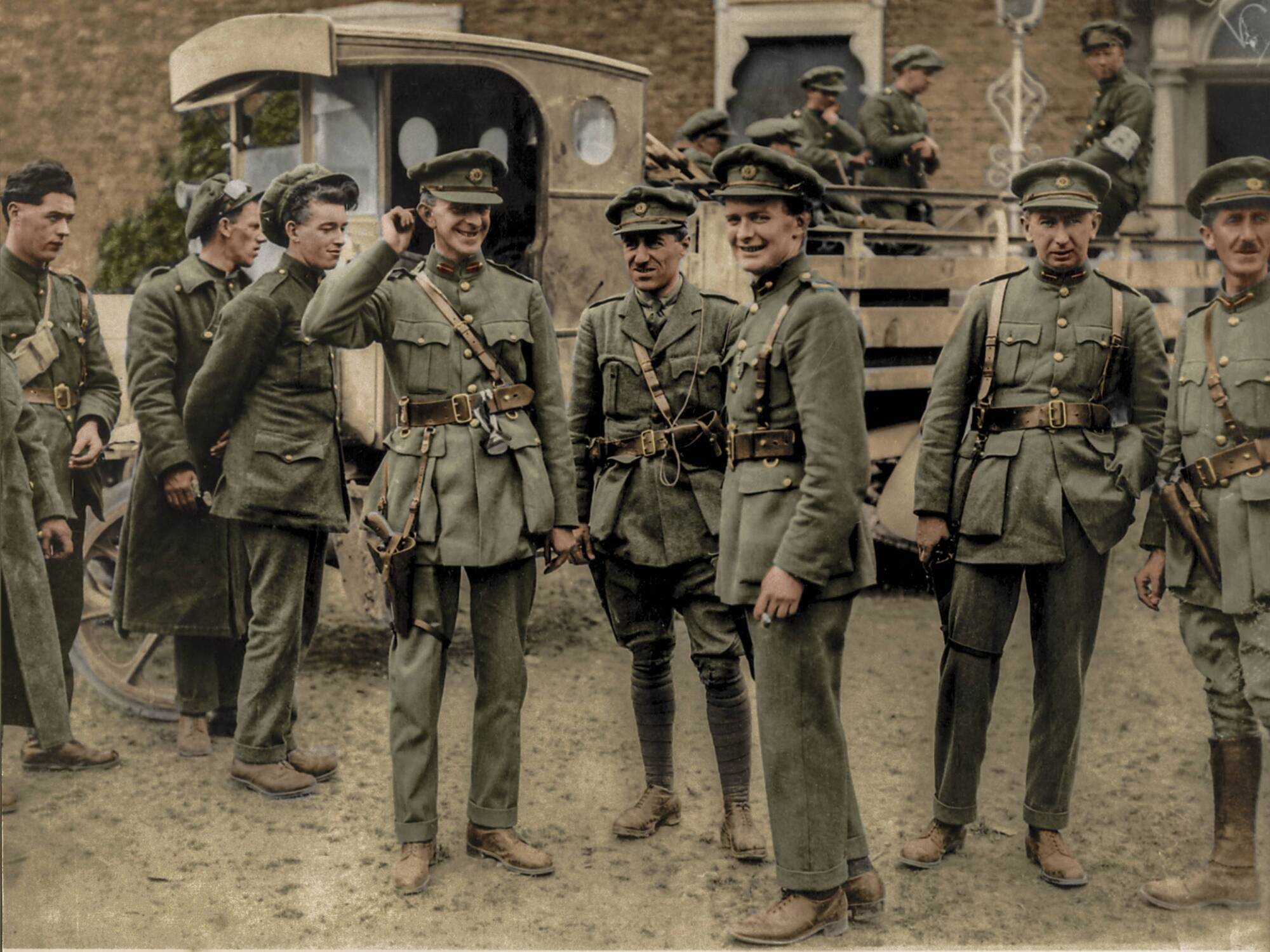
One of the photographs featured in 'The Irish Civil War in Colour' shows the senior Provisional Government Army command in Limerick in 1922, including General Eoin O’Duffy fourth from left; centre, cigarette in hand, Commandant-General Michael Brennan; next right, Commandant-General Fionán Lynch, TD. Pictures: Gillbooks.ie
Photographer John O’Byrne has landed a job many children would dream of: Colouring in pictures.
Mr O’Byrne has spent more than a year colourising black and white photographs for a new book, .
The photographs, some of which have never been published before, have been carefully selected from wide-ranging archives and private collections.
His long-time co-author, historian Michael B Barry, researched and planned the book and sent images to Mr O’Byrne for colourisation. So how does it all work?
“Once I have my cup of tea and the computer open in front of me, I go off into my little world and colour away,” said Mr O'Byrne.
He breaks down each image into layers to focus on, such as background, people, buildings, and so forth. He strives for complete accuracy where possible, so will often use Google Maps to check the colour of building bricks among structures that have survived to this day.
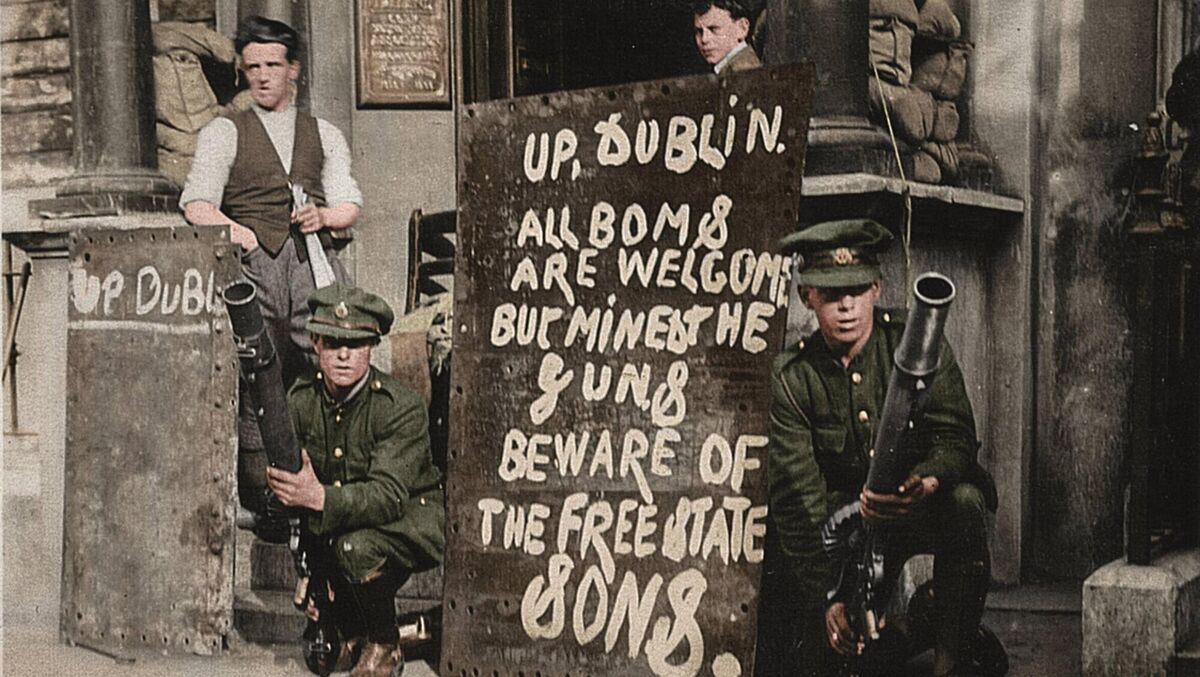
If there is an advertisement in an image in the background, he obtains old copies to make sure any colours are just right.
“The fashion is the hard bit,” he said. While the uniformity of military dress is often easy to recognise and colour, civilian fashion requires analysing each person.
Mr O’Byrne trawls through old fashion catalogues seeking any details on the style of the day, and most importantly the colours in vogue.
He said he “tried to make everything historically accurate to the best of my ability”, but that can be easier said than done.
“A portrait shot of just one person, depending on if they’re not wearing any extravagantly-detailed clothes, could take about an hour,” he said. “Group shots can take a day.” Some images take much longer, with one taking a week to colourise.
“There was one image from the top of Nelson’s Pillar, looking down at the funeral of Michael Collins,” he said.
“It was a portrait shot looking down O’Connell St. It’s a long street and there were thousands of little individual faces [to colour in].”
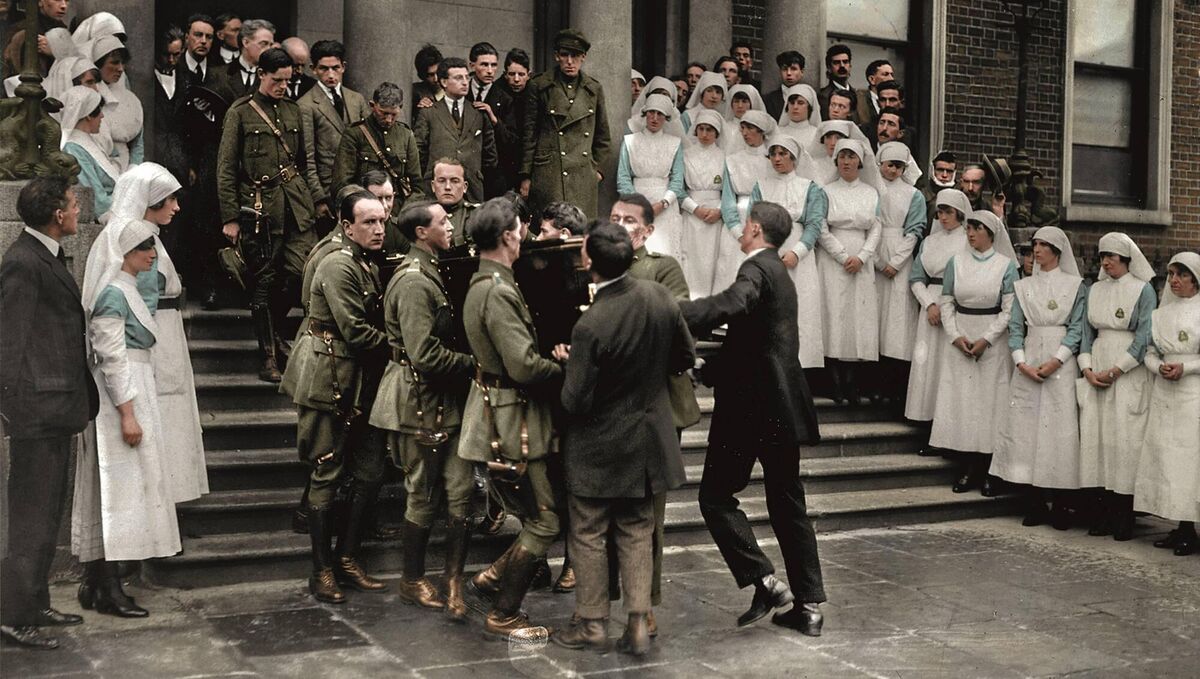
Mr O’Byrne sometimes adjusts the highlights and shadows using editing software “just to bring out a little bit more from the original image”, but for the most part he “tends not to manipulate the image at all".
"If there’s a bad crack on the original [photograph], I leave them in because that’s what the original photographer wanted," he said. "I’m not trying to manipulate their work; I’m trying to turn it into a coloured version.
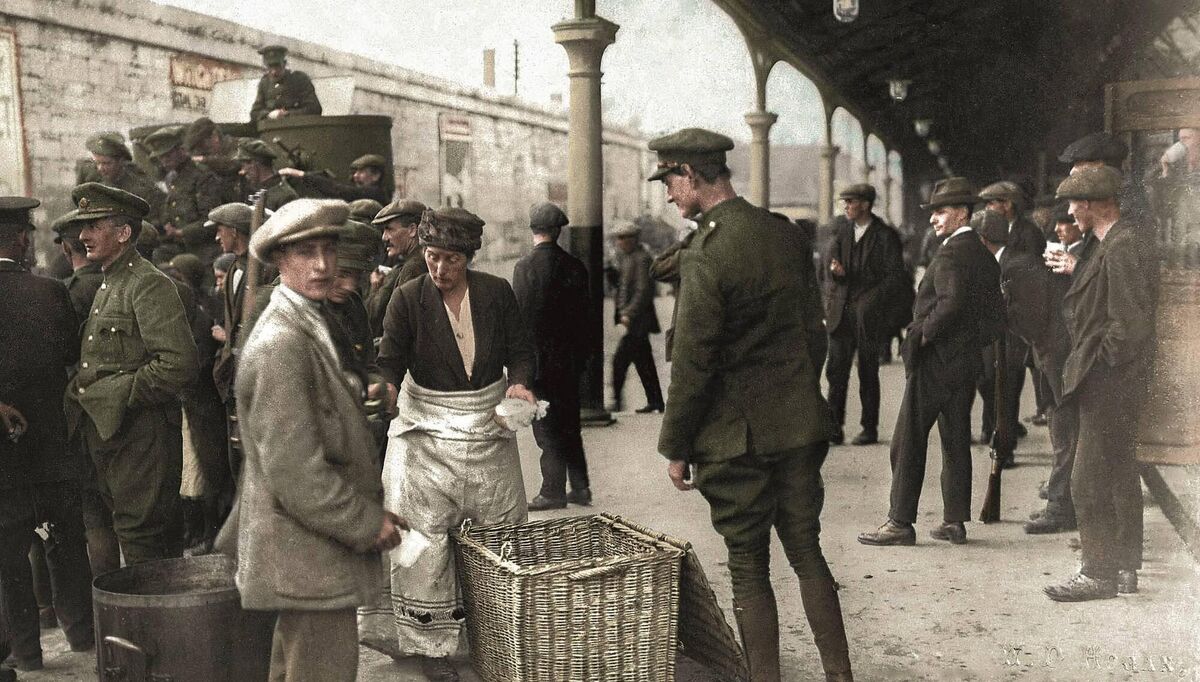
“I think for younger generations coming up, if they see it in colour they realise, ‘That’s 100 years ago, but 100 years ago isn’t that long’.
"Seeing them in colour doesn’t bring them alive, but it's more realistic for the younger generations to think, ‘That man is dressed the same as Daddy going to a wedding!’"
He said anniversaries of 'The Emergency' are coming up soon, which could be a “possibility” for a future project, but they are not rushing into anything just yet.
is published by Gill Books
CONNECT WITH US TODAY



Be the first to know the latest news and updates