Remembering Michael Collins: Famous orations from Béal na Bláth throughout the years
Remembering Michael Collins: Famous orations from Béal na Bláth throughout the years

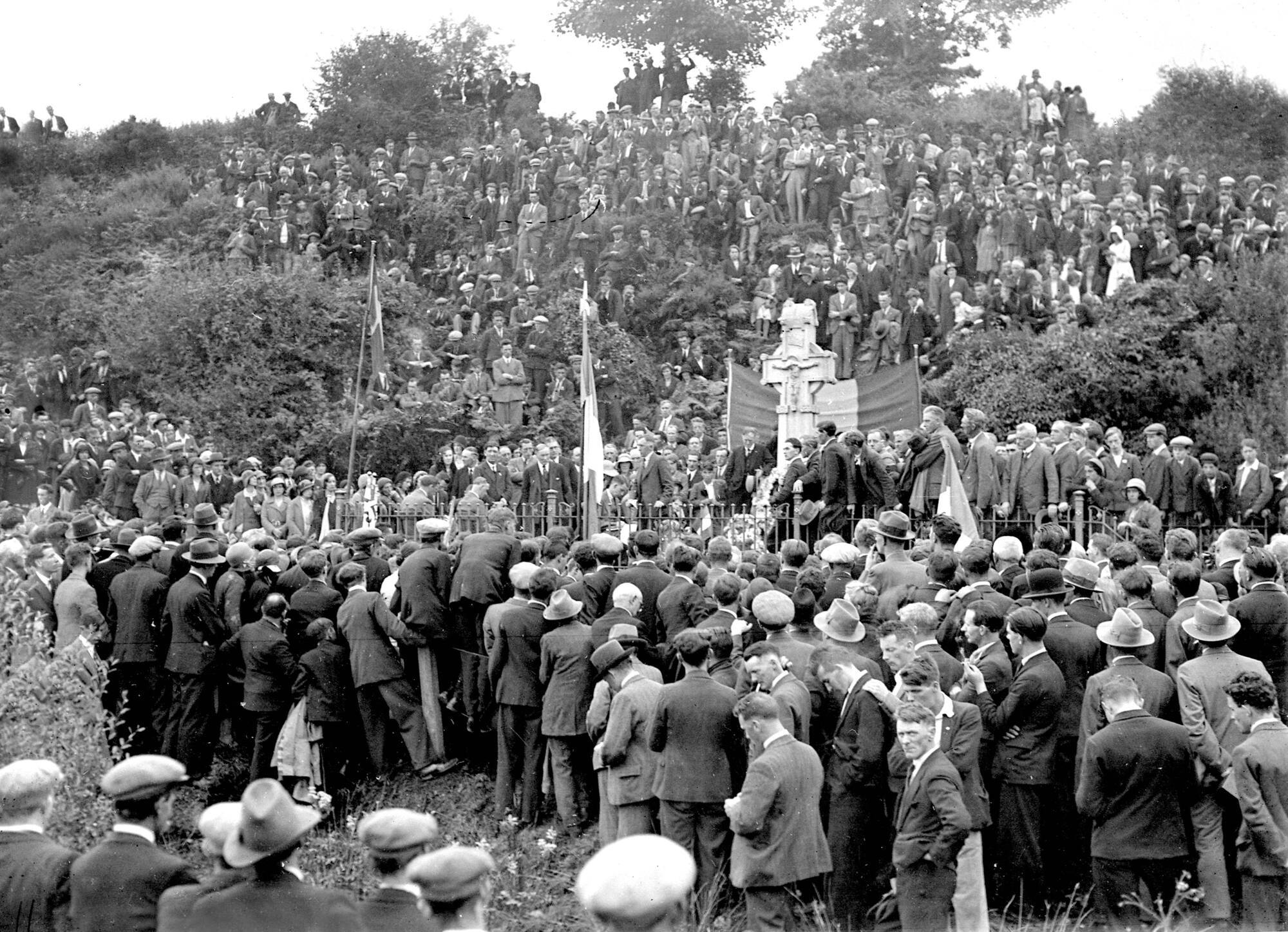
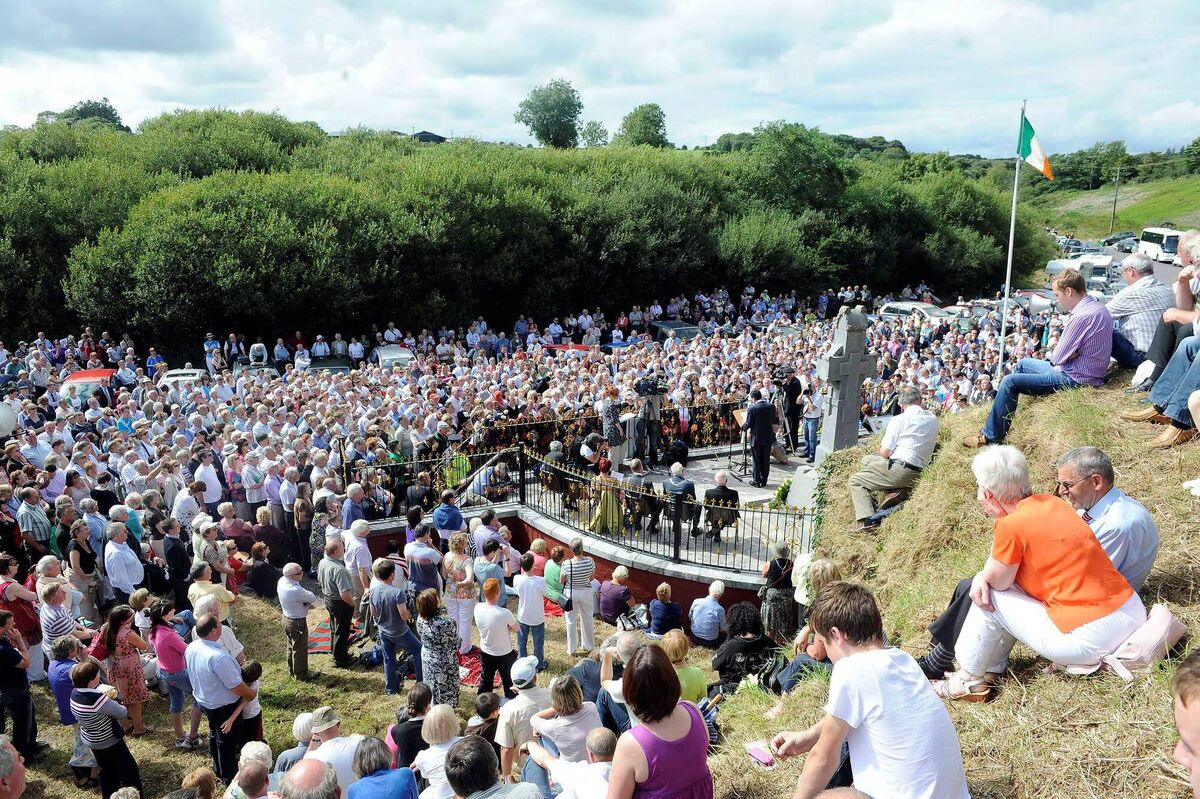
General Richard Mulcahy speaking at the tenth anniversary Béal na Bláth commemoration in 1932.

The site of Michael Collins’ death hosts an annual oration in his memory. Here are some outstanding quotes from those occasions.
Michael D Higgins 2016 

Michael Collins, as highlighted by all those who have spoken at this event, was a person of extraordinary talent. He was energetic, committed, pragmatic, with a zest for life and companionship, and the robust rural version of that companionship. His background was endowed with what I would call ‘the native richness of rural Ireland’. His mother and father were equipped with robust practical skills, yet the two of them combined that with an interest in literature, in languages, in both the oral history of their own people, and the written accounts of the history of our nation.

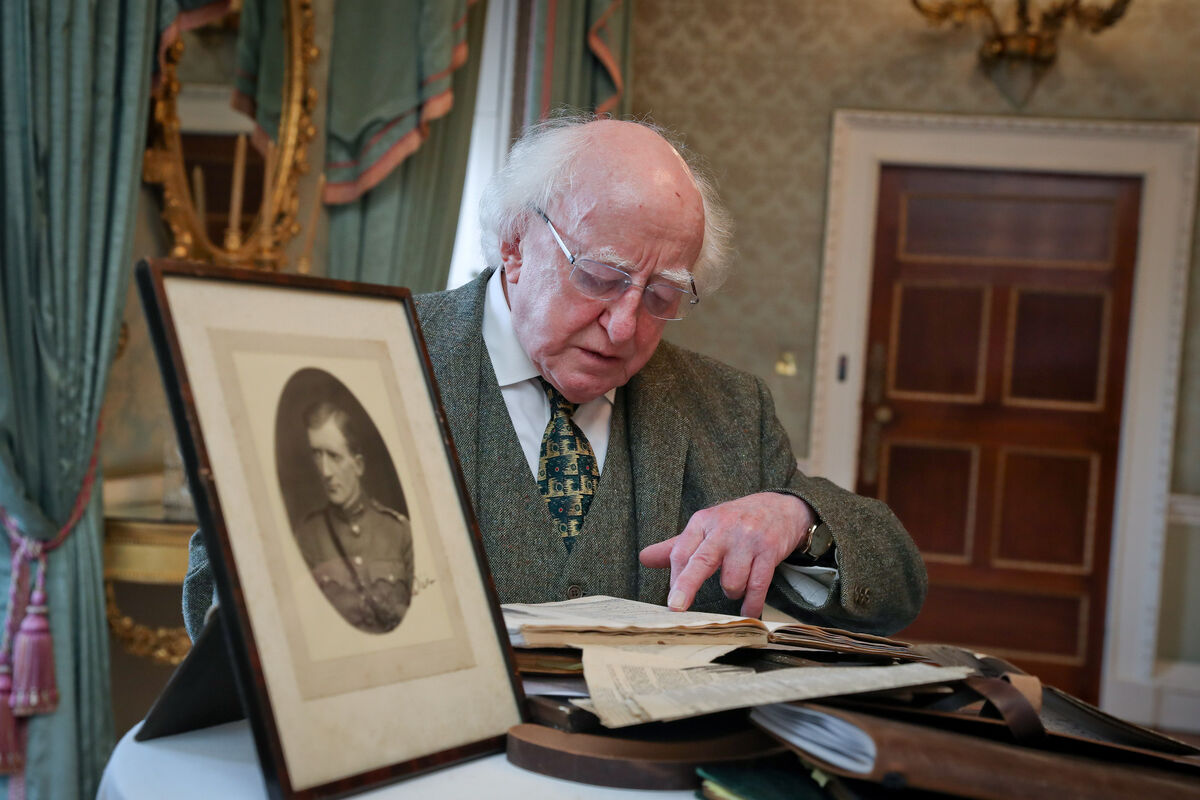
President Higgins looks at memorabilia from the Treaty negotiations in London in 1921, of which Collins was a key player. Picture: Maxwells

The memory of Michael Collins will forever be enmeshed with that of the tragic and bloody Civil War which raged on this island throughout the years 1922-1923. This was a dreadful human tragedy for so many Irish families. And while we should never underestimate the challenge that it was to build the foundations of a stable democratic state in the midst of turmoil and in the shadow of a great power, we must never forget what a terrible price was paid in divided families and divided communities, leaving a legacy that was felt for generations.

HISTORY HUB

If you are interested in this article then no doubt you will enjoy exploring the various history collections and content in our history hub. Check it out HERE and happy reading
Enda Kenny 2006 

We meet here in the dust, the earth of West Cork. It’s dust, the earth that gave life to Miceál O Coileáin, Michael Collins. The dust, the earth that called him home, here, to his own, in death. His journey was a nostalgic journey. And so is ours. Not nostalgic, in the reduced, colloquial sense. But nostalgic in the literal sense, coming from the Greek Nostos, for home, for homecoming. Therefore, I am deeply honoured that you should ask me to join you in this Nostos, this homecoming, to this sacred, political place.

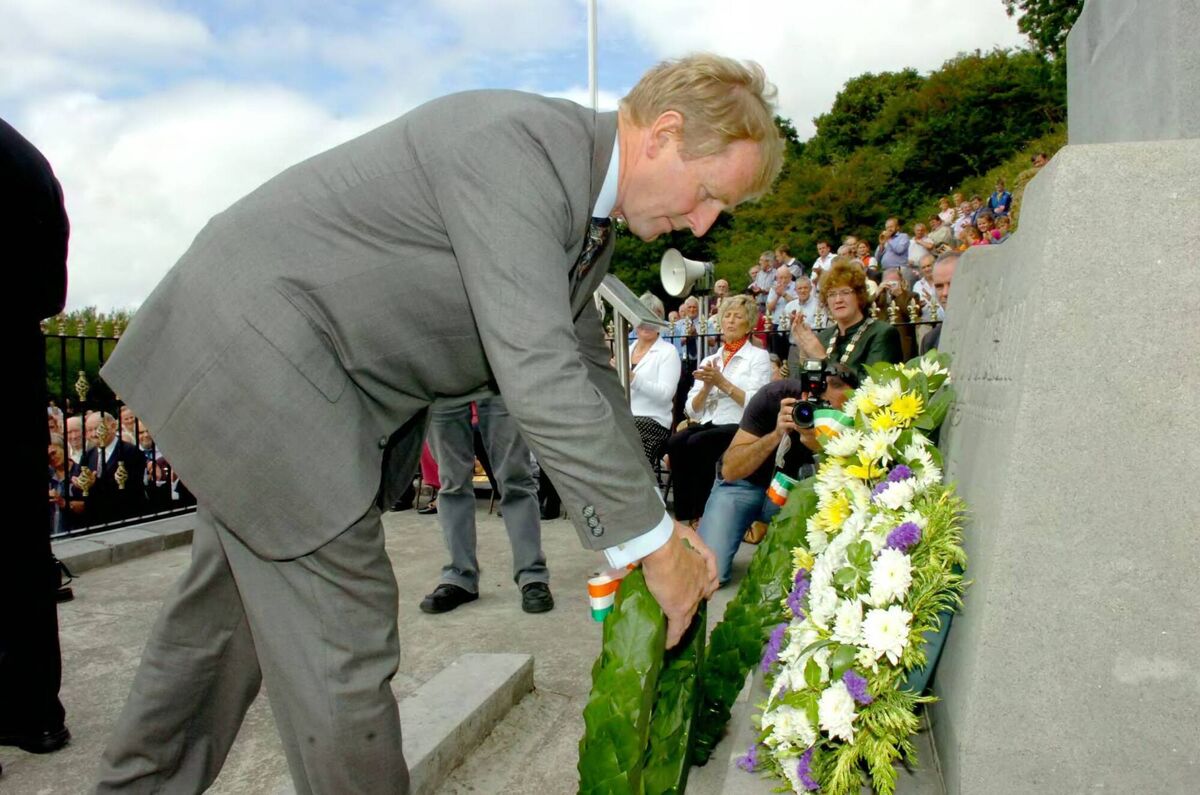
Fine Gael leader Enda Kenny lays a wreath at the Michael Collins monument. Picture: Richard Mills.

Michael Collins knew instinctively the value, and the fragility, of public trust. He recognised the need…..the duty…… to keep faith with the people. He understood how vital it was to make difficult, sometimes impossible, decisions. With our reform agenda, we too are making difficult decisions, we’re respecting public trust…we’re keeping faith with the people. Through radical legislation, we’re tackling political corruption. Through our Constitutional Convention Irish citizens and politicians from both north and south will come together to discuss constitutional reform – a new concept in our country. Something of which Collins would approve.
Michael Noonan 2001 

In his time, Collins was, the main advocate of recognising the importance of diversity, the importance of difference. Indeed, in one of his speeches, he noted that there were three threats to democracy, namely disinterest in politics, disorder and false consensus. He was a great advocate of accommodating differing political positions though he emphasised that, in a true democracy, people had a number of fundamental obligations to the state, not least of which was to co-operate in maintaining peace and public order, rights of life and property according to law, and the freedom for individuals, parties and creeds to express themselves lawfully.

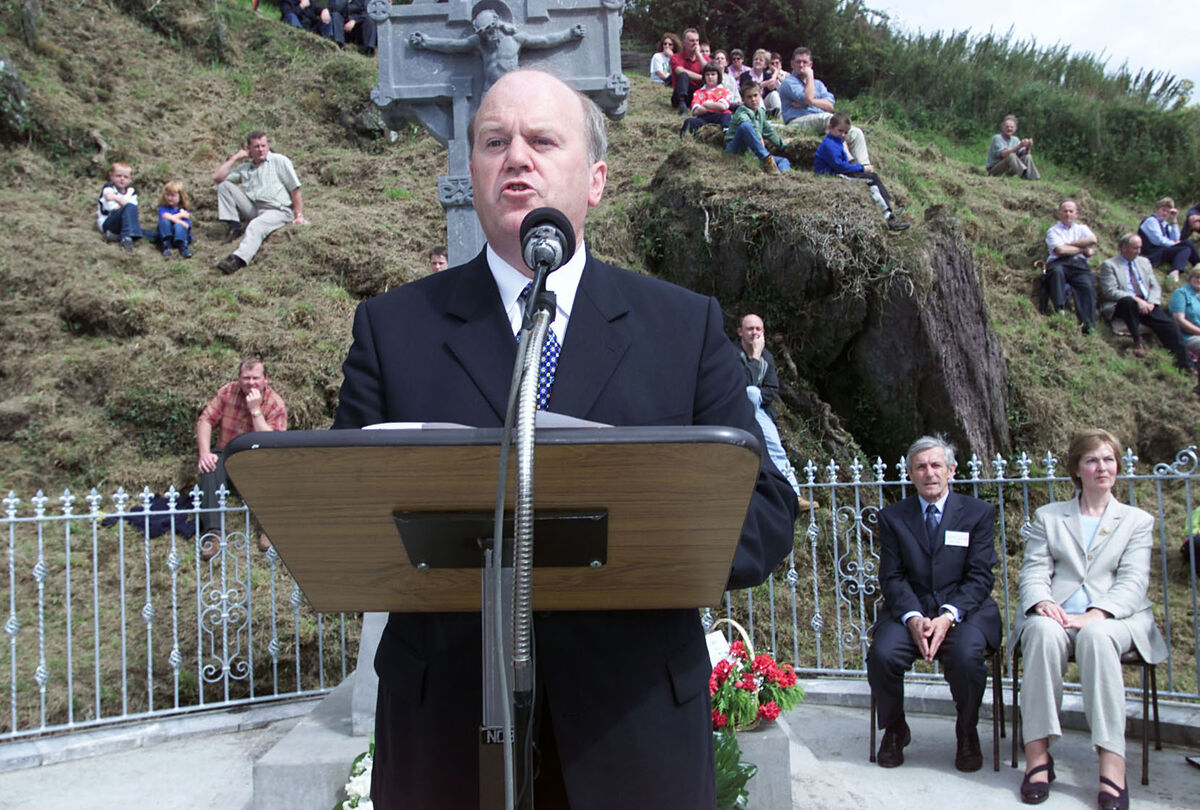
Michael Noonan delivers the Oration. Picture: Mark Kelleher

The democratic cornerstones laid by Michael Collins in 1922 included, among other things, a recognition of the unionists’ right to consent to any change in their status as part of the United Kingdom. He always hoped that the Boundary Commission would narrow the geographic territory of Northern Ireland to the point where unionists would see that it was in their own interest to join with the rest of us on the island in a diversified but unified state.

David Putnam 2007 

Michael Collins is the most wonderful example of a life suspended somewhere between history and myth – and that alone makes this an annual gathering of enormous significance. Let’s be honest about it – we all need our heroes, we need them to help sustain our dreams of a better and more secure future.You’ll remember that just a week before he died, at Arthur Griffith’s funeral, Michael Collins was heard to lament: “Why has Ireland always lost its leaders when it had the greatest need of them”? We might just as easily ask, “why have we always needed outstanding men and women to re-calibrate our moral compass”?

But what’s certain is that, on that day, Ireland was gifted a figure to rank alongside other 20th century leaders such as Mahatma Ghandi and Nelson Mandela — men who, having freed their own people from the shackles of oppression, became icons for peace and reconciliation everywhere.
Bill O Herlihy 2013 

As in so many other ways, Michael Collins was way ahead of his time in his realisation of the virtues of sport and how sport could be harnessed to bring a spirit and cohesion to his political and military endeavours. Sport for him became part of his inspiration. The challenge of sport to galvanise the nation really has not changed all that much in the 91 years since Collins died. Look at our response to the gold medal of Rob Heffernan at the World Athletics Championships which have just ended.

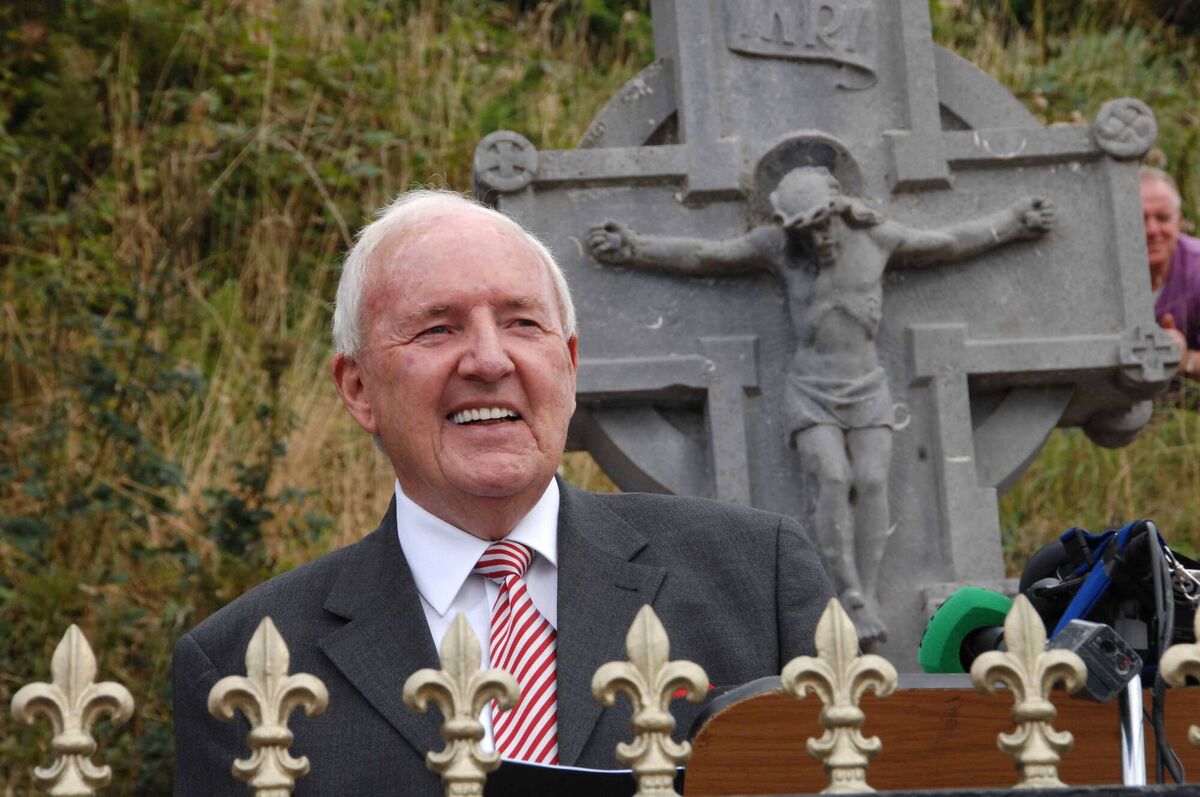
RTE Sports Broadcaster Bill O'Herlihy giving the oration at the annual Michael Collins commemorations in Beal na Bláth. Picture: Provision.

By 1908 he had himself elected vice-captain of the Geraldines Hurling Club in London, even though he wasn’t what you would call a polished player. He has been described as an effective mid-fielder, a description which in my experience can mean almost anything. I suspect that his temper would have seen him capture a few red cards if red cards had been invented at the time.
Brian Lenihan 2010 

Today is a day to recall the remarkable qualities of a man who, along with O’Connell, Parnell and de Valera, is part of our national Pantheon. As Dr Garret FitzGerald has written, these other three political leaders “had not only the capacity and ability to play a major political role over an extended period of time, but also the opportunity to do so.” Dr FitzGerald adds: “There are others who if they had lived. . …might have rivalled or even outshone some or all of these three — most notably Michael Collins in this century.” 

Brian Lenihan was the first Fianna Fáil Cabinet member to deliver an address at the annual commemoration of the death of Michael Collins in Béal na Bláth in West Cork. Picture: Dan Linehan

What is less often recognised is Collins’s work in putting in place an accounting system that required government departments to give full reports of expenditure to the Dáil, and also required that any financial proposal brought to Cabinet should be first submitted to the Minister for Finance. Here was a man at constant risk of arrest and death, running a ruthless guerrilla war and masterminding the highly efficient intelligence system which secured its success. 

Yet he still had the time and the ability to build the foundations of a system of financial control. He recognised that such a system was essential to the running of a State. His talent for state-craft was also evident when in the period between the signing of the Treaty and the outbreak of the Civil War he continued to build the administrative apparatus which still serves the modem Irish State.


x

More in this section

Lunchtime News

Newsletter

Get a lunch briefing straight to your inbox at noon daily. Also be the first to know with our occasional Breaking News emails.

Cookie Policy Privacy Policy Brand Safety FAQ Help Contact Us Terms and Conditions

© Examiner Echo Group Limited