Naval Service acquires high-tech equipment that could save divers' lives
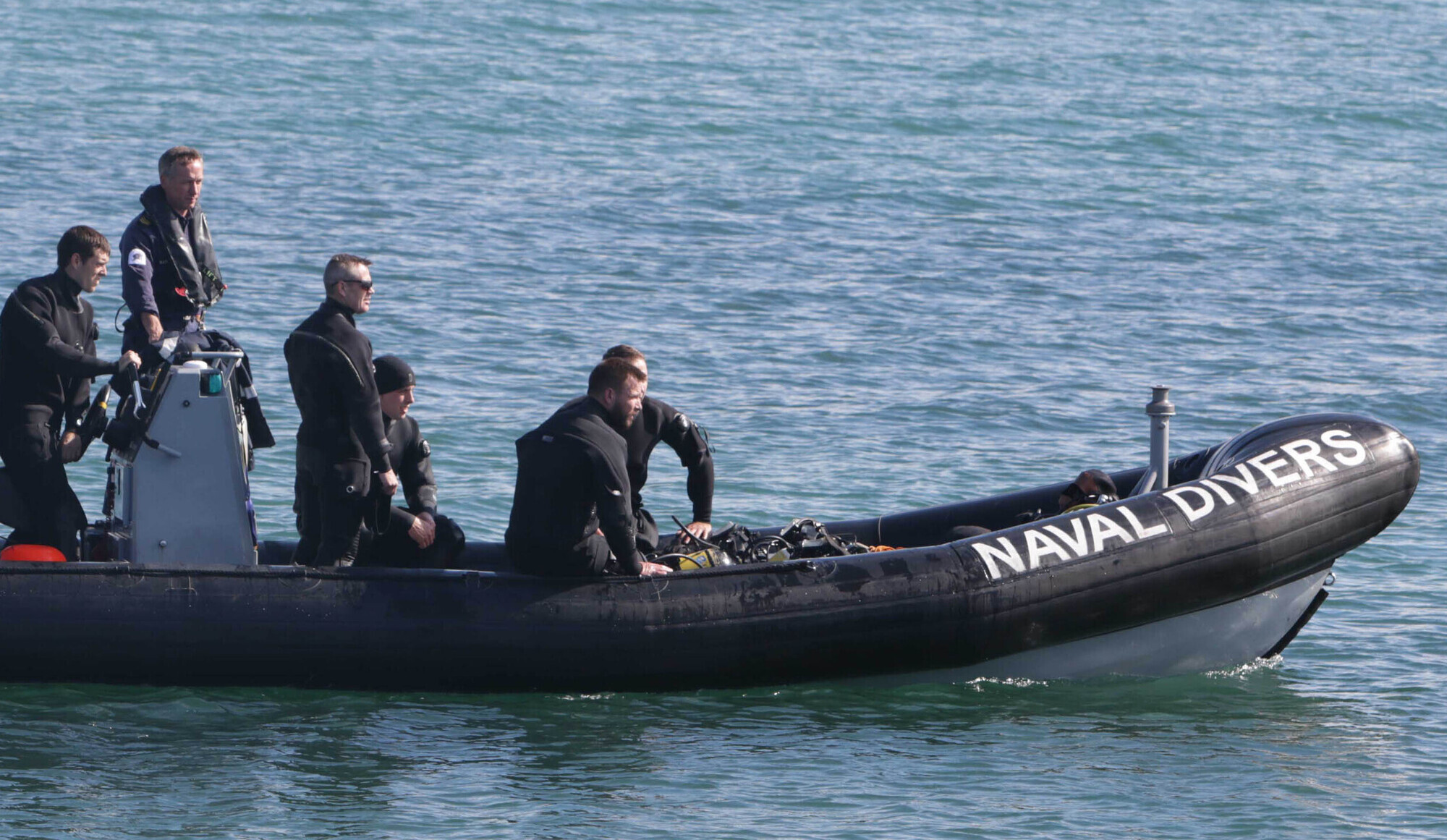
Naval divers during a search and rescue mission. The Nail Service's diving section now has small and large versions of a recompressions unit. Picture:Press 22
The Naval Service has successfully made operational two new pieces of ultra-modern high-tech equipment which will be used to help save underwater divers who get into difficulties with potentially deadly decompression sickness.
The service's diving section has acquired one small version of a recompression unit weighing 250kgs, which can hold one patient and an attendant, as well as a larger version of 10,000kgs (10 tonnes). This can hold up to eight people.
Lieutenant Commander Stephen Stack, the officer in charge of the Naval Service diving section, said the equipment will be invaluable if a diver gets into difficulties underwater, potentially helping to save their lives.
He explained that when somebody enters the water their body compresses. Their breathing is also compressed and if decompression is too quick (as a result of a medical incident or accident) a diver will potentially get into serious trouble.
“The analogy is like opening a can of coke too quickly because it fizzes up," Lt Cdr Stack said.
"Bubbles (of air) pass into the bloodstream in the best case scenario. Smaller ones will go into the lungs and are exhaled. However, the bigger ones can get lodged in the spinal cord, or in the brain."
"If they go into the brain they can lead to stroke-like symptoms. This, in turn, can lead to unconsciousness and even death,” Lt Cdr Stack added
The recompression units (RCCs) can address these problems.
The smaller 'Transportable RCC' can be taken onboard a ship, or out on a platform, or pier at the scene of a diving emergency.
Naval Service divers can activate the smaller recompression therapy unit at these 'dive sites', transport a patient back to the naval base at Haulbowline and conduct a 'Transfer Under Pressure' into the larger RCC and complete the recompression therapy in it.
The officer pointed out this allows for greater patient care, greater flexibility in diving operations and increases overall safety for his own divers as well.
The units were purchased from a specialist Dutch company, whose technical experts recently visited the Naval Service headquarters at Haulbowline Island, Co Cork to oversee the equipment being put through its paces by members of the diving section.
“The manufacturers sent people over to help oversee our training with the units. All went according to plan,” Lt Cdr Stack added.
The bigger RCC is stored in a container in the naval base.
Like other specialist sections in the Naval Service, the diving section is suffering from manpower shortages. It is currently at 41% of the designated strength it should have.
CONNECT WITH US TODAY



Be the first to know the latest news and updates