Hazardous waste generated in Ireland rises by 10%
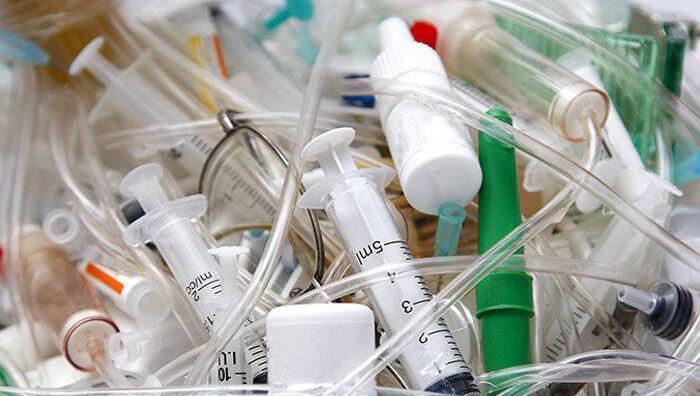
Masks and personal protective equipment will likely lead to a sharp rise in medical hazardous waste in 2020 from the previous year, the EPA said.
There was a 10% spike in hazardous waste generated in Ireland in 2019, with almost 600,000 tonnes produced, and signifying a continuous rise over the last five years.
The Environmental Protection Agency (EPA) said Ireland produced 581,000 tonnes of hazardous waste last year, an increase of 55,000 tonnes.
It has been increasing since 2015, driven mainly by increases in incinerator ash and contaminated soils, the EPA said.
65% of Ireland's hazardous waste was exported for treatment in 2019. The #Netherlands, #Norway, #UK, #Denmark, #Germany, #NorthernIreland and #France together accepted the majority of our hazardous waste exports.
— EPA Ireland (@EPAIreland) December 11, 2020
2019 hazardous waste figures here: https://t.co/FKDdO7jo4G pic.twitter.com/93PaRsyXaN
Ireland is not capable of dealing with all of the hazardous waste generated, and just under two-thirds was exported for treatment to other EU member states in 2019.
The Netherlands, Norway, Britain, Denmark, Germany, and France together accepted the majority of the Republic’s hazardous waste exports, with a chunk also going to the North.
Industry and construction generated the most hazardous waste, with 152,000 tonnes of incinerator ash, 91,000 tonnes of contaminated soils from remediation of industrial sites, and 66,000 tonnes of chemical residue.
Households, farms and other businesses were also significant contributors of hazardous waste such as batteries, waste electrical and electronic appliances, paints, solvents and medicines, the EPA said.
Masks and personal protective equipment will likely lead to a sharp rise in medical hazardous waste in 2020 from the previous year, the EPA said. The Covid-19 pandemic will spike medical waste figures, which was the 11th highest contributor of hazards in 2019.
The EPA said that waste is hazardous when it can harm human health or the environment because it is “explosive, oxidising, flammable, irritant, toxic, carcinogenic, corrosive, infectious, mutagenic, sensitising, or eco-toxic”.
In 2019, approximately 80% of the 580,977 tonnes of hazardous waste generated was from industry, 18% was from the construction sector and 2% was from households, small businesses, educational facilities and other municipal areas.
The top four categories that made up 61% of hazardous waste generated in 2019 came from waste treatment such as incinerator bottom ash, fly ash, and boiler ash.
Residues from flue gas and air pollution control at waste-to-energy facilities also contributed to the 152,635 tonnes of hazardous waster, while contaminated soils from old industrial and brownfield sites led to 90,595 tonnes.

CONNECT WITH US TODAY



Be the first to know the latest news and updates