Trinity researchers help develop material to protect pilots from laser attacks
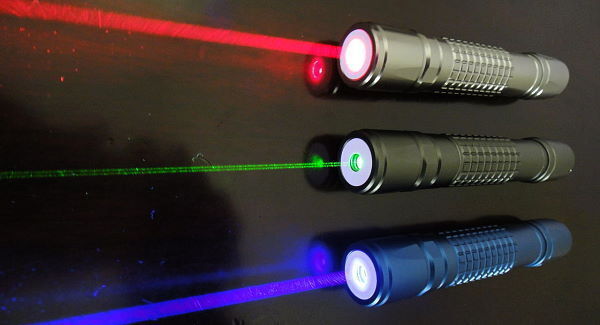
Scientists have developed revolutionary material that could protect pilots from laser attacks.
Laser pens can cause temporary blindness if they are directed at crews in aircraft cockpits.
Earlier this year, Belfast International Airport found there were five laser pen incidents over an eight-day period and urged people to report incidents to the police.
The Irish Aviation Authority found there has been a noticeable increase in malicious laser attacks in recent years.
Now Irish scientists have played a major role in developing a material that can be used as a coating on the front window of the aircraft cockpit.
Professor of physics at Trinity College Dublin, Prof. Werner J. Blau, said the coating – a non-linear optical material - provided protection against high-intensity bursts of light. “The coating will darken if a laser is shone on it and will stay bright during daylight,” he explained.
Prof. Blau, said the material had been jointly patented by both Trinity and the University of Houston in Texas. “It could possibly be commercially available in a few years time. The US Air Force is pushing to have the product earlier,” he said.
It can also be used to safeguard drones, surveillance cameras and other equipment against high-intensity bursts of light.
A report in Nature Communications also describes how the material could be used to improve the speed and capacity of internet communications.
Physics professor at the University of Houston, Seamus Curran, is a former student of Prof. Blau, and one of the paper's authors.
Prof. Curran explained how they used bacteria to create the nanocrystals and found that the results were superior to those obtained from graphene. “We found a cheaper, easier, simpler way to manufacture the material," he said.
We let Mother Nature do it
The new findings grew out of earlier work by Prof Curran and his team, working in collaboration with Prof Blau and Prof Ron Oremland of the US Geological Survey.
Light at very high intensity, such as that from a laser, can have unpredictable polarising effects on certain materials and physicists have long been searching for suitable non-linear materials that can withstand the effects.
Prof Blau said that compared to graphene, the material they created using tellurium nanorods, produced from naturally occurring bacteria worked in the mid-infrared range. “This wavelength region is becoming a hot technological topic as it is useful for biomedical, environmental and security-related sensing, as well as laser processing and for opening up new windows for fibreoptic and free-space communications,” he said.